Chiến tranh ngắn một tuần lễ của Thái Lan và Cam Bốt đã thức tỉnh người Việt và người dân các nước trong vùng Đông Nam Á. Họ thấy sự khác biệt vũ khí của Thái Lan theo Mỹ và vũ khí của Cam Bốt theo Trung cộng. Giống như Iran dùng vũ khí Tàu, IRAQ dùng vũ khí Nga.
Tất cả người dân các nước trong vùng Đông Nam Á theo Hoa Kỳ, kể cả Nam Duong/Indonesia cũng vậy, chỉ có một nước Việt Nam theo Tàu cộng, các bạn Việt Nam trong nước có thấy sợ sợ không? Việt Nam bị cô lập quân sự trong các nước Đông Nam Á. Việt Nam thích chửi Mỹ.
.
CHÍNH TRỊ THẾ GIỚI ĐỔI CHIỀU - THÂN PHẬN CHƯ HẦU VIỆT CỘNG PHẢI LÀM GÌ?
https://www.youtube.com/live/HEhy2U0OdFI?si=kQVJNX2Y3BxzUQdx
THÁI LAN VÀ CAM BỐT CÓ NGỪNG BẮN KHÔNG?
https://www.youtube.com/live/UuHicNF1xlw?si=i3VMwz2wbK5mNtOq
Bonjour Việt Nam và Việt Nam Việt Nam.
https://youtu.be/PZq7VOQYqT0?si=_KZ3n2-aZLi5RtZn
Cộng Đồng người Việt Nam vùng Montreal.
Diễn Hành Tưởng Niệm 50 Năm Ngày Quốc Hận Tại Houston USA
https://youtu.be/_I9VqevoHNM?si=GehldiX0jkqENIPL
Đừng Sợ Nữa
Ban Hợp Ca Anh Thư Thiện Nguyện
Anh Thư Hậu Duệ Quân Lực VNCH
Người Tàu đã than vãn rằng -- nơi quận Giao Chỉ là những người dân cứng đầu, hung tợn, luôn có cuộc xung đột giua ho với thái Thú địa phương.
(Thời Bắc Thuộc)
CHAI NA DỌA BẮN CÁC VỆ TINH CỦA ELON MUSK
https://www.youtube.com/live/NvN8H6NaHLg?si=gkU8A0wbiFnkhWzD
CHINA CÓ ĐỨNG SAU LƯNG CAM BỐT KHÔNG?
https://www.youtube.com/live/-okQ-Q_okhY?si=ePXRqpTqNvEIA_S0
VIỆT NAM SAU LŨY TRE LÀNG #CN (Kỹ Nghệ)
https://www.youtube.com/live/AStwUrTMQ78?si=Cym01jMg-SsrouPd
TIN TỨC THẾ GIỚI #4
https://www.youtube.com/live/zFUqcUCWP9M?si=07j-_2Dir6JSteuz
Sau khi cân nhắc đánh chiếm Đài Loan, thấy khó nuốt. Đài Loan có Mỹ, Nhật, Nam Hàn và Úc trợ giúp. Mà dàn trận ở biển Đông thì đụng phải Phi, Úc, Mã, Sing... thấy cũng khó nuỐt trôi. Tàu cộng nghĩ đến chơi trò giống như Nga đánh chiếm Ukraine là: đánh chiếm Việt Nam thằng cộng sản nghèo, không bạn bè (quân sự) quốc tế giúp đỡ ngoài Nga, nay Nga bị thiếu vũ khí, đây là cách chiếm Hoàng Sa Trường Sa một cách hợp lý nhất. Việt cộng và Cam cộng là đàn em, là em út của Tà u cộng. Mỹ có giúp Việt cộng về quân sự không?
China Wants to INVADE Vietnam! WHY??
https://youtu.be/SP5IR-q7mDU?si=17QCSetBxQr2Lv5K
Tiếng Việt - Dấu Giọng/dấu thanh và Dấu Phụ
Vietnamese - Tonal Marks (Dấu Giọng) and Diacritic Mark – Dấu Phụ
https://youtu.be/zqsnqmR7cfM?si=eDcLmxyVy4x1MFsl
Diacritic Mark / denoting the tones (Vietnamese)
Dấu Giọng/dấu thanh và Dấu Phụ
6 Dấu Giọng trên khuôn nhạc
.................................................................
Vietnamese Language tones and pitch
Tiếng Việt là tiếng tượng thanh hơn tượng hình. Tiếng Việt giàu thanh điệu lẫn âm tiết nhất; do đó, khi chuyển sang chữ La tinh chúng ta đã thành công với thứ ngôn ngữ ‘nói thế nào viết thế đấy’.
- 29 letters =
A B C D E G H I K L M N O P Q R S T U V X Y Ă Â Đ Ê Ô Ơ Ư
The Vietnamese alphabet contains 29 letters, including:
- 29 letters
- One digraph (đ) and
- Nine with diacritics
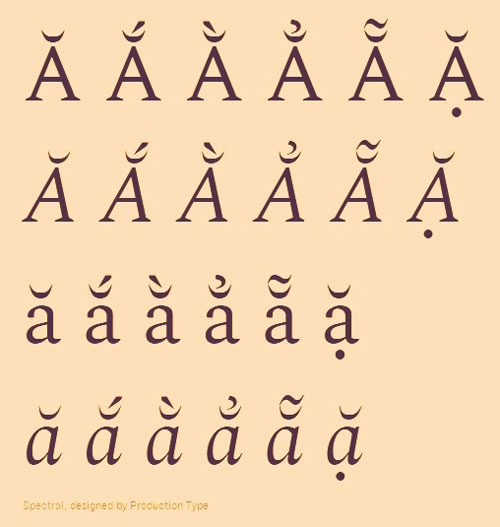
- Six tones (i.e.a, à, á, ả, ã, and ạ) combined Five diacritics (ă, â/ê/ô, ơ, ư).[63] That made up to 134 letters (uppercase and lowercase) demonstrate all the diacritics in Vietnamese.
This Romanized script became predominant over the course of the early 20th century, that were made education became easy to learn and widespread.
A B C D E G H I K L M N O P Q R S T U V X Y Ă Â Đ Ê Ô Ơ Ư
Here is this, you will see these demonstrated in (uppercase and lowercase) of all.
1
2
3
4
5
6
7
8
9
10
11
12
a
A
ă
Ă
â
Â
e
E
ê
Ê
i
I
o
O
ô
Ô
ơ
Ơ
u
U
ư
Ư
y
Y
..........................................
Ghi chú:
i và y là hai chữ đồng âm khác thể, y phát âm ngắn hơi hơn i.
00000000000000000000000000
2
a A
Chữ thường và chữ in trong sáu dấu giọng
1
2
3
4
5
6
a
A
à
À
á
Á
ả
Ả
ã
Ã
ạ
Ạ
--------------------
3
ă Ă
Chữ thường và chữ in trong sáu dấu giọng
1
2
3
4
5
6
ă
Ă
ằ
Ằ
ắ
Ắ
ẳ
Ẳ
ẵ
Ẵ
ặ
Ặ
--------------------
4
â Â
Chữ thường và chữ in trong sáu dấu giọng
1
2
3
4
5
6
â
Â
ầ
Ầ
ấ
Ấ
ẩ
Ẩ
ẫ
Ẫ
ậ
Ậ
.............................
5
e E
Chữ thường và chữ in trong sáu dấu giọng
1
2
3
4
5
6
e
E
è
È
é
É
ẻ
Ẻ
ẽ
Ẽ
ẹ
Ẹ
''''''''''''''''''''''''
6
ê Ê
Chữ thường và chữ in trong sáu dấu giọng
1
2
3
4
5
6
ê
Ê
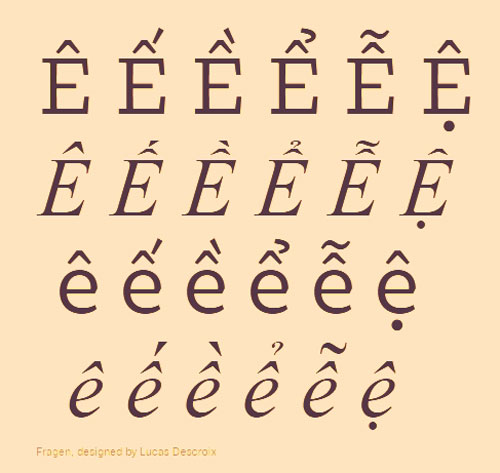
ề
Ề
ế
Ế
ể
Ể
ễ
Ễ
ệ
Ệ
---------------------
7
i I
Chữ thường và chữ in trong sáu dấu giọng
1
2
3
4
5
6
i
I
ì
Ì
í
Í
ỉ
Ỉ
ĩ
Ĩ
ị
Ị
----------------------------
8
o O
Chữ thường và chữ in trong sáu dấu giọng
1
2
3
4
5
6
o
O
ò
Ò
ó
Ó
ỏ
Ỏ
õ
Õ
ọ
Ọ
-----------------------------------
9
ô
Chữ thường và chữ in trong sáu dấu giọng
1
2
3
4
5
6
ô
Ô
ồ
Ồ
ố
Ố
ổ
Ổ
ỗ
Ỗ
ộ
Ộ
============================
10
ơ Ơ
Chữ thường và chữ in trong sáu dấu giọng
1
2
3
4
5
6
ơ
Ơ
ờ
Ờ
ớ
Ớ
ở
Ở
ỡ
Ỡ
ợ
Ợ
---------------------------
11
u
Chữ thường và chữ in trong sáu dấu giọng
1
2
3
4
5
6
u
U
ù
Ù
ú
Ú
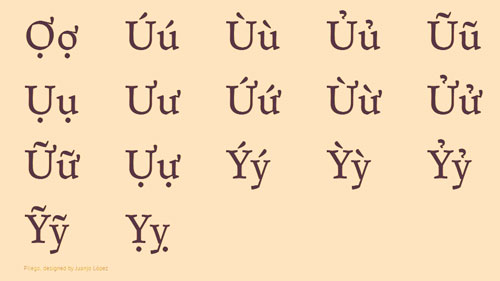
ủ
Ủ
ũ
Ũ
ụ
Ụ
------------------------
12
ư Ư
Chữ thường và chữ in trong sáu dấu giọng
■ Dấu Giọng (trong tiếng Việt)
Diacritic Mark / denoting the tones (Vietnamese)
Dấu Giọng (trong tiếng Việt)
Diacritic Mark / denoting the tones in
Vietnamese
_
a
Không dấu/ngang
_
Mid-level tone
`
à
Dấu huyền
`
Low-falling tone
´
á
Dấu sắc
´
High-rising tone
ɂ
ả
Dấu hỏi
ɂ
Low-falling rising tone
~
ã
Dấu ngã
~
Hight-rising broken tone
•
ạ
Dấu nặng
•
Low-falling broken tone
@@@@@@@@@@@@@@@@@@@@@@@
THE ALPHABET
The official Latin-based Vietnamese alphabet consists of twenty-nine letters: seventeen consonants and twelve vowels. Except f, j, w, and z, twenty-two letters come from the Roman alphabet. The seven modified letters are ă, â, đ, ê, ô, ơ, and ư. As in English, the order follows the Roman alphabetic convention. Letters with diacritical marks come after letters without. For instance, a precedes ă and d precedes đ. The following alphabetization is taught in schools.
Official Latin-based Vietnamese alphabet - holylandvietnamstudies.com
The official Latin-based Vietnamese alphabet
LETTERS WITH DIACRITICS
Vietnamese has an extensive number of letters with diacritical marks to make tonal distinctions. The ordering of tone marks is varied, but the most common is Nguyễn Đình Hòa’s convention: unmarked tone (ngang), acute (sắc), grave (huyền), hook above (hỏi), tilde (ngã), and underdot (nặng). Because diacritics play an essential role in differentiating the tones, each vowel can take on one or two additional marks. The following 134 letters (uppercase and lowercase) demonstrate all the possibilities of diacritics in Vietnamese.
vietnamese diacritical marks - holylandvietnamstudies.com
Vietnamese diacritical marks
MODIFIED LETTERS
As demonstrated in the alphabet, the Vietnamese writing system uses seven modified letters. Four have separated diacritical marks:
ă, â, ê, and ô.
Three have connected diacritical marks:
đ, ơ, and ư.
This chapter provides further details of the modified letters.
Vietnamese diacritical marks - holylandvietnamstudies.com
Vietnamese diacritical marks
LETTER Â
The â has a circumflex placed above the letter a. The a-circumflex can take on an additonal acute ( ấ ), grave ( ầ ), hook above ( ẩ ), tilde ( ẫ ), or underdot ( ậ ). In Vietnamese, a chevron-shaped circumflex is also used on e ( ê ) and o ( ô ).
LETTER Đ
The đ has a cross bar through the letter d. The đ is an initial-only consonant. The uppercase Đ has a horizontal bar in the middle of the cap height of the letter D. The lowercase đ has a bar centered between the ascender and the x-height of the letter d.
LETTER Ê
The ê has a circumflex placed above the letter e. The e-circumflex can take on an additonal acute ( ế ), grave ( ề ), hook above ( ể ), tilde ( ễ ), or underdot ( ệ ). In Vietnamese, a chevron-shaped circumflex is also used on a ( â ) and o ( ô ).
LETTER Ô
The ô has a circumflex placed above the letter o. The o-circumflex can take on an additonal acute ( ố ), grave ( ồ ), hook above ( ổ ), tilde ( ỗ ), or underdot ( ộ ). In Vietnamese, a chevron-shaped circumflex is also used on a ( â ) and e ( ê ).
LETTER Ơ
The ơ has a horn attached and aligned to the right of the letter o. The o-horn can take on an additonal acute ( ớ ), grave ( ờ ), hook above ( ở ), tilde ( ỡ ), or underdot ( ợ ). In Vietnamese, a horn is also used on u ( ư ).
LETTER Ư
The ư has a horn attached and aligned to the right of the letter u. The u-horn can take on an additonal acute ( ứ ), grave ( ừ ), hook above ( ử ), tilde ( ữ ), or underdot ( ự ). In Vietnamese, a horn is also used on o ( ơ ).
Vietnamese diacritical marks - holylandvietnamstudies.com
Vietnamese diacritical marks
TONE MARKS
Vietnamese is a tonal language. Accents are used to denote six distinctive tones:
“level” (ngang),
“acute-angry” (sắc),
“grave-lowering” (huyền),
“smooth-rising” hỏi,
“chesty-raised” (ngã), and
“chesty-heavy” (nặng).
In writing, one tone is represented as unmarked (a), four are indicated with diacritics marked on a vowel
( á, à, ả, and ã ), and one is marked with a dot under a vowel
( ạ ). Let’s break down these individual tone marks.
UNMARKED
An unmarked tone (ngang) has no accent. Its pitch ranges from mid to high-mid.
ACUTE
An acute (dấu sắc) is a forward-slash accent placed on vowels: á, é, í, ó, ú, and ý. An acute, which starts from a narrow bottom and ends with a wide top, denotes a high rising pitch. It should rise slightly toward the right of the base character ( á ) without falling off. When combined, it must be positioned clearly from another mark ( ắ, ấ, ế, ố, ớ, or ứ ).
GRAVE
A grave (dấu huyền) is a backward-slash accent placed on vowels: à, è, ì, ò, ù, and ỳ. A grave, which starts from a wide top and ends with a narrow bottom, denotes a low pitch. It should rise slightly toward the left of the base character ( à ) without falling off. When combined, it must be positioned clearly from another mark ( ằ, ầ, ề, ồ, ờ, or ừ ).
HOOK ABOVE
A hook above (dấu hỏi) is a tone mark that resembles a dotless question mark placed on vowels: ả, ẻ, ỉ, ỏ, ủ, and ỷ. It denotes a mid-low dropping pitch. When combined, it must be positioned clearly from another mark ( ẳ, ẩ, ể, ổ, ở, or ử ).
TILDE
A tilde (dấu ngã) is an accent placed on vowels: ã, ẽ, ĩ, õ, ũ, or ỹ. It denotes a high rising pitch. When combined, it must be positioned clearly from another mark ( ẵ, ẫ, ễ, ỗ, ỡ, or ữ ).
UNDERDOT
An underdot (dấu nặng) is a dot placed under vowels: ạ, ẹ, ị, ọ, ụ, and ỵ. It denotes a low dropping pitch and must be positioned clearly below the baseline.
… be continued in section 3…
BAN TU THU
01 /2020
..............................
NOTE:
1: About the author: Donny Trương is a designer with a passion for typography and the web. He received his master of arts in graphic design from the School of Art at George Mason University. He is also the author of Professional Web Typography.
◊ Bold words and sepia images has been set by Ban Tu Thu – thanhdiavietnamhoc.com
SEE MORE:
◊ A brief HISTORY of VIETNAMESE WRITING – Section 1
◊ A brief HISTORY of VIETNAMESE WRITING – Section 3
◊ etc.
(Visited 9,637 times, 3 visits today)
Donny Trương1
School of Art at George Mason University
… continued for section 1
========================
THE ALPHABET
The official Latin-based Vietnamese alphabet consists of twenty-nine letters: seventeen consonants and twelve vowels. Except f, j, w, and z, twenty-two letters come from the Roman alphabet. The seven modified letters are ă, â, đ, ê, ô, ơ, and ư. As in English, the order follows the Roman alphabetic convention. Letters with diacritical marks come after letters without. For instance, a precedes ă and d precedesđ. The following alphabetization is taught in schools.
The official Latin-based Vietnamese alphabet
LETTERS WITH DIACRITICS
Vietnamese has an extensive number of letters with diacritical marks to make tonal distinctions. The ordering of tone marks is varied, but the most common is Nguyễn Đình Hòa’s convention: unmarked tone (ngang), acute (sắc), grave (huyền), hook above (hỏi), tilde (ngã), and underdot (nặng). Because diacritics play an essential role in differentiating the tones, each vowel can take on one or two additional marks. The following 134 letters (uppercase and lowercase) demonstrate all the possibilities of diacritics in Vietnamese.
Vietnamese diacritical marks
MODIFIED LETTERS
As demonstrated in the alphabet, the Vietnamese writing system uses seven modified letters. Four have separated diacritical marks: ă, â, ê, and ô. Three have connected diacritical marks: đ, ơ, and ư. This chapter provides further details of the modified letters.
Vietnamese diacritical marks
LETTER Â
The â has a circumflex placed above the letter a. The a-circumflex can take on an additonal acute ( ấ ), grave ( ầ ), hook above ( ẩ ), tilde ( ẫ ), or underdot ( ậ ). In Vietnamese, a chevron-shaped circumflex is also used on e ( ê ) and o ( ô ).
LETTER Đ
The đ has a cross bar through the letter d. The đ is an initial-only consonant. The uppercase Đ has a horizontal bar in the middle of the cap height of the letter D. The lowercase đ has a bar centered between the ascender and the x-height of the letter d.
LETTER Ê
The ê has a circumflex placed above the letter e. The e-circumflex can take on an additonal acute ( ế ), grave ( ề ), hook above ( ể ), tilde ( ễ ), or underdot ( ệ ). In Vietnamese, a chevron-shaped circumflex is also used on a ( â ) and o ( ô ).
LETTER Ô
The ô has a circumflex placed above the letter o. The o-circumflex can take on an additonal acute ( ố ), grave ( ồ ), hook above ( ổ ), tilde ( ỗ ), or underdot ( ộ ). In Vietnamese, a chevron-shaped circumflex is also used on a ( â ) and e ( ê ).
LETTER Ơ
The ơ has a horn attached and aligned to the right of the letter o. The o-horn can take on an additonal acute ( ớ ), grave ( ờ ), hook above ( ở ), tilde ( ỡ ), or underdot ( ợ ). In Vietnamese, a horn is also used on u ( ư ).
LETTER Ư
The ư has a horn attached and aligned to the right of the letter u. The u-horn can take on an additonal acute ( ứ ), grave ( ừ ), hook above ( ử ), tilde ( ữ ), or underdot ( ự ). In Vietnamese, a horn is also used on o ( ơ ).
Vietnamese diacritical marks
TONE MARKS
Vietnamese is a tonal language. Accents are used to denote six distinctive tones: “level” (ngang), “acute-angry” (sắc), “grave-lowering” (huyền), “smooth-rising” hỏi, “chesty-raised” (ngã), and “chesty-heavy” (nặng). In writing, one tone is represented as unmarked (a), four are indicated with diacritics marked on a vowel ( á, à, ả, and ã ), and one is marked with a dot under a vowel ( ạ ). Let’s break down these individual tone marks.
UNMARKED
An unmarked tone (ngang) has no accent. Its pitch ranges from mid to high-mid.
ACUTE
An acute (dấu sắc) is a forward-slash accent placed on vowels: á, é, í, ó, ú, and ý. An acute, which starts from a narrow bottom and ends with a wide top, denotes a high rising pitch. It should rise slightly toward the right of the base character ( á ) without falling off. When combined, it must be positioned clearly from another mark ( ắ, ấ, ế, ố, ớ, or ứ ).
UNMARKED
An unmarked tone (ngang) has no accent. Its pitch ranges from mid to high-mid.
ACUTE
An acute (dấu sắc) is a forward-slash accent placed on vowels: á, é, í, ó, ú, and ý. An acute, which starts from a narrow bottom and ends with a wide top, denotes a high rising pitch. It should rise slightly toward the right of the base character ( á ) without falling off. When combined, it must be positioned clearly from another mark ( ắ, ấ, ế, ố, ớ, or ứ ).
GRAVE
A grave (dấu huyền) is a backward-slash accent placed on vowels: à, è, ì, ò, ù, and ỳ. A grave, which starts from a wide top and ends with a narrow bottom, denotes a low pitch. It should rise slightly toward the left of the base character ( à ) without falling off. When combined, it must be positioned clearly from another mark ( ằ, ầ, ề, ồ, ờ, or ừ ).
HOOK ABOVE
A hook above (dấu hỏi) is a tone mark that resembles a dotless question mark placed on vowels: ả, ẻ, ỉ, ỏ, ủ, and ỷ. It denotes a mid-low dropping pitch. When combined, it must be positioned clearly from another mark ( ẳ, ẩ, ể, ổ, ở, or ử ).
TILDE
A tilde (dấu ngã) is an accent placed on vowels: ã, ẽ, ĩ, õ, ũ, or ỹ. It denotes a high rising pitch. When combined, it must be positioned clearly from another mark ( ẵ, ẫ, ễ, ỗ, ỡ, or ữ ).
UNDERDOT
An underdot (dấu nặng) is a dot placed under vowels: ạ, ẹ, ị, ọ, ụ, and ỵ. It denotes a low dropping pitch and must be positioned clearly below the baseline.
Việt Nam là một quốc gia với một bảng chữ cái độc đáo và đặc sắc, được gọi là bảng chữ cái tiếng Việt hay Chữ Quốc Ngữ. Hệ thống viết này hoàn toàn khác biệt so với các hệ thống viết khác trong khu vực, chẳng hạn như chữ Hán hay chữ Khmer. Vậy, tại sao Việt Nam lại có bảng chữ cái độc đáo của riêng mình?
Trong bài viết này, chúng ta sẽ khám phá lịch sử và sự phát triển của bảng chữ cái tiếng Việt.
Nguồn gốc của bảng chữ cái tiếng Việt
Trước khi có bảng chữ cái tiếng Việt, ngôn ngữ tiếng Việt chính yếu là được viết bằng chữ Hán, điều này rất khó học và hạn chế khả năng biết đọc biết viết chỉ cho tầng lớp tinh hoa. Vào thế kỷ 10, các học giả Việt Nam đã tạo ra một hệ thống gọi là Chữ Nôm, sử dụng chữ Hán để đại diện cho một số từ tiếng Việt. Hệ thống này được sử dụng cho đến thế kỷ 17, nhưng vẫn rất khó khăn cho người dân bình thường học và sử dụng.
Vào đầu thế kỷ 17, một vị linh mục Công giáo tên là Cha Alexandre de Rhodes đã phát minh ra một hệ thống viết tiếng Việt mới sử dụng bảng chữ cái Latin. Hệ thống này dễ học và sử dụng hơn Chữ Nôm và đã giúp cho người dân bình thường có khả năng học đọc và viết. Hệ thống của Cha Rhodes đã nhanh chóng được chấp nhận và trở thành nền tảng cho bảng chữ cái tiếng Việt hiện đại. Sự phát triển của bảng chữ cái tiếng Việt hiện đại
Theo thời gian, bảng chữ cái tiếng Việt đã trải qua một số sửa đổi và điều chỉnh. Một thay đổi quan trọng được thực hiện vào thế kỷ 20 khi các chữ cái "đ" và "ơ" được thêm vào bảng chữ cái, mở rộng số lượng chữ cái lên 29. Những thay đổi này được thực hiện để phản ảnh những thay đổi trong chính ngôn ngữ tiếng Việt, đã tiến hóa và phát triển theo thời gian. Ngày nay, bảng chữ cái tiếng Việt được sử dụng độc quyền để viết ngôn ngữ tiếng Việt và được sử dụng rộng rãi trên toàn quốc. Nó cũng được sử dụng bởi các cộng động người Việt trên khắp thế giới, cũng như bởi người nước ngoài đang học tiếng Việt.
Tại sao bảng chữ cái tiếng Việt lại đặc biệt?
Bảng chữ cái tiếng Việt có nhiều lý do để trở nên đặc biệt.
Trước hết và quan trọng nhất, đây là một trong số ít bảng chữ cái ở Đông Nam Á sử dụng chữ cái Latin. Điều này làm cho việc học và sử dụng trở nên dễ dàng hơn cho những người đã quen thuộc với bảng chữ cái Latin.
Thứ hai, bảng chữ cái tiếng Việt là một bảng chữ cái dựa trên âm vị, có nghĩa là mỗi chữ cái tương ứng với một cung bậc âm thanh cụ thể trong tiếng Việt. Điều này giúp cho việc học cách đọc và viết tiếng Việt trở nên dễ dàng hơn.
Ngoài ra, bảng chữ cái tiếng Việt cũng đặc biệt vì nó có một số dấu diacritics (dấu phụ), được sử dụng để chỉ định âm điệu và các đặc điểm âm vị khác của ngôn ngữ. Điều này có thể làm cho bảng chữ cái tiếng Việt trông phức tạp hơn so với các bảng chữ cái khác, nhưng đây là một đặc điểm cần thiết của ngôn ngữ và giúp làm cho nó chính xác và rõ ràng hơn.
Kết luận
Tóm lại, bảng chữ cái tiếng Việt là một hệ thống chữ viết độc đáo và đặc sắc đã phát triển qua nhiều thế kỷ để trở thành tiêu chuẩn viết tiếng Việt. Sự phát triển của bảng chữ cái bị ảnh hưởng bởi nhiều yếu tố, bao gồm nhu cầu về một hệ thống dễ học và dễ sử dụng, cũng như những thay đổi trong chính ngôn ngữ Việt Nam. Ngày nay, bảng chữ cái tiếng Việt là một phần quan trọng của văn hóa và bản sắc Việt Nam, và nó tiếp tục đóng vai trò quan trọng trong các truyền thống văn học và nghệ thuật của đất nước.
Tài liệu tham khảo:
"Chữ Quốc Ngữ - Bảng Chữ Cái Tiếng Việt,"
Vietnam Online."Sự Phát Triển của Hệ Thống Viết Tiếng Việt," Thư Viện SEAlang.
"Lịch Sử Bảng Chữ Cái Tiếng Việt," VietnamDiscovery.com.
======================
Why Viet Nam's Writing System Is Vastly Different from Other Writing Systems in Asia?
March 24, 2023 4:36 PM GMT+7 2 mins
Vietnam is a country with a unique and distinctive alphabet, known as the Vietnamese alphabet or Chữ Quốc Ngữ. This writing system is vastly different from other writing systems in the region, such as the Chinese or the Khmer alphabets. So, why does Vietnam have its own unique alphabet? In this article, we'll explore the history and evolution of the Vietnamese alphabet.
Origins of the Vietnamese Alphabet
Before the Vietnamese alphabet, the Vietnamese language was mainly written using Chinese characters, which were difficult to learn and limited literacy to the elite. In the 10th century, Vietnamese scholars created a system called Chữ Nôm, which used Chinese characters to represent Vietnamese words. This system was used until the 17th century, but it was still difficult for the common people to learn and use.
In the early 17th century, a Catholic missionary named Father Alexandre de Rhodes devised a new system of writing Vietnamese that used the Latin alphabet. This system was easier to learn and use than Chữ Nôm and made it possible for the common people to learn to read and write. Father Rhodes' system was quickly adopted and became the basis for the modern Vietnamese alphabet.
Over time, the Vietnamese alphabet has undergone several modifications and adjustments. One significant change was made in the 20th century when the letters "đ" and "ơ" were added to the alphabet, expanding the number of letters to 29. These changes were made to reflect changes in the Vietnamese language itself, which had evolved and developed over time.
Today, the Vietnamese alphabet is used exclusively for writing the Vietnamese language and is widely used throughout the country. It is also used by Vietnamese communities around the world, as well as by foreigners who are learning Vietnamese.
Why is the Vietnamese Alphabet Distinctive?
The Vietnamese alphabet is distinctive for several reasons.
First and foremost, it is one of the few alphabets in Southeast Asia that uses the Latin script. This makes it easy for people who are familiar with the Latin alphabet to learn and use.
Second, the Vietnamese alphabet is a phonetic alphabet, which means that each letter corresponds to a specific sound in the Vietnamese language. This makes it easy for people to learn how to read and write Vietnamese.
In addition, the Vietnamese alphabet is also distinctive because it contains a number of diacritical marks, which are used to indicate tones and other phonetic features of the language, this is likely musically sound. This can make the Vietnamese alphabet look more complicated than other alphabets, but it is an essential feature of the language and helps to make it more precise and accurate.
Conclusion
In summary, the Vietnamese alphabet is a unique and distinctive writing system that has evolved over centuries to become the standard for writing Vietnamese. The development of the alphabet has been influenced by various factors, including the need for a system that is easy to learn and use, as well as changes in the Vietnamese language itself. Today, the Vietnamese alphabet is an important part of Vietnamese culture and identity, and it continues to play a vital role in the country's literary and artistic traditions.
References:
"Chữ Quốc Ngữ - Vietnamese Alphabet," Vietnam Online.
"The Development of the Vietnamese Writing System," SEAlang Library.
"The History of the Vietnamese Alphabet," VietnamDiscovery.com.
Source: Akhyari HanantoBy Akhyari Hananto
❧
❧
❧
❧
Khi bạn hiểu được sự tuyệt diệu của tiếng Việt, bạn sẽ thấy thích thú trong cách cấu tạo và sáng chế âm thanh độc đáo lẫn đặc sắc cho tiếng Việt, bạn sẽ yêu tiếng Việt như tôi đã yêu.
Xin nhắc bạn câu dặn dò của bậc tiền bối:
Đừng nói sai tiếng mẹ,
Tinh hoa của nước nhà.
Bảng so sánh đối chiếu chữ
VC
VNCH
1
phản ánh
phản ảnh
Đặt câu:
Những gì trong xã hội đã phản ảnh đời sống thật của người dân.
2
chất lượng
phẩm chất
Đặt câu:
Bia số 33 có phẩm chất tuyệt hảo.
3
neo đơn
đơn chiếc
Đặt câu:
bà lão sống đơn chiếc làm nghề gánh bán qua ngày.
4
đột xuất
bất ngờ
Đặt câu: Cơn lốc bất ngờ từ đâu đến thổi tung những mái nhà ven biển.
5
thi thoảng
thỉnh thoảng
Đặt câu:
Cô ấy thỉnh thoảng có đến đây.
6
đại trà
cỡ lớn, qui mô, diện rộng
Đặt câu:
Đốn chặt cây rừng đã thành một lối làm ăn có qui mô. Nạo vét cát ở biển cũng đã trở thành lối làm ăn cỡ lớn.
7
tư liệu
tài liệu
Đặt câu:
Tài liệu chiến tranh đã từ từ được đem ra trình báo.
8
tư vấn
cố vấn
Đặt câu:
Anh A được chọn làm cố vấn trong công ty chúng tôi.
9
tiếp cận
tiếp xúc
Đặt câu:
Tổng thống đã tiếp xúc với đám đông quần chúng.
Tiếp cận là chữ được dùng trong toán học. Điểm A tiếp cận với điểm B.
10
diễu hành
diễn hành
Đặt câu:
Cuộc diễn hành ngày đầu năm để mừng năm mới.
11
cây xanh
cây, cây cối xanh tươi
Đặt câu:
Nói cây xanh là sai. Nói cây là bao gồm tất cả rồi.
12
thu nhập
lợi tức
Đặt câu:
Lợi tức trung bình một đầu người.
Chữ "lợi tức" mà VNCH dùng có nghĩa là lợi nhuận sau khi đã được trừ chi phí, còn gọi là "lợi tức thuần” hay “lợi tức ròng”. (Quỳnh Lâm, Từ điển chính trị, hành chánh, kinh tế, pháp luật). VNCH có luật đánh thuế lợi tức.
Còn chữ thu nhập của XHCH bây giờ không ai định nghĩa được, không minh bạch.
13
bình quân
trung bình
Đặt câu:
Trung bình ở Việt Nam hiện nay, cứ 10 người thì có sáu người bị mắc bệnh ung thư.
14
ùn tăc
kẹt xe
Đặt câu:
xe cộ kẹt cứng.
15
đề xuất
đề nghị, đề xướng
Đặt câu:
đề xướng một dự án
16
quán triệt
hiểu rõ, thấu đáo
Đặt câu:
Các anh đã hiểu rõ chưa?
Các anh đã quán triệt tư tưởng?
17
nghe tốt
nghe rõ
Đặt câu:
Các anh có nghe rõ không? Các anh có nghe được không?
18
tiêu thụ
tiêu dùng
Đặt câu: thi thoảng
thảnh thoảng
Cô ấy thỉnh thoảng có đến đây.
19
xử lý
giải quyết
Đặt câu:
Họ đã đưa người đến để giải quyết mọi vấn đề trục trặc tại.
Chữ xử lý là chữ được dùng trong luật học, tòa án.
20
bài nói
bài diễn văn
Đặt câu:
Bài diễn văn của cử tọa.
21
người phát ngôn
xướng ngôn viên
Đặt câu:
Xướng ngôn viên trên đài truyền hình và đài phát thanh.
22
kênh (phát sóng)
đài (chanel) băng tần
Đặt câu:
Đài phát thanh, đài truyền hình, phát sóng ngày nay có thêm đài / chương trình trong youtube.
23
xuất khẩu
xuất cảng
Đặt câu:
Lượng hàng xuất cảng đã giảm đi nhiều.
24
căn hộ
căn nhà
Đặt câu:
Những căn nhà của người dân đã được dựng lên sau cơn bão.
25
hộ khẩu
sổ gia đình
Đặt câu:
Sổ gia đình của người dân được ghi rõ.
26
hộ chiếu
sổ thông hành
Đặt câu:
Sổ thông hành của anh ta bị mất.
27
input
nhập lượng
Đặt câu:
nhập lượng là input.
28
output
xuất lượng
Đặt câu:
output là xuất lượng.
29
máy tính
máy điện toán
Đặt câu:
Máy tính là calculator, máy điện toán là computer.
30
bình chọn
bầu chọn
Đặt câu:
Anh A được bầu chọn làm trưỏng thủ quỹ của hội.
31
sân bay
phi trường
Đặt câu:
Phi trường Tân Sơn Nhứt là nơi chúng tôi gặp lại sau 30 năm xa cách.
32
tàu sân bay
hàng không mẫu hạm
Đặt câu:
Người Việt tị nạn ở Hoa Kỳ đã có người đóng hàng không mẫu hạm cho hãng.
33
quân hàm
cấp bậc
Đặt câu:
Chữ "quân hàm", nhiều người trong nam tưởng là chữ "quai hàm".
34
học vị
bằng cấp
Đặt câu:
Những người học cao, có bằng cấp đều được trọng dụng.
35
xưởng đẻ
Viện bảo sanh
Đặt câu:
Viện bảo sanh được tọa lạc tại....
36
tên lửa
hỏa tiễn
Đặt câu:
Người ta đã cho thử phóng hỏa tiễn để tiêu diệt....
37
thử nghiệm
thí nghiệm
Đặt câu:
Không ghép chữ Hán Việt và chữ Việt đi với nhau.
Chữ "thử" là chữ Việt, chữ "thí" là chữ Hán
thí nghiệm là chữ Hán Việt, hoặc thử là chữ Việt.