Après Toi - Vắng Bóng Người Yêu
https://youtu.be/HiIcDJPIGxs
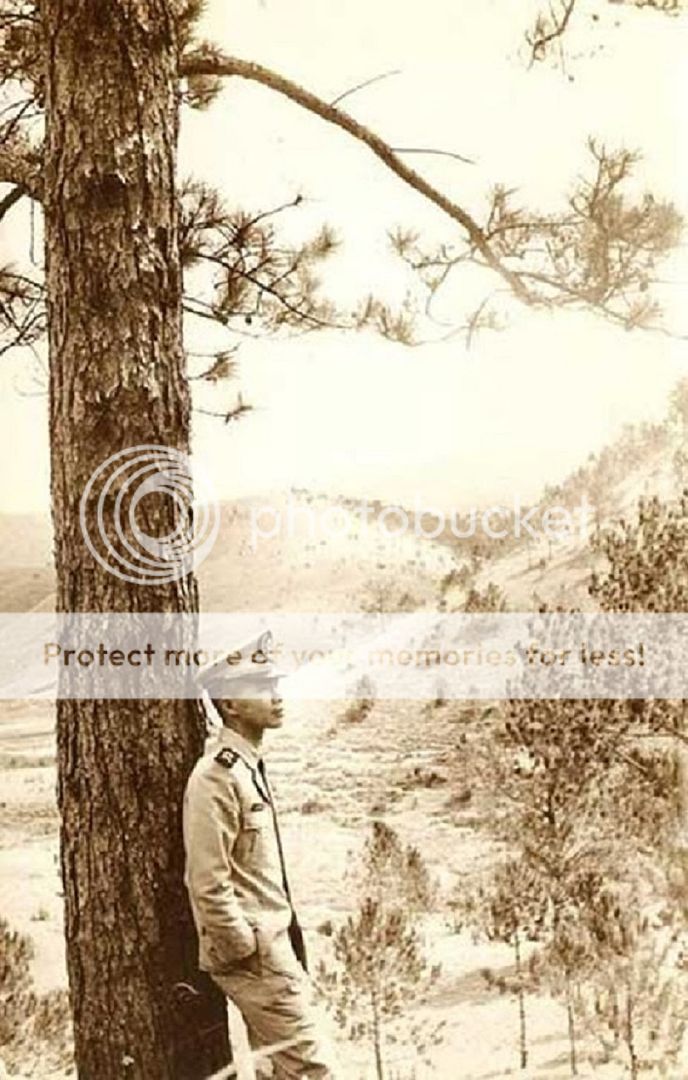
Hình: Sinh Viên sĩ quan Võ Bị Quốc Gia - Đà Lạt (chụp năm ? Ai biết xin thông báo vì rừng thông Đà Lạt đã bị chặt đốn, phá nát và đất đã xây bê tông hóa thành những ngôi nhà, đô thị, không còn cảnh quan thơ mộng núi non hùng vĩ, rừng cây bạt ngàn nữa. 100 năm nữa người Tàu chiếm đất cao nguyên này, sẽ ghi là đây là hình thanh niên Tàu ở Tây Nguyên)
Après Toi
- Thanh Lan
Après Toi - Thanh Lan
Après Toi - Nhạc và lời:
Mario Panas & Klaus Munro và Yves Dessca
Trình bày: Thanh Lan (Pre 1975)
Après Toi
Tu t'en vas,
L'amour a pour toi.
Le sourire d'une autre
Je voudrais mais ne peux t'en vouloir
Désormais
Tu vas m'oublier
Ce n'est pas de ta faute
Et pourtant tu dois savoir.
Qu'après toi,
Je ne pourrai plus vivre, non plus vivre
Qu'en souvenir de toi
Après toi J'aurai les yeux humides
Les mains vides, le cœur sans joie.
Avec toi,
J'avais appris à rire
Et mes rires ne viennent que par toi
Après toi je ne serai que l'ombre
De ton ombre Après toi...
Même une jour si je fais ma vie
Si je tiens la promesse Qui unit peut-être pour toujours
Après toi
Je pourrai peut-être
Donner de ma tendresse
Mais plus rien de mon amour
Après toi.
Je ne pourrai plus vivre, non plus vivre
Qu'en souvenir de toi
Après toi
J'aurai les yeux humides
Les mains vides, le cœur sans joie
Avec toi
J'avais appris à rire
Et mes rires ne viennent que par toi
Après toi je ne serai que l'ombre,
De ton ombre Après toi.
Après Toi – Vắng Bóng Người Yêu
Thanh Lan (Pre 1975) Lời Việt: Phạm Duy 1974
Cuộc tình tàn, cuộc tình vắng bóng anh,
Vắng ánh sáng vắng tháng năm,
Cuộc tình xanh nào ngờ mối tình mỏng manh.
Cuộc tình rồi, đành là khuất bóng thôi,
Với dĩ vãng sẽ lãng đãng trôi,
Người tình ơi vắng tanh cuộc đời.
Đời hoang vắng, khi em xin đành mất anh,
Em đành sống quanh bao nhiêu kỷ niệm long lanh.
Và khi sáng đôi ta chưa tròn trắng khơi,
Mõi mòn mắt trong trái tim âm thầm.
Ngày tươi sáng, khi đôi ta đầy luyến thương,
Ta cười hát vang ta ôm cuộc đời mênh mang.
Tình đã chết, nên em như là bóng đêm,
Đi tìm bóng anh dưới trăng thanh.
Rồi cuộc đời, cuộc đời sẽ cuốn trôi,
Với tiếng khóc với tiếng vui.
Cuộc đời ơi, cuộc đời đọa đày mà thôi.
Cuộc tình sầu, cuộc đời mãi đớn đau.
Của những kẻ vẫn mất nhau,
Người tình đâu, tóc tang một màu.
Tuyển Tập 123 Bản Nhạc Pháp (1959 - 1989)
Sưu tầm và giới thiệu: Bùi Văn Tuyên
Xin
click vao link sau để nghe hết một lượt hay bấm vào từng link trong danh
sách:
"Một Thế Kỷ Nhạc Pháp". là một bộ sách thật quý giá, mỗi thập niên ban biên tập tìm ra 300 bài nhạc tiêu biểu nhất rồi kẻ nhạc lời và hợp âm và cho vào một quyển bìa cứng thật đẹp, giá cả rất văn nghệ, khoảng 50USD một quyển, tức là khoảng 16 xu một bài hát! Để so sánh, tôi mới mua giá discount 13USD tập nhạc Adele 21, trong đó có 11 bài, tức 1đ một bài, mà tôi đã cảm thấy có lời rồi :-)
Ba
quyển sách quý nằm gọn ghẽ trong bộ sưu tầm nhạc đủ loại của tôi: các
sách nhạc Pháp, nhạc cổ điển cho dương cầm, ABBA, v.v.
Bản
Michele, trước giờ chỉ nghe qua CD và chơi theo, nay đã có nốt, lời và
hợp âm để dạo.
Tôi hy vọng danh sách 123 bài tuyển chọn này sẽ là quà tặng của riêng tôi cho các bạn muốn nghe nhạc Pháp có tài liệu để đối chiếu, để tìm hiểu về một nền âm nhạc đã giúp phần nhỏ tạo nên một sân khấu nhạc trẻ miền Nam Việt Nam khi xưa - với những bản nhạc Pháp lời Việt bất hủ như Bang Bang, Tu te reconnaitras, L'avventura, v.v. Ngoài ra cũng sẽ có phụ trang những bản nhạc tôi hâm mộ mà không có trong danh sách 900 bài nhạc kể trên.
Công việc lựa chọn này thật ra cũng không khó, chỉ cái là hơi tốn thời gian. Việc đầu tiên là tôi in ra danh sách theo từng năm của cả ba quyển. Sau đó tôi lấy marker bôi đỏ lên bài nào tôi quen thuộc. Đếm thử thì thấy cũng khoảng 80 bài rất quen thuộc. Sau đó là lấy nhạc Paul Mauriat và Raymond Lefevre ra nghe và tìm xem những bài nhạc tôi ưa thích có nằm trong danh sách 900 bài không? Mới chợt nhận ra tôi chịu ơn hai ông rất, rất nhiều vì có nhiều bài nhạc không quen tên nhưng giai điệu rất hay, và chúng cũng có mặt trong sách nữa.
Tiếp theo là tôi đánh tên từng bài trong danh sách bôi đỏ vào Google rồi vào trang frmusique.ru để lấy lời của các bài nhạc trên cho vào một Word document. Tôi có để tập lời nhạc đó trong trang PDF để nếu bạn nào thích thì có thể download xuống làm tài liệu.
Nhìn chung, 123 bài nhạc này (xin gọi tắt là Selection 123) có thể nói rất tiêu biểu cho nhạc Pháp từ 59-89. Cũng có những bài hay mà không có trong danh sách như Viens Viens do Marie Laforet trình bày, nhưng một bài khác của cô làIl a neigé sur Yesterday cũng có mặt. Các danh ca và nhà soạn nhạc nổi tiếng đều xuất hiện trong danh sách ít nhất là một lần. Tôi rất hy vọng bạn trẻ nào chưa biết nhạc Pháp, sau khi nghe xong danh sách này sẽ có một khái niệm về dòng nhạc ấy ra sao; còn nếu bạn nào biết sơ sơ thì cũng có một khái niệm là mình biết khoảng ít nhiều trên 100 bài hay, rồi sẽ lần theo danh sách tìm thêm các danh ca mình chưa nghe. Cái sự 123 bài nhạc cũng là rất tình cờ. Tôi đếm các bài bôi đỏ của cả 3 quyển rồi cộng lại và được tổng số 123, rất dễ nhớ!Nói đến chuyện sưu tầm nhạc Pháp, thì tôi phải biết ơn ông Google, là cha ông YouTube. Khoảng cuối năm 2006, khi Blogger (cũng là con của ông Google) mặc áo mới cho mình, thì YouTube cũng mới được Google mua lại, rồi sau đó khuếch trương lên, và trở thành nơi để người dùng tải lên các videos mình tạo ra, hay sưu tầm từ DVD, videos VHS, đĩa 45 vòng, v.v. Chỉ sau vài năm (2006 -> 2009) là trên YouTube đã có quá trời video của đủ mọi loại thần tượng nhạc Anh Pháp Mỹ. Cái hay nhất của YouTube là nó dùng giải thuật tìm kiếm có sẵn của Google để giăng lên các video tương tự như video mình đang kiếm, trong khi mình đang nghe một video nào đó. Nhờ vào cái feature "Related videos" bên tay phải này mà tôi lang thang tìm ra khối nhạc hay.
Cũng không quên cám ơn những người bạn Youtube có danh và vô danh đã nhiệt tình upload những bản nhạc từ thời xa xưa, từ những năm đầu 60 của dòng nhạc Pháp, tới những bài nhạc "hot" nhất hiện nay. Mười năm trước đây làm sao có được những thông tin tuyệt vời như vậy được, cái sự nghe nhạc Pháp của tôi chỉ đóng khung trong các CD cóp nhặt cũ kỹ, tầm nhìn hạn hẹp với các dĩa Christophe, Elsa, Pierre Bachelet, hay những CD "The best of France" bày rải rác trong Virgin Records và Tower Records (mà hai công ty này cũng đã tuyệt chủng vì không cạnh tranh nổi với cách mua online qua ông Amazon!)
Một người upload nhạc tôi rất biết ơn là anh Nicholas Phạm, sống ở Pháp. Anh tà tà chụp ảnh các người mẫu Âu Á, những phong cảnh Paris hoa lệ, rồi khéo léo gửi gắm thông điệp đằng sau những hình ảnh đó qua những bài nhạc Anh Pháp thật trữ tình. Tôi còn nhớ được nghe lại bài From Souvenirs to Souvenirs qua tiếng hát ấm cúng của danh ca Demis Roussos, cùng lúc được xem những kỷ niệm thời trung học/ đại học của anh ở Paris, với những bạn bè Việt Pháp, làm tôi rất cảm động và nhớ đến thời trung học và đại học của mình bên nhà và nơi xứ người. Anh Nicholas có một gout âm nhạc thật phong phú và đa dạng, nhờ có anh mà tôi biết thêm rất nhiều bài nhạc Pháp với giai điệu lời ca rất trữ tình, như các bài D'Aventures En Aventures, Paris Au Mois d'Août, Non, Je n'ai rien Oublié, v.v. Cám ơn anh thật nhiều và mong anh sẽ tiếp tục upload những video hình ảnh đẹp, nhạc hay trên trang YouTube của anh.
***
Tôi thích nghe nhạc Pháp từ bao giờ tôi cũng chẳng nhớ, có lẽ là từ khi nghe nhạc Paul Mariat văng vẳng bên tai mỗi khi đi dạo phố với ba tôi (Happy Father's day Daddy! hôm nay khi đang viết những dòng này là ngày lễ nhớ ơn Cha của Mỹ), hay từ những tape nhạc AKAI, TEAC nhạc Pháp lời Việt do các ca sĩ như Thanh Lan trình bày. Chỉ phỏng đoán thôi vì tôi làm sao biết được tên những người ấy, trong đầu tôi chỉ có các trò chơi dích hình, xem Lucky Luke, Xì Trum qua những quyển sách trắng đen với những mẩu truyện dịch thông minh và rất thích hợp với tuổi thơ ngây 8-9 tuổi như tôi.
Rồi cơn lũ tràn về, đại gia đình tôi chia năm xẻ bảy, người vào tù, người vượt biển, những bài nhạc Pháp cũng chẳng còn có cơ hội nào chen chân vào chỗ những bài ca ngợi anh hùng nọ, chiến sĩ kia. Nhưng được cái may là những người nắm giữ trọng trách của chế độ mới vẫn còn coi việc giảng dạy ngoại ngữ là một phần trong việc "đào tạo con người mới xã hội chủ nghĩa". Tôi được học thêm một mớ chữ Pháp chính trị, tuy nhiên cô giáo dạy Pháp văn cấp 2 là người cũ, và Bà đã dạy thêm rất nhiều những chữ, những câu sinh hoạt thông thường của người Pháp. Cấp 3 cũng vậy, cũng là những thầy cô trước 75 nên sự học tiếng Pháp của tôi cũng không đến nỗi tệ. Tôi cũng được mẹ cho học thêm tiếng Pháp ở nhà do một người cô họ tôi giảng dạy, bà rất giỏi tiếng Pháp, nên ngoài chuyện tôi học khá trong lớp, cũng được biết thêm nhiều về văn hóa Pháp do được học từ những sách xưa. Sau đó vài năm (1981 trở đi?) thì Viện Văn hóa Pháp mở lại các lớp học tiếng Pháp, sau đó tôi cũng có theo học trường kỳ các bộ La France En Direct 1 và 2, còn 3 là học với cô tôi. Dài dòng như vậy để thấy là tôi cũng có duyên với tiếng Pháp nói chung và với nhạc Pháp nói riêng, chỉ tiếc rằng sau này nước định cư là Hoa Kỳ nên tôi đã mất rất nhiều các kiến thức về ngữ pháp, từ thông dụng, cách nói chuyện, v.v. giờ chỉ còn biết hát theo và đoán nghĩa các bài dễ hiểu mà thôi. Buồn! Những bài học về văn hóa Pháp, về Paris cũng cho tôi thật nhiều mơ mộng viển vông khi dạo đàn theo những bài nhạc Pháp. Tôi còn nhớ rất say mê hát bài Maman của Christophe với cây đàn guitar, cũng như các bài nhạc khác với giai điệu tân kỳ như Les pris des alumettes, Une histoire d'amour, L'avventura, v.v. Tôi còn nhớ rất say mê sưu tầm các cassetes nhạc như Dạ Vũ Tím, Đen, Hồng, v.v. trong đó các ca sĩ hải ngoại như Kiều Nga hát những bài nhạc Pháp thật hay. có một bài tôi quên mất tên, chỉ nhớ loáng thoáng giai điệu valse với điệp khúc lá "đầu em cuồng quay, trên sàn nhảy ..." nghe là thấy cũng muốn cuồng quay theo rồi! Cũng nên nhắc một chút xíu về đài Radio FM ở Sài gòn những năm giữa 80. Mỗi Chủ Nhật đài đó phát chương trình nhạc nhẹ các nước, dài 1 tiếng đồng hồ. Ngoài những bài nhạc ABBA, nhạc của các nước xã nghĩa, tôi cũng được biết đến một vài bài rất hay do France Gall và Michelle Torr trình bày. Ngoài ra, những năm cuối thập niên 80 thì nhạc ngoại, nhất là nhạc Mỹ đã lan tràn khắp Sài gòn qua đường tàu viễn dương, và tôi có dịp thâu lại, được cho một số nhạc cassette tapes Paul Mauriat, phần lớn là nhạc Anh Pháp Mỹ sau 1980, mà tôi đã kể qua trong một bài viết trước. Và đó là toàn bộ sự hiểu biết của tôi về nhạc Pháp từ 1959-1989.
Một trăm hăm ba bài nhạc tuyển này, thực ra tôi chỉ biết khi ở trong nước chỉ khoảng hai ba chục bài là cùng, vì những lý do thời cuộc như đã kể ở trên: trước 75 thì quá nhỏ, sau 75 thì bị đứt dây liên lạc. Nên, nói cho cùng, tôi không có thẩm quyền để lựa ra những bài nhạc này. Sở dĩ tôi bạo gan chọn ra 123 bài từ 900 bài là vì hai lý do đơn giản. Một là để hệ thống hóa sự hiểu biết của mình sau nhiều năm say mê nhạc Pháp. Đây cũng là cách làm của tôi đối với dòng nhạc Phạm Duy, khi chưa biết nhiều thì nghe nhiều, sau khi biết rồi thì tuyển chọn ra để ước đoán coi có bao nhiêu bài tôi thực sự thích. Và theo tôi, Một Trăm Tình Khúc Của Một Đời Người là một selection mà đại chúng cũng rất thích, và đa số đã được nhà nước Việt Nam cho hát lại trong nước. Vì lý do đó, 123 bài nhạc Pháp là một selection khá tổng quát, lựa chọn từ 900 bài đáng kể mà chính người Pháp công nhận và in thành sách, và lại được sàng lọc nữa qua lăng kính của một người Việt yêu nhạc Pháp. Lý do thứ hai là, cũng giống như khi làm selection Phạm Duy, tôi cũng muốn phổ biến lên liên mạng để người mình có dịp nghe. Nhạc thì nhiều, tha hồ nghe trên YouTube, nhưng để làm một collection 123 bài theo năm tháng thì tôi chưa thấy, và do đó cần phải được tạo ra. Bạn có thể không đồng ý với một số bài tôi chọn, nhưng ít ra bạn cũng tự nhủ là ít ra có trên dưới 100 bài "đỉnh" cần được nghe nếu bạn muốn trở thành một fan nhạc Pháp. ***
Điểm
qua những bài từ 1959 đến 1963, ta thấy giai điệu vẫn còn dáng dấp của
thời 40, 50, theo hướng những bài nhạc Pháp nổi tiếng như La Vie En
Rose do danh ca Edith Piaf trình bày. Những giai điệu
ngọt ngào, kể lể nhưng cổ điển nhưNe Me Quitte
Pas, Deux enfants au
soleil, dẫu sao vẫn có vẻ chừng mực, không thái quá. Các hợp
âm cũng có vẻ dễ đoán, không có nhiều lắt léo.
Năm 1962 đánh dấu
năm đầu tiên của các bản nhạc yé-yé, do các
nữ danh ca trẻ, rất trẻ trình bày. Hai bài nổi bật của năm là Le temps de
l'amour và
Tous les garçons et les
filles đều do danh ca
Françoise
Hardy trình bày, khi cô vừa tròn mười tám tuổi. Bài thì
tôi biết được - tất nhiên, cũng như nhiều người Việt khác - qua bản dịch
của nhạc sĩ Phạm Duy, với tựa đề "Những nụ tình xanh". Khi đối
chiếu lại những câu dịch, ta thấy nhạc sĩ đã giữ gần hết ý chính của
bài, ngoài ra còn Việt hóa thêm một số chữ nữa. Thí dụ như câu
đầu:
Tous les garçons et les filles de mon âge se promènent
dans la rue deux par deux - tạm dịch: mọi chàng trai và cô gái
cùng lứa tuổi tôi đi dạo phố từng cặp, từng cặp đã được dịch thành từng
cặp hai, cặp ba chữ như uyên ương/ yêu đương, miên man/hân hoan/lang
thang
"Bao nhiêu uyên ương trong cơn yêu đương, đôi
chân miên man hân hoan lang thang giữa phố phường." rồi câu
cuối Oui mais moi je vais seule / Car personne ne m'aime
- tạm dịch: Ừ nhưng tôi thì cô đơn quá, bởi vì chẳng ai yêu
tôi. thì được dịch thành Thế nhưng tôi vẫn đơn côi vẫn không ai
đoái hoài tôi.
Bài Le temps de l'amour cũng
được dịch qua Việt ngữ với tựa đề Mùa Tình Yêu, tôi có sưu tầm được trên
mạng, nhưng không biết ai là người dịch. Bản dịch này cũng rất xuất sắc,
vần điệu thật chỉnh.
Mùa Tình Yêu - Le Temps De
L'amour
Mùa tình yêu đến đây rồi / Ngàn hoa ngát hương
đời / Cầm tay nhau khiêu vũ đi…. Mùa Tình yêu nét Xuân thì / Rồi sẽ
có những gì / Mình ước muốn với trái tim
Một mùa Xuân ngát hương
tình / Hạnh phúc giữa yên bình Rộn rã với những ước mơ / Đẹp muôn ý
thơ
Đời đẹp nhất tuổi đôi mươi / Thơm ngát muôn hoa hồng
tươi Tình đầu đến giữa hồn nhiên / Trong sáng giấc mơ thần
tiên Sức sống vô biên
Mùa tình yêu chứa chan lòng / Đẹp đôi má
em hồng / Mùa ươm thêm bao ước mơ Mùa tình yêu đến muôn mầu / Tặng
nhau chiếc hôn đầu / Rồi mãi nhớ…. đến kiếp sau
Mùa
tình dâng trái tim hiền / Cùng nhau đến trăm miền Và đắm đuối dưới
nắng say / Tình yêu…ngất ngây
Le temps de
l'amour có cái intro guitar thật chõi với giai điệu của
bài, trống syncope, rồi cách phát triển giai điệu
(La/ La Ti Do
Ti La/ La Ti Do
Ti La/ La Ti Do Re Mi Re/ v. v.
) đơn giản chỉ với các hợp âm Am, Dm và E7, cộng với giọng hát tươi vui,
thẹn thùng lẫn lạnh lùng của Françoise Hardy, có lẽ là những yếu tố đã
làm bài nhạc tồn tại với thời gian chăng? Đã 50 năm trôi qua rồi còn gì,
mà giai điệu vẫn còn cho ta một cảm giác ngây ngất, si mê, thật lôi
cuốn. Bài hát này phải được gọi là "bài hát vượt thời
gian".
Ngoài hai bản kể trên, người đẹp Françoise Hardy còn gây
nhiều ấn tượng khác với những bản nhạc trong cũng như
ngoài Selection 123 như Le Premier Bonheur du
Jour, Comment te dire
adieu?, L'amitie, v.v.
Riêng bài Le premier bonheur du jour tôi mới khám phá ra gần đây, nhưng
rất ngơ ngẩn, bàng hoàng trước cách viết giai điệu, cách đệm guitar
thùng, cũng như lời bài nhạc.
Le Premier Bonheur
du Jour
1.
Dm
Em7 A7
Le
premier bonheur du jour
Dm
Em7 A7
C'est
un ruban de soleil Am7-5
D7 Gm7 Qui
s'enroule sur ta mainC9
C7 F
A7 Et
caresse mon épaule
Dm
Em7 A7
C'est
le souffle de la merDm
Em7 A7 Et
la plage qui attendAm7-5
D7 Gm
C'est
l'oiseau qui a chantéDm
Em7 A7 Dm
C7 Sur
la branche du figuier
2. Le premier chagrin
du jour C'est la porte qui se ferme La voiture qui
s'en va Le silence qui s'installe
Mais bien vite
tu reviens Et ma vie reprend son cours Le dernier
bonheur du jour C'est la lampe qui s'éteint
Tạm
dịch:
Niềm vui đầu tiên trong ngày là ánh mặt trời
như dải nơ quấn quanh tay anh và âu yếm bờ vai
em.
Là ngọn gió thoảng của biển
khơi và bãi biển dài đang chờ mong (đôi ta) Là tiếng
chim hót trên cành cây (figuer -
hổng biết là cây gì? :-)
Buồn ơi! ta xin chào
mi lần đầu Là khi cánh cửa đã khép lại Xe hơi đã ra
đi Để lại một sự im lặng
Nhưng may
thay anh đã mau quay về Và đời sống em đã trở lại vòng
quay Hạnh phúc cuối cùng trong ngày Là ngọn đèn
khuya chờ em tắt ...
Theo tôi, bài này hay nhất là ở chỗ nó
thuộc về thang âm Re thứ, nhưng ta rất ít nghe hợp âm này, mà chỉ nghe
nhiều câu lặp với kết là Gm, tạo nên nhiều nỗi băn khoăn, vì hóa giải
không được. Chỉ tới câu cuối cùng của đoạn ( Sur la branche du
figuier) nó mới được cho trở về Dm. Cái chord Am7-5 cũng "quá
đã" vì technically nó không thuộc về thang âm này. Nó là secondary
dominant chord làm nền cho D7 để về Gm!
Bạn cũng để ý là bài này
chỉ có phái nữ hát mới hợp, vì nhiều lý do, mà lý do chính là các chi
tiết trong bài đều là ngoại cảnh. Em vui vì tiếng chim hót, vì ánh mặt
trời, em buồn vì anh đã đi làm, nhưng lại vui vì anh đã sớm trở về (chắc
là em này đẹp quá bị chồng nhốt không cho đi làm, suốt ngày ở nhà ...
mộng mơ, hi hi ...,) chứ phái nam mà hát bài này coi bộ không hợp với
tính cách xông xáo, ỷ mình ngon của chúng
tôi.
***
Ngoài
bài nhạc Le Premier Bonheur du Jour vừa được nhắc đến,
năm 1963 còn có nhiều bài xuất sắc khác như: C'est beau la vie (Jean
Ferrat), Demain Tu Te
Maries (Patricia Carli), Elle était si
jolie (Alain Barrière), Les vendanges de
l'amour(Marie Laforet), và Tombe la
neige (Adamo Salvatore).
(Tên ca sĩ trong ngoặc
đơn) Đây là năm đầu tiên mà gout nhạc của tôi nghe được hết,
không phải vất vả tìm kiếm để tìm ra những bài tiêu biểu trong năm như
các năm 1959-1962. Người Việt nghe nhạc nhiều chắc thế nào cũng biết bài
Elle était si jolie qua lời việt Vũ Xuân Hùng: Em đẹp như
mơ.
Elle était si jolie - Em đẹp như
mơ
Eb Vì
nàng đẹp như một bông hồng G7
Cm Cm7
Nên tôi không dám yêu nàng Ab
Cm
Fm7
Ôi đôi môi cười như cánh lan Bb7
Eb
Bao năm tôi khó nguôi quên G7
Cm9 Cm
Nên theo cơn gió bay qua đây Fm7
Bb7
Eb
Như dung nhan vừa tươi mướt G7
Cm
Cm7
Em vui như dáng xuân hồng nắngAb
G7
Cm Fm
Tôi nghe cơn gió ru hời
*
Trời
lành lạnh khi mùa thu về Tôi nghe tôi khóc trong
lòng Hôm nay đây mùa thu mới sang Ôi sao xa quá xuân
xưa
Trong công viên lá thôi đong đưa Tôi nghe em
cười trong nắng Dang tay cho gió tung tà áo Trong hơi
sương em sẽ tan nhòa * Đẹp tuyệt vời
hỡi em dấu yêu Nên tôi đâu dám trao tình Đẹp tuyệt vời
tựa như đóa hoa Tim tôi ngây ngất si mê
Nhưng tôi
không nói yêu thương em Nên tôi muôn đời sầu đau Như
cây thông đứng trong rừng vắng Em như mây trắng trên
trời * Rồi một chiều cánh mây khép
lại Mây đang bay bỗng rơi rụng Em ra đi bỏ lại sắc
hương Ôi thiên thu mãi xa nhau Ôi đôi ta
cách ngăn đôi đời Em ra đi vào mù khơi Trong hơi sương
áo em lộng gió Cho tôi thương nhớ vô bờ
Năm 1963
cũng là năm mà nhóm The Beatles rực sáng cả Âu châu lẫn Hoa Kỳ, thế nên
không ít thì nhiều các bài nhạc của họ cũng ảnh hưởng đến nhạc Pháp.
Thậm chí mười ba năm sau (1976) nữ danh ca Marie
Laforêt đã hát một bài riêng dành cho Beatles fans với
tựa đề tạm dịch là Trời đã phủ tuyết rơi lên Yesterday
( Il a
neigé sur Yesterday ), nói về nỗi ảm đạm khi nhóm chia
tay, và dĩ nhiên bài cũng có mặt trong Selection 123 :-) Ta có thể thấy
bài hát đầy dẫy những references tới tên các bài hát, địa danh như
Yesterday, Jude, Yellow Submarine, John (Lennon) và Paul (McCartney),
Sgt. Pepper, Hello goodbye, v.v. Ngay cả điệp khúc cũng sử dụng các hợp
âm đi xuống như trong bài Michelle, cùng
sử dụng câu de ces mots qui vont si bien ensemble, si bien
ensemble cùng với sự tiếc nuối khi nhắc về người đẹp -
la belle của những năm tháng êm đềm đã qua.
Il a
neigé sur YesterdayAb
DbM7 Il
a neigé sur YesterdayEb
Cm7 Le
soir où ils se sont quittésFm
Bb
Ebsus4 Eb Ab Le
brouillard sur la mer s'est endormiCm
Bb Ebsus4 Eb
C7sus4 C7 Et
Yellow Submarine fût engloutieFm
FmM7 Fm7 Et
Jude habite seule, un cottage à ChelseaBb7
Gm7
Cm7 John
et Paul je crois sont les seuls
Gm7 C7sus4
C7 A
qui elle ait écritFm
FmM7 Fm7
Bb7 Le vieux sergent Pepper a perdu ses
médailles Em7
Cm7
F7sus4 Au
dernier refrain d'Hello Good ByeF7
Bbm7
Eb7sus4 Eb7
Hello
Good Bye
* Il a neigé sur
Yesterday Le soir où ils nous ont quitté Penny Lane
aujourd'hui a deux enfants Mais il pleut sur l'île de Wight au
printemps.
Eleanor Righby aux quatre
musiciens Viennent pas vraiment vous voir Quand ils
passent à Dublin Vous parler de Michèle La belle des
années tendres De ces mots qui vont si bien
ensemble Si bien
ensemble
*
Il a neigé
sur Yesterday Le soir où ils se sont quittés Penny
Lane c'est déjà loin maintenant Mais jamais elle n'aura de
cheveux blancs. Il a neigé sur Yesterday Cette année
là même en été En cueillant ces fleurs Lady Madonna
a tremblé Mais ce n'était pas de
froid
* Il a neigé sur
Yesterday Cette année là même en été En cueillant
ces fleurs Lady Madonna a tremblé Mais ce n'était
pas de froid
Il a neigé sur
Yesterday Cette année là même en été En cueillant
ces fleurs Lady Madonna a tremblé Mais ce n'était
pas de froid Il a neigé sur Yesterday
Nói về
sự sáng tạo và ảnh hưởng của The Beatles thì khôn cùng, và người ta cũng
đã tốn nhiều bút mực về họ. Tiếc thay, những tinh hoa của họ không được
biết đến nhiều ở Việt Nam. Họ nổi tiếng vì các giai điệu của họ dựa trên
tiến trình hợp âm, mà vì họ không học nhạc có căn bản, chỉ chơi nhạc
nhiều và giỏi, rồi sáng tạo ra những hợp âm lạ, không nằm trong thang âm
chính, nhưng nghe rất "đã". Họ lại vừa sáng tác nhạc, vừa được chơi nhạc
của họ viết ra, không như lớp trước như Elvis Presley chỉ được cho hát,
còn giai điệu thì do người khác viết. Người producer Sir George Martin
cũng thú nhận là mới đầu 4 chàng chỉ đáng là học trò ông, sau mấy năm
thôi họ giỏi quá, cùng thầy mixing các tracks trong phòng thu âm, chế ra
các cách tạo âm thanh mới, v.v. Họ chỉ ở trong phòng thu âm rồi tương
tác với nhau, thử nghiệm cái này cái kia, thu biết bao nhiêu bài hay với
đủ mọi loại styles. Có bài chỉ độc một câu như ‘You Know My Name (Look
Up the Number)’ (tôi có viết một bài ngắn ở
đây) mà nghe cũng sướng tai vì cái "goofiness", rỡn rỡn của
họ.
Trái lại, nghe nhạc Việt bây giờ, ta thấy rất sáo mòn, đơn
điệu. Tôi không nghe nhiều nhạc ở trong nước nên không dám cho ý kiến,
nhưng ở hải ngoại tôi xem qua mấy cuốn Thúy Nga Paris gần đây, thấy tẻ
nhạt quá, chẳng còn hay như trước cuốn 100. Nhiều bài nhạc mới do nhiều
nhạc sĩ mới nhưng viết nhạc lại dùng các "cliché" nhiều quá.
Theo
định nghĩa từ Wikipedia, thì cliché là
một ý tưởng, cách diễn đạt, hay một thành tố của một tác phẩm nghệ thuật
mà đã bị sử dụng quá nhiều lần tới độ đã làm mất đi hiệu quả nó làm được
ban đầu. (A cliché is an expression, idea, or
element of an artistic work which has been overused to the point of
losing its original meaning or effect, especially when at some earlier
time it was considered meaningful or novel.) Một thí dụ là vòng
quãng năm. Khi nghe vài lần thì thấy hay, như trong bài Hello của Lionel
Ritchie, nhưng khi được dùng nhiều trong nhạc thì nghe thấy nhàm, vừa
nghe một câu là biết ngay câu sau sẽ phát triển ra sao (vì câu kế phải
tuân theo luật của vòng quãng 5).
Nhạc Việt của miền Nam trước và
sau 75, ngoài một số bài thật tiêu biểu vì giai điệu mới, cách phát
triển sáng tạo, còn thì cũng từ từ đi dần vào lối sáo mòn vì không dám
phá lệ, không biết phá lệ, hay coi việc ca sĩ nào hát hay trong show là
được, còn bài vở thì ráng chắp vá vào cho đủ số ca sĩ! Thí dụ mới nhất
là cô Tóc Tiên trong cuốn Paris By Night 105. Nhạc thì hình như do nhạc
sĩ trong nước viết, lời ca rất thô và không "mướt" như lời ca tôi thường
nghe ở hải ngoại, nhạc thì không phá lệ, chỉ phối khí phối âm nhiều cho
nó "hoành tráng". Ca sĩ thì múa hát một đằng lời nhạc một nẻo, chả ăn
nhập gì với nhau, chẳng thể hiểu là hay ở chỗ nào.
Trở về nhạc
Pháp, tôi cảm nhận từ trực giác, từ my "feeling" là có một sự thay đổi
lớn từ trước và sau hai năm 1963-64, khi các bài nhạc đã chuyển sang
giai đoạn thử nghiệm, giai điệu phát triển rất cách tân, tiến trình hòa
âm cũng lắt léo hơn, cũng đa dạng như cách The Beatles dùng trong mỗi
bài nhạc của họ. Mà người ta nghiên cứu nhạc Beatles kỹ lắm, nói về cách
dùng hợp âm thôi mà đã có quyển dày cộp bẩy tám trăm trang như tôi có
kể trong
tập ebook này. (Phải chi có ai dám dịch những quyển như
vầy thay vì bỏ ra một hai năm "ăn nằm với chữ" để dịch Lolita!
:-)
Thí
dụ như trong bài Les vendanges de
l'amour do Marie Laforêt trình bày. Ta nghe câu strings
giữa hai đoạn (khoảng 0:40 đến 0:55) rất sáng tạo. Giai điệu cũng phát
triển sáng tạo nữa, câu "Et le soleil du bel âge ..." cũng là một tịnh
tiến ngắn từ câu đầu "nous les referons ..." tí xíu thôi rồi lại quay
trở về motif chính. Đó là một sự sáng tạo, nhỏ thôi nhưng rất hiệu quả.
Không như bài Ne Me
Quitte Pas được Jacques Brel trình bày năm 1959, ta thấy
motif chính phát triển đến tột cùng, cứ năm chữ, năm chữ, có vẻ dễ đoán
hơn là bài Les vendanges de l'amour.
Với lý do tương tự, từ lâu
tôi đã không còn nghe nhạc Trịnh Công Sơn nữa. Lời nhạc của ông chỉ cách
tân khi mới đầu, với những Diễm Xưa, Nắng Thủy Tinh, Hạ Trắng, nhưng do
dùng lại quá nhiều những chữ "đắt" và "lạ" đó, những giai điệu đều đều
đó, chúng trở nên nhàm, cliché. Còn nhạc của TCS mà thiếu lời thì cũng
chỉ là OK thôi, không quá xuất sắc, vì ông chỉ có dùng đi dùng lại mấy
cái hợp âm La thứ, Re thứ, Mi 7, không thoát nổi cái thang âm trưởng và
thứ để tìm tòi những hướng đi, những đột phá mới trong việc cách tân
giai điệu. Thành ra nói nhạc TCS hay thì cũng đúng, vì ông là người cách
tân những lối viết nhạc chạy theo thị hiếu, nhưng rồi ông cũng khựng lại
và không thoát ra được lối viết nhạc chính ông đặt
ra.
***
Nhưng
những ảnh hưởng qua lại như vậy giữa các nhóm nhạc, trào lưu nhạc thường
không thể thấy được qua bề ngoài. Chỉ khi chủ tâm nghe kỹ nhạc ta mới
thấy cấu trúc bài nhạc, cách đặt hợp âm, cách phối nhạc biến đổi ra sao
theo từng thời kỳ và chịu ảnh hưởng lẫn nhau ra sao. Có lẽ mục đích
trước tiên là sự sinh tồn. Nếu mình cứ hát nhạc xưa hoài, trong
khi nhạc yé-yé được hát tràn lan, thì sẽ không có nhiều người mua băng
dĩa của mình. Vậy thì mình phải sửa đổi nhạc mình viết sao cho theo sát
thị hiếu và bán chạy.
Do có lần tôi tình cờ tìm kiếm trên mạng,
tôi được biết Google đã cộng tác với tuần
báo Billboard để scan các tạp chí của họ lên mạng. Có
thật nhiều điều thú vị, vì được xem những bản khác nhau của tờ tạp chí
xưa cũ chuyên viết về sinh hoạt âm nhạc của Hoa Kỳ. Họ cũng để một cái
chart có tên là Hits of the World, đăng danh sách 10 bài hay
nhất trong tuần của các nước Âu, Mỹ châu và Nhật Bản. tiếc rằng từ
khoảng 1975 trở đi họ không đăng Top 10 của Pháp và các nước nói tiếng
Pháp nữa. Sau đây là hình chụp sample của năm 1963 và
1972:
So
sách hai bản thì bạn thấy ngay nhạc ngoại quốc đã tràn vào Pháp quốc
thật mãnh liệt khiến họ phải làm thêm một Top 10 nữa dành cho nhạc ngoại
cho khỏi bị cạnh tranh với nhạc nội, ít ra là trên giấy tờ. Một điều
cũng thú vị nữa là cũng có những bài nhạc Pháp hay được thế giới đón
nhận. Đó là bài Mamy
Blue (xem hình trên), do ca sĩ Nicoletta trình bày,
sau đó được dịch sang Anh ngữ và cũng leo lên danh sách ở cả hai bên
luôn. Trước đó, một bài khác mà tôi được biết là một bài hiếm hoi lên
được hạng nhất ở Hoa Kỳ, đó là bài Love Is Blue do Paul
Mauriat trình tấu. (Còn Mamy
Blue tôi cũng nghe lần đầu qua tape nhạc Paul Mauriat
luôn! :-)
VBS | THÔNG TIN CỘNG ĐỒNG 07 08 2023 P1
https://youtu.be/myX99_8g0lA
Lễ Động Thổ khu thương mại lớn bậc nhất ngay trung tâm Little SaiGon Bolsa Row
https://youtu.be/rTO6XfdIK60
VBS | THÔNG TIN CỘNG ĐỒNG 07 08 2023 P3
https://www.youtube.com/embed/jdjdr9nmBJU
Hơn 5 Mẫu Rừng Thông Sắp Bị Đốn Hạ Ở Rừng Tuyền Lâm, Đà Lạt
| 11.07.23
https://youtu.be/twOmnn5-Pi4
Chí Phèo Ngô Kỹ Tuyên Bố Mình là Ánh Sáng là Trí Tuệ Là Chân Lý là sự thật các bạn nghĩ sao?
https://www.youtube.com/live/ljjFng_cwnc
Phỏng Vấn ÔNG PHẠM VĂN NAM người dám chỉ trích những nhận đình của ông nguyễn đình thắng là sai!
https://www.youtube.com/live/esWu0pRBtaY
Xin mời ông Nguyễn Đình Thắng trả lời giùm những gì ông tuyên bố!
https://www.youtube.com/live/l6T8Z21K4_k
KHÁCH MỜI ĐẶC BIỆT HOC GIẢ ĐỖ THÔNG MINH NÓI VỀ CHÍNH TRỊ VÀ KINH TẾ VIET NAM HIỆN NAY
https://www.youtube.com/live/H0A4FfEnP7I
Phỏng Vấn Bà Holly Ngo về vụ kiện lịch sử!
https://www.youtube.com/embed/eXGAveDUvjs
KHÔNG THỂ QUÊN. NV TỴ NẠN THÁI LAN QUA LỜI CT NVQG HOUSTON CHU VĂN CƯỜNG.
https://www.youtube.com/live/lgGNj3mtPTE
ÀM SAO GIÚP NGƯỜI TỴ NẠN THÁI LAND VỚI CHỦ TỊCH CỘNG ĐỒNG NVQG HOUSTON CHU VĂN CƯƠNG
https://www.youtube.com/live/Ycv_gLZ-5B0
LÀM SAO GIÚP NGƯỜI TỴ NẠN THÁI LAND VỚI CHỦ TỊCH CỘNG ĐỒNG NVQG HOUSTON CHU VĂN CƯƠNG
https://www.youtube.com/live/Ycv_gLZ-5B0
NHẬN ĐỊNH THỜI SỰ VỚI HỌC GIẢ ĐỖ THÔNG MINH... TIN TỨC THẾ GIỚI
https://www.youtube.com/live/PTbmfVDUVds
VÔ ĐỀ SÁNG CHỦ NHẬT 30/7/2023
https://youtu.be/N94ONGKedxE
TÁN GẪU SÁNG THỨ BẢY 29/7/2023
https://youtu.be/18LkKEblmQE
Friday, July 7, 2023
Pocahontas"
- Alexandro Querevalú
https://youtu.be/dYMbTFlt6qA
Pocahontas
|| Vietnamese Zither (Đàn Tranh
https://youtu.be/LqhvokFjeQg
"Pocahontas"
Colors Of The Wind
https://youtu.be/YRSmToaXySU
Colors of the Wind
Song by Judy Kuhn
You think I'm an ignorant savage
And you've been so many places
I guess it must be so
But still, I cannot see
If the savage one is me
How can there be so much that you don't know?
You don't know
You think you own whatever land you land on
The Earth is just a dead thing you can claim
But I know every rock and tree and creature
Has a life, has a spirit, has a name
You think the only people who are people
Are the people who look and think like you
But if you walk the footsteps of a stranger
You'll learn things you never knew, you never knew
Have you ever heard the wolf cry to the blue corn moon?
Or asked the grinning bobcat why he grinned?
Can you sing with all the voices of the mountain?
Can you paint with all the colors of the wind?
Can you paint with all the colors of the wind?
Come run the hidden pine trails of the forest
Come taste the sun sweet berries of the Earth
Come roll in all the riches all around you
And for once, never wonder what they're worth
The rainstorm and the river are my brothers
The heron and the otter are my friends
And we are all connected to each other
In a circle, in a hoop that never ends
How high does the sycamore grow?
If you cut it down, then you'll never know
And you'll never hear the wolf cry to the blue corn moon
For whether we are white or copper skinned
We need to sing with all the voices of the mountain
We need to paint with all the colors of the wind
You can own the Earth and still
All you'll own is Earth until
You can paint with all the colors of the wind
Pocahontas was captured and held for ransom by English colonists during hostilities in 1613. During her captivity, she was encouraged to convert to Christianity and was baptized under the name Rebecca. She married the tobacco planter John Rolfe in April 1614 at the age of about 17 or 18, and she bore their son Thomas Rolfe in January 1615.[2]
In 1616, the Rolfes travelled to London, where Pocahontas was presented to English society as an example of the "civilized savage" in hopes of stimulating investment in Jamestown. On this trip she may have met Squanto, a "Patuxet Native American" from New England.[3] Pocahontas became a celebrity, was elegantly fêted, and attended a masque at Whitehall Palace. In 1617, the Rolfes set sail for Virginia; Pocahontas died at Gravesend, Kent, England, of unknown causes, aged 20 or 21. She was buried in St George's Church, Gravesend; her grave's exact location is unknown because the church was rebuilt after being destroyed by a fire.[2]
Numerous places, landmarks, and products in the United States have been named after Pocahontas. Her story has been romanticized over the years, many aspects of which are fictional. Many of the stories told about her by the English explorer John Smith have been contested by her documented descendants.[4] She is a subject of art, literature, and film. Many famous people have claimed to be among her descendants through her son, including members of the First Families of Virginia, First LadyEdith Wilson, American actor Glenn Strange, and astronomer Percival Lowell.[5]
Early life
Pocahontas's birth year is unknown, but some historians estimate it to have been around 1596.[2] In A True Relation of Virginia (1608), the English explorer John Smith described meeting Pocahontas in the spring of 1608 when she was "a child of ten years old".[6] In a 1616 letter, Smith again described her as she was in 1608, but this time as "a child of twelve or thirteen years of age."[7]
Pocahontas was the daughter of Chief Powhatan, paramount chief of Tsenacommacah, an alliance of about thirty Algonquian-speaking groups and petty chiefdoms in the Tidewater region of the present-day U.S. state of Virginia.[8] Her mother's name and origin are unknown, but she was probably of lowly status. English adventurer Henry Spelman had lived among the Powhatan people as an interpreter, and he noted that, when one of the paramount chief's many wives gave birth, she was returned to her place of origin and supported there by the paramount chief until she found another husband.[9] However, little is known about Pocahontas's mother, and it has been theorized that she died in childbirth.[10] The Mattaponi Reservation people are descendants of the Powhatans, and their oral tradition claims that Pocahontas's mother was the first wife of Powhatan and that Pocahontas was named after her.[11]
Names
According to colonist William Strachey, "Pocahontas" was a childhood nickname meaning "little wanton."[12] Some interpret the meaning as "playful one."[13] In his account, Strachey describes Pocahontas as a child visiting the fort at Jamestown and playing with the young boys; she would "get the boys forth with her into the marketplace and make them wheel, falling on their hands, turning up their heels upwards, whom she would follow and wheel so herself, naked as she was, all the fort over."[14]
Historian William Stith claimed that "her real name, it seems, was originally Matoax, which the Native Americans carefully concealed from the English and changed it to Pocahontas, out of a superstitious fear, lest they, by the knowledge of her true name, should be enabled to do her some hurt."[15] According to anthropologist Helen C. Rountree, Pocahontas revealed her secret name to the colonists "only after she had taken another religious – baptismal – name" of Rebecca.[16]
Title and status
Pocahontas is frequently viewed as a princess in popular culture. In 1841, William Watson Waldron of Trinity College, Dublin, published Pocahontas, American Princess: and Other Poems, calling her "the beloved and only surviving daughter of the king."[17] She was her father's "delight and darling", according to colonist Captain Ralph Hamor,[18] but she was not in line to inherit a position as a weroance, sub-chief, or mamanatowick (paramount chief). Instead, Powhatan's brothers and sisters and his sisters' children all stood in line to succeed him.[19] In his A Map of Virginia, John Smith explained how matrilineal inheritance worked among the Powhatans:
His kingdom descendeth not to his sonnes nor children: but first to his brethren, whereof he hath three namely Opitchapan, Opechanncanough, and Catataugh; and after their decease to his sisters. First to the eldest sister, then to the rest: and after them to the heires male and female of the eldest sister; but never to the heires of the males.
Interactions with the colonists
John Smith
Pocahontas saves the life of John Smith in this chromolithograph, credited to the New England Chromo. Lith. Company around 1870. The scene is idealized; there are no mountains in Tidewater, Virginia, for example, and the Powhatans lived in thatched houses rather than tipis.
Pocahontas is most famously linked to colonist John Smith, who arrived in Virginia with 100 other settlers in April 1607. The colonists built a fort on a marshy peninsula on the James River, and had numerous encounters over the next several months with the people of Tsenacommacah – some of them friendly, some hostile.
A hunting party led by Powhatan's close relative Opechancanough captured Smith in December 1607 while he was exploring on the Chickahominy River and brought him to Powhatan's capital at Werowocomoco. In his 1608 account, Smith describes a great feast followed by a long talk with Powhatan. He does not mention Pocahontas in relation to his capture, and claims that they first met some months later.[20][21] Margaret Huber suggests that Powhatan was attempting to bring Smith and the other colonists under his own authority. He offered Smith rule of the town of Capahosic, which was close to his capital at Werowocomoco, as he hoped to keep Smith and his men "nearby and better under control."[22]
In 1616, Smith wrote a letter to Queen Anne of Denmark, the wife of King James, in anticipation of Pocahontas' visit to England. In this new account, his capture included the threat of his own death: "at the minute of my execution, she hazarded the beating out of her own brains to save mine; and not only that but so prevailed with her father, that I was safely conducted to Jamestown."[7] He expanded on this in his 1624 Generall Historie, published long after the death of Pocahontas. He explained that he was captured and taken to the paramount chief where "two great stones were brought before Powhatan: then as many as could layd hands on him [Smith], dragged him to them, and thereon laid his head, and being ready with their clubs, to beate out his braines, Pocahontas the Kings dearest daughter, when no intreaty could prevaile, got his head in her armes, and laid her owne upon his to save him from death."[23]
Karen Ordahl Kupperman suggests that Smith used such details to embroider his first account, thus producing a more dramatic second account of his encounter with Pocahontas as a heroine worthy of Queen Anne's audience. She argues that its later revision and publication was Smith's attempt to raise his own stock and reputation, as he had fallen from favor with the London Company which had funded the Jamestown enterprise.[24] Anthropologist Frederic W. Gleach suggests that Smith's second account was substantially accurate but represents his misunderstanding of a three-stage ritual intended to adopt him into the confederacy,[25][26] but not all writers are convinced, some suggesting the absence of certain corroborating evidence.[4]
Early histories did establish that Pocahontas befriended Smith and the colonists. She often went to the settlement and played games with the boys there.[14] When the colonists were starving, "every once in four or five days, Pocahontas with her attendants brought [Smith] so much provision that saved many of their lives that else for all this had starved with hunger."[27] As the colonists expanded their settlement, the Powhatans felt that their lands were threatened, and conflicts arose again. In late 1609, an injury from a gunpowder explosion forced Smith to return to England for medical care and the colonists told the Powhatans that he was dead. Pocahontas believed that account and stopped visiting Jamestown but learned that Smith was living in England when she traveled there with her husband John Rolfe.[28]
Capture
The abduction of Pocahontas (1624) by Johann Theodor de Bry, depicting a full narrative. Starting in the lower left, Pocahontas (center) is deceived by weroance Iopassus, who holds a copper kettle as bait, and his wife, who pretends to cry. At center right, Pocahontas is put on the boat and feasted. In the background, the action moves from the Potomac to the York River, where negotiations fail to trade a hostage and the colonists attack and burn a Native village.[29]
Pocahontas' capture occurred in the context of the First Anglo-Powhatan War, a conflict between the Jamestown settlers and the Natives which began late in the summer of 1609.[30] In the first years of war, the colonists took control of the James River, both at its mouth and at the falls. In the meantime, Captain Samuel Argall pursued contacts with Native tribes in the northern portion of Powhatan's paramount chiefdom. The Patawomecks lived on the Potomac River and were not always loyal to Powhatan, and living with them was Henry Spelman, a young English interpreter. In March 1613, Argall learned that Pocahontas was visiting the Patawomeck village of Passapatanzy and living under the protection of the weroance Iopassus (also known as Japazaws).[31]
With Spelman's help translating, Argall pressured Iopassus to assist in Pocahontas' capture by promising an alliance with the colonists against the Powhatans.[31] Iopassus, with the help of his wives, tricked Pocahontas into boarding Argall's ship and held her for ransom, demanding the release of colonial prisoners held by her father and the return of various stolen weapons and tools.[32] Powhatan returned the prisoners but failed to satisfy the colonists with the number of weapons and tools that he returned. A long standoff ensued, during which the colonists kept Pocahontas captive.[citation needed]
During the year-long wait, Pocahantas was held at the English settlement of Henricus in present-day Chesterfield County, Virginia. Little is known about her life there, although colonist Ralph Hamor wrote that she received "extraordinary courteous usage."[33] Linwood "Little Bear" Custalow refers to an oral tradition which claims that Pocahontas was raped; Helen Rountree counters that "other historians have disputed that such oral tradition survived and instead argue that any mistreatment of Pocahontas would have gone against the interests of the English in their negotiations with Powhatan. A truce had been called, the Indians still far outnumbered the English, and the colonists feared retaliation."[34] At this time, Henricus minister Alexander Whitaker taught Pocahontas about Christianity and helped her improve her English. Upon her baptism, she took the Christian name "Rebecca."[35]
In March 1614, the stand-off escalated to a violent confrontation between hundreds of colonists and Powhatan men on the Pamunkey River, and the colonists encountered a group of senior Native leaders at Powhatan's capital of Matchcot. The colonists allowed Pocahontas to talk to her tribe when Powhatan arrived, and she reportedly rebuked him for valuing her "less than old swords, pieces, or axes." She said that she preferred to live with the colonists "who loved her."[36]
Possible first marriage
Mattaponi tradition holds that Pocahontas' first husband was Kocoum, brother of the Patawomeck weroance Japazaws, and that Kocoum was killed by the colonists after his wife's capture in 1613.[37] Today's Patawomecks believe that Pocahontas and Kocoum had a daughter named Ka-Okee who was raised by the Patawomecks after her father's death and her mother's abduction.[38]
Kocoum's identity, location, and very existence have been widely debated among scholars for centuries; the only mention of a "Kocoum" in any English document is a brief statement written about 1616 by William Strachey that Pocahontas had been living married to a "private captaine called Kocoum" for two years.[39] Pocahontas married John Rolfe in 1614, and no other records even hint at any previous husband, so some have suggested that Strachey was mistakenly referring to Rolfe himself, with the reference being later misunderstood as one of Powhatan's officers.[40]
During her stay at Henricus, Pocahontas met John Rolfe. Rolfe's English-born wife Sarah Hacker and child Bermuda had died on the way to Virginia after the wreck of the ship Sea Venture on the Summer Isles, now known as Bermuda. He established the Virginia plantation Varina Farms, where he cultivated a new strain of tobacco. Rolfe was a pious man and agonized over the potential moral repercussions of marrying a heathen, though in fact Pocahontas had accepted the Christian faith and taken the baptismal name Rebecca. In a long letter to the governor requesting permission to wed her, he expressed his love for Pocahontas and his belief that he would be saving her soul. He wrote that he was:
motivated not by the unbridled desire of carnal affection, but for the good of this plantation, for the honor of our country, for the Glory of God, for my own salvation... namely Pocahontas, to whom my hearty and best thoughts are, and have been a long time so entangled, and enthralled in so intricate a labyrinth that I was even a-wearied to unwind myself thereout.[41]
The couple were married on April 5, 1614, by chaplain Richard Buck, probably at Jamestown. For two years they lived at Varina Farms, across the James River from Henricus. Their son Thomas was born in January 1615.[42]
The marriage created a climate of peace between the Jamestown colonists and Powhatan's tribes; it endured for eight years as the "Peace of Pocahontas".[43] In 1615, Ralph Hamor wrote, "Since the wedding we have had friendly commerce and trade not only with Powhatan but also with his subjects round about us."[44] The marriage was controversial in the British court at the time because "a commoner" had "the audacity" to marry a "princess."[45][46]
One goal of the London Company was to convert Native Americans to Christianity, and they saw an opportunity to promote further investment with the conversion of Pocahontas and her marriage to Rolfe, all of which also helped end the First Anglo-Powhatan War. The company decided to bring Pocahontas to England as a symbol of the tamed New World "savage" and the success of the Virginia colony,[47] and the Rolfes arrived at the port of Plymouth on June 12, 1616.[48] The family journeyed to London by coach, accompanied by eleven other Powhatans including a holy man named Tomocomo.[49] John Smith was living in London at the time while Pocahontas was in Plymouth, and she learned that he was still alive.[50] Smith did not meet Pocahontas, but he wrote to Queen Anne urging that Pocahontas be treated with respect as a royal visitor. He suggested that, if she were treated badly, her "present love to us and Christianity might turn to... scorn and fury", and England might lose the chance to "rightly have a Kingdom by her means."[7]
Pocahontas was entertained at various social gatherings. On January 5, 1617, she and Tomocomo were brought before King James at the old Banqueting House in the Palace of Whitehall at a performance of Ben Jonson's masque The Vision of Delight. According to Smith, the king was so unprepossessing that neither Pocahontas nor Tomocomo realized whom they had met until it was explained to them afterward.[50]
Pocahontas was not a princess in Powhatan culture, but the London Company presented her as one to the English public because she was the daughter of an important chief. The inscription on a 1616 engraving of Pocahontas reads "MATOAKA ALS REBECCA FILIA POTENTISS : PRINC : POWHATANI IMP:VIRGINIÆ", meaning "Matoaka, alias Rebecca, daughter of the most powerful prince of the Powhatan Empire of Virginia." Many English at this time recognized Powhatan as the ruler of an empire, and presumably accorded to his daughter what they considered appropriate status. Smith's letter to Queen Anne refers to "Powhatan their chief King."[7] Cleric and travel writer Samuel Purchas recalled meeting Pocahontas in London, noting that she impressed those whom she met because she "carried her selfe as the daughter of a king."[51] When he met her again in London, Smith referred to her deferentially as a "King's daughter."[52]
Pocahontas was apparently treated well in London. At the masque, her seats were described as "well placed"[53] and, according to Purchas, London's Bishop John King "entertained her with festival state and pomp beyond what I have seen in his greate hospitalitie afforded to other ladies."[54]
Not all the English were so impressed, however. Helen C. Rountree claims that there is no contemporaneous evidence to suggest that Pocahontas was regarded in England "as anything like royalty," despite the writings of John Smith. Rather, she was considered to be something of a curiosity, according to Rountree, who suggests that she was merely "the Virginian woman" to most Englishmen.[19]
Pocahontas and Rolfe lived in the suburb of Brentford, Middlesex, for some time, as well as at Rolfe's family home at Heacham, Norfolk. In early 1617, Smith met the couple at a social gathering and wrote that, when Pocahontas saw him, "without any words, she turned about, obscured her face, as not seeming well contented," and was left alone for two or three hours. Later, they spoke more; Smith's record of what she said to him is fragmentary and enigmatic. She reminded him of the "courtesies she had done," saying, "you did promise Powhatan what was yours would be his, and he the like to you." She then discomfited him by calling him "father," explaining that Smith had called Powhatan "father" when he was a stranger in Virginia, "and by the same reason so must I do you". Smith did not accept this form of address because, he wrote, Pocahontas outranked him as "a King's daughter." Pocahontas then said, "with a well-set countenance":
Were you not afraid to come into my father's country and caused fear in him and all his people (but me) and fear you here I should call you "father"? I tell you then I will, and you shall call me child, and so I will be for ever and ever your countryman.[50]
Finally, Pocahontas told Smith that she and her tribe had thought him dead, but her father had told Tomocomo to seek him "because your countrymen will lie much."[50]
In March 1617, Rolfe and Pocahontas boarded a ship to return to Virginia, but they had sailed only as far as Gravesend on the River Thames when Pocahontas became gravely ill.[55] She was taken ashore, where she died from unknown causes, aged approximately 21 and "much lamented." According to Rolfe, she declared that "all must die"; for her, it was enough that her child lived.[56] Speculated causes of her death include pneumonia, smallpox, tuberculosis, hemorrhagic dysentery ("the Bloody flux") and poisoning.[57][58]
Pocahontas's funeral took place on March 21, 1617, in the parish of St George's Church, Gravesend.[59] Her grave is thought to be underneath the church's chancel, though that church was destroyed in a fire in 1727 and its exact site is unknown.[60] Since 1958 she has been commemorated by a life-sized bronze statue in St. George's churchyard, a replica of the 1907 Jamestown sculpture by the American sculptor William Ordway Partridge.[61]
Legacy
Pocahontas and John Rolfe had a son, Thomas Rolfe, born in January 1615.[62] Thomas and his wife, Jane Poythress, had a daughter, Jane Rolfe,[63] who was born in Varina, in present-day Henrico County, Virginia, on October 10, 1650.[64] Jane married Robert Bolling of present-day Prince George County, Virginia. Their son, John Bolling, was born in 1676.[64] John Bolling married Mary Kennon[64] and had six surviving children, each of whom married and had surviving children.[65]
In 1907, Pocahontas was the first Native American to be honored on a U.S. stamp.[66] She was a member of the inaugural class of Virginia Women in History in 2000.[67] In July 2015, the Pamunkey Native tribe became the first federally recognized tribe in the state of Virginia; they are descendants of the Powhatan chiefdom of which Pocahontas was a member.[68] Pocahontas is the twelfth great-grandmother of the American actor Edward Norton.[69]
After her death, increasingly fanciful and romanticized representations were produced about Pocahontas, in which she and Smith are frequently portrayed as romantically involved. Contemporaneous sources substantiate claims of their friendship but not romance.[43] The first claim of their romantic involvement was in John Davis' Travels in the United States of America (1803).[70]
Rayna Green has discussed the similar fetishization that Native and Asian women experience. Both groups are viewed as "exotic" and "submissive," which aids their dehumanization.[71] Also, Green touches on how Native women had to either "keep their exotic distance or die," which is associated with the widespread image of Pocahontas trying to sacrifice her life for John Smith.[71]
Cornel Pewewardy writes, "In Pocahontas, Indian [sic] characters such as Grandmother Willow, Meeko, and Flit belong to the Disney tradition of familiar animals. In so doing, they are rendered as cartoons, certainly less realistic than Pocahontas and John Smith; In this way, Indians remain marginal and invisible, thereby ironically being 'strangers in their own lands' - the shadow Indians. They fight desperately on the silver screen in defense of their asserted rights, but die trying to kill the white hero or save the Indian woman.’"[72]
Brougham's burlesque revised for London as La Belle Sauvage, opening at St James's Theatre, November 27, 1869 [73]
Sydney Grundy's Pocahontas, a comic opera, music by Edward Solomon, which opened at the Empire Theatre in London on 26 December 1884 and ran for just 24 performances with Lillian Russell in the title role and C. Hayden Coffin in his stage debut in the piece, taking the role of Captain Smith for the final six nights [74]
Miss Pocahontas (Broadway musical), Lyric Theatre, New York City, October 28, 1907
Pocahontas ballet by Elliot Carter, Jr., Martin Beck Theatre, New York City, May 24, 1939
Pocahontas musical by Kermit Goell, Lyric Theatre, West End, London, November 14, 1963
Stamps
The Jamestown Exposition was held in Norfolk, Virginia from April 26 to December 1, 1907, to celebrate the 300th anniversary of the Jamestown settlement, and three commemorative postage stamps were issued in conjunction with it. The five-cent stamp portrays Pocahontas, modeled from Simon van de Passe's 1616 engraving. About 8 million were issued.[75]
Film
Films about Pocahontas include:
Pocahontas (1910), a Thanhouser Company silent short drama
Pocahontas and John Smith (1924), a silent film directed by Bryan Foy
Pocahontas (1995), a Walt Disney Company animated feature, one of the Disney Princess films, and the most well known adaptation of the Pocahontas story. The film presents a fictional romantic affair between Pocahontas and John Smith, in which Pocahontas teaches Smith respect for nature. Irene Bedard voiced and provided the physical model for the title character.
Pocahontas II: Journey to a New World (1998), a direct-to-video Disney sequel depicting Pocahantas falling in love with John Rolfe and traveling to England
The SS Pocahontas, name of three vessels including one that Virginia Ferry Corporation completed in 1940 for Little Creek-Cape Charles Ferry, sold to Cape May–Lewes Ferry in 1963, and renamed as the SS Delaware, operating from 1964 to 1974




.png)


