Đế Viêm Thần Nông
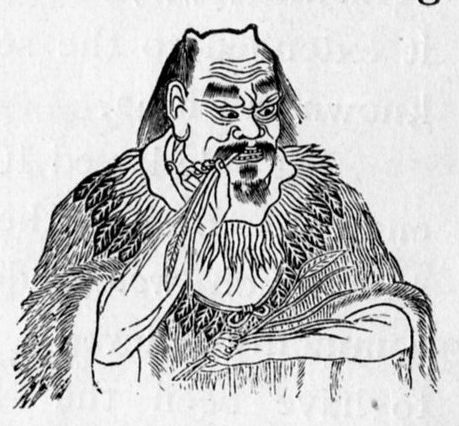
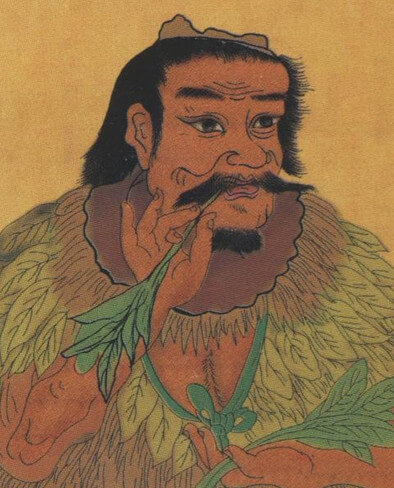
Thần Nông Đế Viêm / Yan Di / Flame Di/ 帝 炎 / Đế Viêm
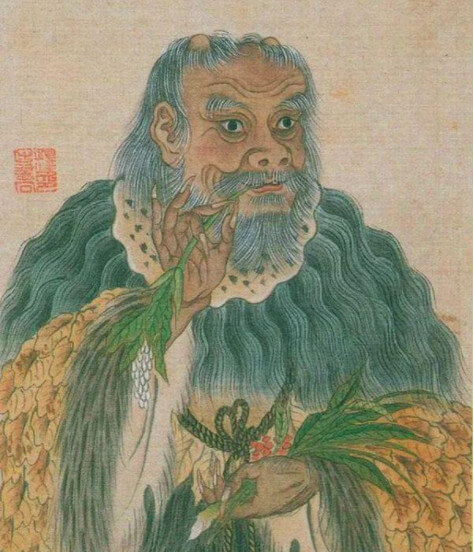

Thần Nông (phồn thể: 神農, giản thể: 神农) (3220 TCN—3080 TCN), còn được gọi là Thần Nông thị (神農氏), Khôi Ngôi thị (魁隗氏), Liên Sơn thị (連山氏), Liệt Sơn thị (列山氏), Tắc thần (稷神), thường được biết với tên gọi Viêm Đế (炎帝).
Thần Nông được xem là thủy tổ của người Việt.
Trong Đại Việt Sử ký Toàn thư, phần lời tựa của Ngô Sĩ Liên chép: "Nước Đại Việt ở phía nam Ngũ Lĩnh, thế là trời đã phân chia giới hạn Nam–Bắc. Thủy tổ của ta là dòng dõi họ Thần Nông[1], thế là trời sinh chân chúa, có thể cùng với Bắc triều mỗi bên làm đế một phương".
Theo Đại Việt sử ký toàn thư:
"Vua Đế Minh là cháu ba đời của Thần Nông, đi tuần thú phương Nam, đến núi Ngũ Lĩnh (nay thuộc tỉnh Hồ Nam, Trung quốc), gặp một nàng tiên, lấy nhau đẻ ra người con tên là Lộc Tục. Sau Đế Minh truyền ngôi lại cho con trưởng là Đế Nghi làm vua phương Bắc (từ núi Ngũ Lĩnh về phía Bắc), phong cho Lộc Tục làm vua phương Nam (từ núi Ngũ Lĩnh về phía Nam), xưng là Kinh Dương Vương, quốc hiệu là Xích Quỷ. Kinh Dương Vương làm vua Xích Quỷ vào năm Nhâm Tuất 2897 TCN, lấy con gái Động Đình Hồ quân (còn có tên là Thần Long) là Long nữ sinh ra Sùng Lãm, nối ngôi làm vua, xưng là Lạc Long Quân. Lạc Long Quân lấy con gái vua Đế Lai (con của Đế Nghi), tên là Âu Cơ, sinh một lần trăm người con trai. Một hôm, Lạc Long Quân bảo Âu Cơ rằng: "Ta là giống rồng, nàng là giống tiên, thủy hỏa khắc nhau, chung hợp thật khó". Bèn từ biệt nhau, chia 50 con theo mẹ về núi, 50 con theo cha về ở miền biển (có bản chép là về Nam Hải), phong cho con trưởng làm Hùng Vương, nối ngôi vua."
Lễ Thần Nông
Lễ Thần Nông tức là lễ tế vua Thần Nông để cầu mong được mùa và nghề nông phát đạt. Trên các quyển lịch cổ hàng năm, người ta thường vẽ một mục đồng dắt một con trâu. Mục đồng tức là vua Thần Nông, còn con trâu tượng trưng cho nghề nông.
Hình mục đồng cũng như con trâu thay đổi hàng năm tùy theo sự ước đoán của Khâm thiên giám về mùa màng năm đó sẽ tốt hay xấu.
Năm nào được coi là được mùa, Thần Nông có giày dép chỉnh tề, còn năm nào mùa màng bị coi là kém, Thần Nông có vẻ như vội vàng hấp tấp nên chỉ đi giày một chân. Con trâu được đổi màu tùy theo hành của mỗi năm, nó có thể có một trong 5 màu vàng, đen, trắng, xanh, đỏ đúng với các hành Thổ, Thủy, Kim, Mộc, Hỏa. Thời phong kiến, hàng năm đều có tục tế và rước Thần Nông tại triều đình cũng như ở các địa phương.
Lễ tế Thần Nông hàng năm cử hành vào ngày Lập xuân, bởi vậy nên lễ tế Thần Nông còn được gọi là Tế xuân.
Theo chỉ dụ của Minh Mạng, hàng năm sau tiết Đông chí, tòa Khâm thiên giám phải lo sửa soạn việc tế Thần Nông. Các quan cùng nhau họp để nặn trâu và tượng Thần Nông.
Trước ngày lập xuân hai ngày, tại gần cửa thành Đông Ba (ngày nay là cửa chính Đông), các quan Khâm thiên giám cho lập một cái Đài hướng đông. Trâu và tượng Thần Nông cũng được đưa tới lưu tại phủ Thừa Thiên để ngày hôm sau các quan trong phủ mới rước từ phủ tới Đài. Các quan vận lễ phục, có quân lính mang gươm giáo, tàn lọng, cờ quạt theo hầu.
Tới Đài thì một lễ đơn giản được cử hành, ngụ ý trình với Thổ Công về sự hiện diện của tượng Thần Nông và trâu. Sau đó, trâu và tượng Thần Nông lại được khiêng về kho cất. Hôm tế xuân, tượng và trâu lại được rước ra Đài, nhưng lần này đi rước là các quan bộ Lễ và các quan phủ Thừa Thiên.
Khi đám rước đi qua cung vua, một viên thái giám vào tâu để vua biết. Sau đó, đám rước lại tiếp tục đi và khi đi qua bộ Lễ, một viên quan đánh vào mông trâu ba roi, có ý thôi thúc trâu phải làm việc.
Tới Đài, các quan làm lễ tế Thần Nông theo như nghi lễ các cuộc tế khác. Tế Thần Nông xong, trâu và tượng Thần Nông được quân lính mang đi chôn sau buổi lễ.
Tại các tỉnh, trong ngày Lập xuân cũng có lễ tế Thần Nông và lễ cũng được sửa soạn từ sau ngày Đông chí. Các quan tỉnh phụ trách việc hành lễ. Trâu và tượng Thần Nông cũng được đem chôn. Người Dao Tuyển, để cảm tạ công ơn và cầu xin cho mùa màng bội thu, nhà nhà hạnh phúc thì lễ hội ngày 6 tháng 6 âm lịch là ngày cúng Thần Nông lớn nhất trong năm. Ngoài ra họ còn thờ cúng Thần Nông vào các ngày 1 tháng 1 âm lịch và 9 tháng 9 âm lịch hàng năm.
Theo Đế vương thế kỷ và Sử Ký - Bổ Tam Hoàng bản kỷ thì Thần Nông thị có chín người lần lượt làm vua:
1- Đế Viêm
2- Đế Lâm Khôi (帝临魁) tức đế Đồi (con Viêm đế)
3- Đế Thừa (帝承) con Đế Lâm Khôi
4- Đế Minh (帝明) con Đế Thừa
5- Đế Trực (帝直) con Đế Minh
6- Đế Ly (帝釐) tức Đế Nghi (con Đế Trực - sách Thông Giám Ngoại Kỷ nói là con Đế Minh mà không có đời Đế Trực)
7- Đế Ai (帝哀) tức Đế Lai (con Đế Ly/Nghi)
8 Đế Khắc (帝克) con Đế Ai/Đế Lai
9 Đế Du Võng (帝榆罔) con Đế Khắc
Thị Tộc Thần Nông không không phải là một nhân vật duy nhất, mà là một gia tộc liên tục từng thống trị.
Sau 520 năm trị vì thì gia tộc Thần Nông bị suy yếu, bị Huangdi Huân Viên đánh bại. Đế Lai bị chêt trong trận Banquan và Đế Du Võng bị mât ngôi đế về gia tộc Xuanyuan. Huangdi đã chiến đấu chống lại con cháu Yandi (Viêm Đế Thần Nông) trong trận Banquan, sau đó Huangdi Huân Viên chiến đấu với Chiyou trong khu vực Zhuolu, Huangdi Huân Viên đã đánh bại vị tướng Chiyou, một viên tướng soái của Đế Minh dòng dõi Thần Nông.
Theo Sách Nghi lễ của nhà Hán thì, Hoàng đế Yan (Đế Viêm Thần Nông) là hoàng đế đầu tiên hy sinh vào mùa hè, và hy sinh cùng lúc với Zhu Rong và Thần bếp [16]."Hoài Nam Tử" tin rằng Hoàng đế Yan (Đế Viêm) đã phát minh ra lửa, vì vậy ông được các thế hệ sau coi là thần bếp.
Shennong clan. The Shennong clan is not a single character, but a continuous clan that once ruled the East Asia land.
During the time of Huangdi, the Shennong clan weakened and was invasion by the Xuanyuan clan to Huangdi.
In the same record, Huangdi fought against Yandi in the battle of Banquan, and then, Huangdi fought with Chiyou in the field of Zhuolu, thus defeating the Shennong clan.
Emperor Yan was the first emperor who sacrificed in summer, and sacrificed at the same time as Zhu Rong and the Kitchen God [16]. "Huainanzi" believes that Emperor Yan invented fire with named "Viêm Đế" / Yan di so he was regarded as the kitchen god by later generations [17].
1. Lai lịch:
– Tên gọi đế Du Võng (帝榆罔)
2. Gia đình và hôn nhân
– Ông nội là Đế Ai/Đế Lai.
– Bố là Đế Khắc.
3. Cuộc đời và sự nghiệp
– Vị vua thứ 9 của Thần Nông thị trong tiền sử người tộc Việt.
Theo Thông giám ngoại kỷ thì là vị vua thứ 8.
– Thời kỳ cuối của nguyên thủy bộ lạc, tù trưởng hay thủ lĩnh cai quản, chống lại những bộ tộc khác đến chiếm đất.
– Trước tình hình rối ren, quân chủ tộc Cửu Lê nghinh chiến với Công Tôn Huân Viên khi ông khởi binh chiếm vùng Trong Nguồn (Trung Nguyên), Tộc Cửu Lê bị thất trận. Lúc ấy Công Tôn Hiên Viên thắng trận lớn trong trận Trác Lộc năm , nên Đế Du Võng bị bưộc phải thoái vị . Chấm dứt 520 năm dòng họ Thần Nông cai quản vùng đất Trong Nguồn (Trung Nguyên) Thủ đô đóng ở Sơn Đông và căn hoa địa núi Thái Sơn.

Truyền Thuyết Về Viêm Đế Thần Nông
https://youtu.be/PuoOCk8Jp5c
Giai Thoại Thủy Tổ Người Việt LỘC TỤC Con Cháu Họ Thần Nông Vị Vua Khai Sáng Ra Nước Xích Quỷ triều đại Hồng Bàng
https://youtu.be/GeHVuCwTGm8
| Tên gọi | Ghi chú |
|---|---|
| Thần Nông (神農) | Tên lúc sinh ra là Khương Thạch Niên (姜石年) |
| Lâm Khôi (臨魁) | |
| Thừa (承) | |
| Minh (明) | Cha của Kinh Dương Vương Lộc Tục [11] |
| Trực (直) hay Đế Nghi (宜). | |
| Ly (釐) hay Đế Lai (來) hoặc Khắc (克) | Tư Mã Trinh xếp Đế Khắc sau Đế Ai. Các sách khác không xếp Khắc là vua. Đế Lai là cha của Âu Cơ huyền sử Việt Nam.[11] |
| Ai (哀) hay Đế Lý (里) hoặc Đế Cư (居) | |
| Du Võng (榆罔) hay Du Cương (揄岡) | Bị Hoàng Đế đánh bại tại trận Phản Tuyền? |
Phả hệ
Phả hệ lấy theo Thông giám tục biên, Sử toản thông yếu, Độc thư kỉ sổ lược, Đại Việt Sử ký toàn thư.[11][12][13][14]
| Phả hệ Viêm Đế Thần Nông thị | ||||||||||||||||||||||||||||||||||||||||||||||||||||||||||||||||||||||||||||||||||||||||||||||||||||||||||||||||||||||||||||||||||||||||||||||||||||||||||||||||||||||||||||||||||||||||||||||||||||||||||||||||||||||||||||||||||||||||||||||||||||||||||||||||||||||||||||||||||||||||||||||||||||||||||||||||||||||||||||||||||||||||||||||||||||||||||||||||||||||||||||||||||||||||||||||||||||||||||||||||||||||||||||||||||||||||||||||||||||||||||||||||||||||||||||||||||||||||||||||||||||||||||||||||||||||||||||||||||||||||||||||||||||||||||||||||||||||||||||||||||||||||||||||||||||||||||||||||||||||||||||||||||||||
|---|---|---|---|---|---|---|---|---|---|---|---|---|---|---|---|---|---|---|---|---|---|---|---|---|---|---|---|---|---|---|---|---|---|---|---|---|---|---|---|---|---|---|---|---|---|---|---|---|---|---|---|---|---|---|---|---|---|---|---|---|---|---|---|---|---|---|---|---|---|---|---|---|---|---|---|---|---|---|---|---|---|---|---|---|---|---|---|---|---|---|---|---|---|---|---|---|---|---|---|---|---|---|---|---|---|---|---|---|---|---|---|---|---|---|---|---|---|---|---|---|---|---|---|---|---|---|---|---|---|---|---|---|---|---|---|---|---|---|---|---|---|---|---|---|---|---|---|---|---|---|---|---|---|---|---|---|---|---|---|---|---|---|---|---|---|---|---|---|---|---|---|---|---|---|---|---|---|---|---|---|---|---|---|---|---|---|---|---|---|---|---|---|---|---|---|---|---|---|---|---|---|---|---|---|---|---|---|---|---|---|---|---|---|---|---|---|---|---|---|---|---|---|---|---|---|---|---|---|---|---|---|---|---|---|---|---|---|---|---|---|---|---|---|---|---|---|---|---|---|---|---|---|---|---|---|---|---|---|---|---|---|---|---|---|---|---|---|---|---|---|---|---|---|---|---|---|---|---|---|---|---|---|---|---|---|---|---|---|---|---|---|---|---|---|---|---|---|---|---|---|---|---|---|---|---|---|---|---|---|---|---|---|---|---|---|---|---|---|---|---|---|---|---|---|---|---|---|---|---|---|---|---|---|---|---|---|---|---|---|---|---|---|---|---|---|---|---|---|---|---|---|---|---|---|---|---|---|---|---|---|---|---|---|---|---|---|---|---|---|---|---|---|---|---|---|---|---|---|---|---|---|---|---|---|---|---|---|---|---|---|---|---|---|---|---|---|---|---|---|---|---|---|---|---|---|---|---|---|---|---|---|---|---|---|---|---|---|---|---|---|---|---|---|---|---|---|---|---|---|---|---|---|---|---|---|---|---|---|---|---|---|---|---|---|---|---|---|---|---|---|---|---|---|---|---|---|---|---|---|---|---|---|---|---|---|---|---|---|---|---|---|---|---|---|---|---|---|---|---|---|---|---|---|---|---|---|---|---|---|---|---|---|---|---|---|---|---|---|---|---|---|---|---|---|---|---|---|---|---|---|---|---|---|---|---|---|---|---|---|---|---|---|---|---|---|---|---|---|---|---|---|---|---|---|---|---|---|---|---|---|---|---|---|---|---|---|---|---|---|---|---|---|---|---|---|---|---|---|---|---|---|---|---|---|---|---|---|---|---|---|---|---|---|---|---|---|---|---|---|---|---|---|---|---|---|---|---|---|---|---|---|---|---|---|---|---|---|---|---|---|---|---|---|---|---|---|---|---|---|---|---|---|---|---|
******
| ||||||||||||||||||||||||||||||||||||||||||||||||||||||||||||||||||||||||||||||||||||||||||||||||||||||||||||||||||||||||||||||||||||||||||||||||||||||||||||||||||||||||||||||||||||||||||||||||||||||||||||||||||||||||||||||||||||||||||||||||||||||||||||||||||||||||||||||||||||||||||||||||||||||||||||||||||||||||||||||||||||||||||||||||||||||||||||||||||||||||||||||||||||||||||||||||||||||||||||||||||||||||||||||||||||||||||||||||||||||||||||||||||||||||||||||||||||||||||||||||||||||||||||||||||||||||||||||||||||||||||||||||||||||||||||||||||||||||||||||||||||||||||||||||||||||||||||||||||||||||||||||||||||||
| Tên gọi | Ghi chú |
|---|---|
| Đế Viêm (帝 炎) | |
| Viêm Cư (炎 居) | Còn được biết đến như là Trụ (柱) |
| Tiết Tịnh (節並) | |
| Hí Khí (戲器) | |
| Chúc Dung (祝融) | |
| Cộng Công (共工) | |
| Thuật Khí (術器) | |
| Hậu Thổ (后土) | Em trai Thuật Khí |
| Ế Minh (噎鳴) | Con Hậu Thổ |
| Tuế Thập (歳十) |
Trồng lúa
..............................................................
| Name | Notes |
|---|---|
| Shennong / Thần Nông 神農 | Born Jiang Shinian 姜石年 |
| Linkui / Đế Lâm Khôi / 臨魁 | |
| Cheng / Đế Thừa /承 | |
| Ming / Đế Minh / 明 | Father of Loc Tuc in Vietnamese mythography |
| Zhi / Đế Nghi / 直 | |
| Li / Đế Lai / 釐 or Ke 克 | Sima Zhen puts Ke between Ai and Yuwang |
| Ai / Đế Lai 哀 | Father of Au Co |
| Yuwang / Đế Du Võng 榆罔 | Defeated by Yellow Emperor at Banquan / |
-------------------------------------
Vào thời Chiến Quốc, nhà nước Văn Lang tan rã, một số thủ lĩnh khu vực thành lập những nhà nước của người Việt như Ngô, Việt, Sở…
Có hai giải thích về danh xưng Hùng Vương:
- Một là dòng dõi họ Hùng Vương nước Sở,
- Hai là Lạc Vương vua của dân Lạc Việt.
Sách Sử Ký – thiên Sở Thế gia viết rằng người Sở là dân Man (Sở Man), vua Sở nhận mình là dân Man Di. Man là chữ người Hạ gọi dân miền Nam không phải là người Trung Nguyên.
Những khai quật khảo cổ ở vùng Kinh Sở gần đây cũng cho thấy rằng thực ra cư dân tối cổ ở vùng Kinh Sở có nguồn gốc Tam Miêu, một dân tộc thuộc nhóm Bách Việt. Đây có thể là nhóm Âu Việt ở phía Tây nên còn gọi là tộc Tây Âu, để phân biệt với Đông Âu là tộc Âu Việt phía Đông, tức vùng Mân – Đài (Phúc Kiến). Tộc Tây Âu, theo các nhà dân tộc học, có thể là tổ tiên các tộc H’mông, Lào, Miến, Thái… hiện nay, ít nhiều cũng có cùng huyết thống người Việt Nam cổ.
Đặc biệt là quý tộc Sở cổ đều có họ Hùng (熊 – con gấu) là vua Sở là Hùng Vương, phải chăng có liên hệ gì đó đến Hùng Vương ở Việt Nam, chỉ khác chữ Hán viết 雄 – hùng mạnh, trong cổ sử của Tàu thì không tìm thấy ghi Hùng Vương 雄 này, có lẽ đây là do các nhà Nho Việt Nam viết lại Hùng Vương = 雄 – hùng mạnh sau này!).
Đến thời Khuất Nguyên, rồi sau đó là lúc Sở diệt Việt phía Đông, thì Sở đã biến thành dân Hạ Trung Nguyên phần nào đó, và Ngô – Việt là quá trình đồng hóa thứ hai, tiến hành thông qua nước Sở. Như vậy, ta có thể nói là -- Ngô – Việt đã bị Sở hóa thì đúng hơn là Ngô – Việt hấp thụ văn hóa của Sở nhiều hơn của văn hóa Hán.
Thần Nông và con cháu của ông đã góp phần vào một số thành công kinh tế xã hội khiến họ tự phong mình là di (帝; 'hoàng đế'), chứ không phải là hou/Hậu (侯; 'chúa tể'), như trong trường hợp của các tù trưởng bộ lạc du mục.
Nguốn gốc của văn hóa Việt Nam là Thần Nông, nhưng bây giờ bị Trung Quốc cũng tự xưng nguồn gốc của họ ngoài Hoàng Đế ra, còn bao gồm Thần Nông nữa. Việt Nam là nền văn minh rực rỡ thừa kế Thần Nông duy nhất. Trung quốc tự xưng tổ tiên của mình là bao gồm Thần Nông, đây là một hành vi ăn cắp văn hóa Việt Nam.
.............................................................
Shennong
Shennong (神農), variously translated as "Divine Farmer" or "Divine Husbandman", born Jiang Shinian (姜石年), was a mythological Yue ruler known as the first Yan Emperor who has become a deity in Vietnamese folk religion. He is venerated as a culture hero in Vietnam. In Vietnamese he is referred to as Thần Nông.
Shennong has at times been counted amongst the Three Sovereigns (also known as "Three Kings" or "Three Patrons"), a group of ancient deities or deified kings of prehistoric China. Shennong has been thought to have taught the ancient Chinese not only their practices of agriculture, but also the use of herbal drugs.[1] Shennong was credited with various inventions: these include the hoe, plow (both leisi (耒耜) style and the plowshare), axe, digging wells, agricultural irrigation, preserving stored seeds by using boiled horse urine, the weekly farmers market, the Yue calendar (especially the division into the 24 jieqi or solar terms), and to have refined the therapeutic understanding of taking pulse measurements, acupuncture, and moxibustion, and to have instituted the harvest thanksgiving ceremony (zhaji (蜡祭) sacrificial rite, later known as the laji (腊祭) rite).[2]
"Shennong" can also be taken to refer to his people, the Shennong-shi ( 神農氏; pinyin: Shénnóngshì; lit. 'Shennong Clan').
Shennong taught humans the use of the plow, aspects of basic agriculture, and the use of medicinal plants. Possibly influenced by the Yan Emperor mythos or the use of slash-and-burn agriculture,[3] Shennong was a god of burning wind. He was also sometimes said to be a progenitor to, or to have had as one of his ministers, Chiyou (and like him, was ox-headed, sharp-horned, bronze-foreheaded, and iron-skulled).[3]
Shennong is also thought to be the father of the Huang Emperor (黃帝) who carried on the secrets of medicine, immortality, and making gold.[4] According to the eighth century AD historian Sima Zhen's commentary to the second century BC Shiji (or, Records of the Grand Historian), Shennong is said to be an ancestor, or a patriarch, of the ancient forebears of the Yue/Viet.
----------------------------
Các vị Hùng Vương nước Văn Lang
- 陸陽王(Kinh Dương Vương),即涇陽王
- 雄賢王(Hùng Hiển Vương),即貉龍君
- 雄國王(Hùng Quốc Vương)雄麟
- 雄曄王(Hùng Diệp Vương)
- 雄犧王(Hùng Hy Vương)
- 雄暉王(Hùng Huy Vương)
- 雄昭王(Hùng Chiêu Vương)
- 雄暐王(Hùng Vi Vương)
- 雄定王(Hùng Định Vương)
- 雄曦王(Hùng Nghi Vương)
- 雄楨王(Hùng Trinh Vương)
- 雄武王(Hùng Vũ Vương)
- 雄越王(Hùng Việt Vương)
- 雄英王(Hùng Anh Vương)
- 雄朝王(Hùng Triệu Vương)
- 雄造王(Hùng Tạo Vương)
- 雄毅王(Hùng Nghi Vương)
- 雄璿王(Hùng Tuyên Vương)
Hùng Vương Thế 襲統 trị的傳說 Năm mươi con trai của Cơ Cơ sống ở Phong Châu, đẩy "hùng vương giả" (< a href="/wiki/%E8%B6%8A%E5%8D%97%E8%AA%9E" class="mw-redirect" title="Việt語"> Việt 語: Hùng Vương),並使用「文 lang"(
Việt語: Văn Lang) 國號。 [7] .[6] Sau đó, Yanxin đã > .
Chú ý: "雄犧王" và "雄曦王" tuy đều đọc là "Hùng Hi Vương" nhưng chữ "hi" trong hai tên gọi này khác nhau về tự dạng và ý nghĩa.
Nước Sở tính từ đời Dục Hùng tới đời Xương Bình quân bị Tần diệt năm 223 TCN gồm có 46 vua. Nước Sở được lập lại cuối thời Tần, truyền được 5 vua nữa, tổng cộng 51 vua. Dưới đây là bảng liệt kê các vị vua nước Sở (theo Sử ký)
...
Đời vua
Vương hiệu
Chữ Hán Nôm
Năm sinh
Năm mất
Ghi chú
Thượng Tổ
Kinh Dương Vương
涇陽王
2919 TCN[12]
2792 TCN
Húy là Lộc Tục (祿續).
Thái Tổ
Lạc Long Quân
駱龍君
~2825 TCN
Không rõ
Hiệu là Lạc Long Quân (駱龍君 hoặc 雒龍君 hoặc 貉龍君). Húy là Sùng Lãm (崇纜).
1
Hùng Đức Vương
雄德王
Không rõ
...
2
Hùng Hiền vương
雄賢王
...
3
Hùng Lân vương
雄麟王
4
Hùng Diệp vương
雄曄王
5
Hùng Hi vương
雄犧王
Phần bên trái chữ "hi" 犧 là bộ "ngưu" 牛
6
Hùng Huy vương
雄暉王
7
Hùng Chiêu vương
雄昭王
8
Hùng Vĩ vương
雄暐王
9
Hùng Định vương
雄定王
10
Hùng Hi vương
雄曦王
Phần bên trái chữ "hi" 曦 là bộ "nhật" 日
11
Hùng Trinh vương
雄楨王
12
Hùng Vũ vương
雄武王
13
Hùng Việt vương
雄越王
14
Hùng Anh vương
雄英王
15
Hùng Triêu vương
雄朝王
16
Hùng Tạo vương
雄造王
17
Hùng Nghị vương
雄毅王
18
Hùng Duệ vương
雄睿王
258 TCN
Thứ tự (thế hệ)
Thụy hiệu
Tên húy
Thời gian ở ngôi
Số năm
Quan hệ với vua trước
Ghi chú
1 (1)
Sở Dục Hùng
Dục Hùng
thầy của Chu Văn vương
2 (2)
Sở Hùng Lệ
Hùng Lệ/Mị Lệ
con Dục Hùng
3 (3)
Sở Hùng Cuồng
Hùng Cuồng/Mị Cuồng
con Hùng Lệ
4 (4)
Sở Hùng Dịch
Hùng Dịch (thụ phong ở đất Kinh)
con Hùng Cuồng
5 (5)
Sở Hùng Ngải
Hùng Ngải/Mị Ngải
con Hùng Dịch
6 (6)
Sở Hùng Đán
Hùng Đán/Mị Đán
con Hùng Ngải
7 (7)
Sở Hùng Thắng
Hùng Thắng/Mị Thắng
con Hùng Đán
8 (7)
Sở Hùng Dương
Hùng Dương/Mị Dương
em Hùng Thắng
9 (8)
Sở Hùng Cừ
Hùng Cừ/Mị Cừ
con Hùng Dương
10 (9)
Sở Hùng Chí
Hùng Chí/Mị Chí/Hùng Chí Hồng
con Hùng Cừ
11 (9)
Sở Hùng Duyên
Hùng Duyên/Mị Duyên/Chấp Tì
?-848 TCN
em Hùng Chí
12 (10)
Sở Hùng Dũng
Hùng Dũng/Mị Dũng
747 TCN-838 TCN
10
con Hùng Duyên
13 (10)
Sở Hùng Nghiêm
Hùng Nghiêm/Mị Nguyên
837 TCN-828 TCN
10
em Hùng Dũng
14 (11)
Sở Hùng Sương
Hùng Sương/Mị Sương/Bá Sương
827 TCN - 822 TCN
6
con Hùng Nghiêm
15 (11)
Sở Hùng Tuân
Hùng Tuân/Mị Tuân/Quý Tuân
821 TCN - 800 TCN
22
em Hùng Sương
giành ngôi với hai anh
16 (12)
Sở Hùng Ngạc
Hùng Ngạc/Mị Ngạc
799 TCN - 791 TCN
9
con Hùng Tuấn
17 (12)
Sở Nhược Ngao
Hùng Nghi (Mị Nghi)
790 TCN - 764 TCN
27
em Hùng Ngạc
18 (13)
Sở Tiêu Ngao
Hùng Khảm/Mị Khảm
763 TCN - 758 TCN
6
con Nhược Ngao
19 (14)
Sở Phần Mạo/Sở Lệ vương
Hùng Thuận/Mị Thuận
757 TCN - 741 TCN
17
con Tiêu Ngao
20 (15)
Sở Vũ vương
Hùng Thông/Mị Thông
740 TCN - Tháng 3/690 TCN
51
con Phần Mạo
21 (16)
Sở Văn vương
Hùng Xi/Mị Xi
689 TCN - 6/675 TCN TCN
15
con Vũ vương
22 (17)
Sở Đổ Ngao
Hùng Gian/Mị Gian
674 TCN - 672 TCN
3
con Văn vương
bị giết
23 (17)
Sở Thành vương
Hùng Uẩn/Mị Uẩn
671 TCN - Tháng 10/626 TCN
46
em Đổ Ngao
tự sát
24 (18)
Sở Mục vương
Hùng Thương /Mị Thương
625 TCN - 614 TCN
12
con Mục vương
25 (19)
Sở Trang vương
Hùng Lữ (Mị Lữ)
613 TCN - 591 TCN
23
con Mục vương
26 (20)
Sở Cung vương
Hùng Thẩm (Mị Thẩm)
590 TCN - 560 TCN
31
con Trang vương
27 (21)
Sở Khang vương
Hùng Chiêu/Mị Chiêu
559 TCN - Tháng 9/545 TCN
15
con trưởng Cung vương
28 (22)
Sở Giáp Ngao
Hùng Viên (Mị Viên)
544 TCN - 541 TCN
4
con Khang vương
bị giết
29 (21)
Sở Linh vương
Hùng Vi (Mị Vi)
540 TCN - 529 TCN
12
con Cung vương
bị giết
30 (21)
Sở vương Bỉ/Sở Ti Ngao
Hùng Bỉ/Mị Bỉ
529 TCN
1
em Linh vương
tự sát
31 (21)
Sở Bình vương
Hùng Khí Tật/Hùng Cư
528 TCN - Tháng 9/516 TCN
13
em Bỉ
32 (22)
Sở Chiêu vương
Hùng (Mị) Trân/Chẩn
515 TCN - Tháng 7/489 TCN
27
con Bình vương
33 (23)
Sở Huệ vương
Hùng Chương (Mị Chương)
488 TCN - 432 TCN[54]
57
con Chiêu vương
34 (24)
Sở Giản vương
Hùng Trung (Mị Trung)
431 TCN - 408 TCN
24
con Huệ vương
35 (25)
Sở Thanh vương
Hùng Đương (Mị Đương)
407 TCN - 402 TCN
6
con Giản vương
bị giết
36 (26)
Sở Điệu vương
Hùng Nghi (Mị Nghi)
401 TCN - 381 TCN
21
con Thanh vương
bị bắn vào thây
37 (27)
Sở Túc vương
Hùng Tang (Mị Tang)
380 TCN - 370 TCN
11
con Điệu vương
38 (27)
Sở Tuyên vương
Hùng/Mị Lương Phu
369 TCN - 340 TCN
30
em Túc vương
39 (28)
Sở Uy vương
Hùng Thương/Mị Thương
339 TCN - 329 TCN
11
con Tuyên vương
40 (29)
Sở Hoài vương
Hùng Hòe (Mị Hòe)
328 TCN - 299 TCN
30
con Uy vương
bị giam ở Tần
41 (30)
Sở Tương vương
Hùng Hoành (Mị Hoành)
298 TCN - 263 TCN
36
con Hoài vương
42 (31)
Sở Khảo Liệt vương
Hùng Nguyên/Mị Nguyên
262 TCN - 238 TCN
25
con Tương vương
43 (32)
Sở U vương
Hùng Hãn/Mị Hãn
237 TCN - 228 TCN
10
con Khảo Liệt vương
44 (32)
Sở Ai vương
Hùng Do (Mị Do)
228
1
em U vương
bị giết
45 (32)
Sở vương Phụ Sô
Hùng Phụ Sô/Mị Phụ Sô
227 TCN - 223 TCN
5
anh Ai vương
bị bắt
46 (32)
Xương Bình quân
Hùng Khải (Mị Khải)
223 TCN
1
anh Phụ Sô
tử trận
47
Tương Cương
209 TCN
1
bị giết
48
Sở Ẩn vương
Trần Thắng
209 - 208 TCN
2
khởi nghĩa nông dân
bị giết
49
Sở Giả vương
Cảnh Câu/Mị Câu
208 TCN
1
con cháu nước Sở
bị giết
50
Sở Nghĩa Đế
Hùng Tâm/Mị Tâm
208 TCN - 206 TCN
3
dòng dõi vua Sở
bị giết
51
Sở Bá vương
Hạng Vũ/Hạng Tịch
206 TCN - 202 TCN
5
tự tử
/span>

1

Đế Viêm Thần Nông
Đế Viêm (tiếng Hán: 炎帝) hay Hỏa Đức Vương/Đức Vương Hỏa (火德王)[1] là một vị vua cổ đại huyền thoại của người Việt cổ vào thời kỳ tiền triều đại. Học thuật hiện đại đã xác định núi Dương Đầu ngay phía bắc Bảo Kê trong tỉnh Thiểm Tây là quê hương và lãnh thổ của ông.[2]
Một cuộc tranh luận kéo dài đã tồn tại về việc liệu Viêm Đế có phải là nhân vật huyền thoại Thần Nông hay không. Một hội thảo học thuật được tổ chức tại Trung Quốc vào năm 2004 đã đạt được sự đồng thuận chung rằng Viêm Đế và Thần Nông là một người.[3] Một khả năng khác là thuật ngữ "Hỏa Đức Vương" là một tước hiệu, được nắm giữ theo kế vị triều đại của các lãnh chúa bộ lạc, với Thần Nông được biết đến với tên gọi Viêm Đế có lẽ sau khi đã qua đời. Theo đó, thuật ngữ các "Hỏa Đức Vương" nói chung sẽ chính xác hơn. Sự kế vị của các vị Hỏa Đức Vương này, từ Thần Nông - vị Hỏa Đức Vương đầu tiên - cho đến thời điểm vị Hỏa Đức Vương cuối cùng là Đế Du Võng bị Hoàng Đế đánh bại, khoảng 500-530 năm.[1][4]

Không có ghi chép thành văn nào được biết là tồn tại từ thời trị vì của Viêm Đế. Tuy nhiên, ông và Thần Nông được nhắc đến trong nhiều tác phẩm kinh điển của tộc Việt cổ đại. Viêm theo nghĩa đen có nghĩa là "lửa", ngụ ý rằng người dân của Viêm Đế có thể coi biểu tượng lửa như các vật tổ bộ lạc của họ. Ngô Quốc Trinh
(吳國楨, Wu K. C.) phỏng đoán rằng danh xưng này có thể liên quan đến việc sử dụng lửa để đốt ruộng nương trong nông nghiệp kiểu đốt rừng làm nương rẫy.[4]
Trong mọi trường hợp, có vẻ như những cải tiến nông nghiệp của Thần Nông và hậu duệ của ông đã góp phần vào một số thành công kinh tế-xã hội, làm họ tự phong mình là đế (帝), thay vì là hầu (侯) như trong trường hợp của các thủ lĩnh các bộ lạc nhỏ hơn.
Vào thời điểm này, dường như mới chỉ có những khởi đầu thô sơ của chữ viết, và để duy trì việc ghi chép thì một hệ thống các dây thắt nút (có lẽ tương tự như quipu ở Nam Mỹ) đã được sử dụng.[5] Tả truyện ghi lại rằng vào năm 525 TCN các hậu duệ của Viêm Đế được công nhận là những bậc thầy về lửa từ lâu và đã sử dụng lửa trong họ tên của họ.[6] Viêm Đế cũng được coi là "Hoàng đế của phương Nam".[7]
Sụp đổsửa
Vị Viêm Đế cuối cùng đã kết thúc triều đại của mình trong trận đánh thứ ba trong chuỗi ba trận chiến, được gọi là trận Phản Tuyền. Vị trí chính xác của trận chiến này vẫn còn tranh cãi giữa các nhà sử học hiện đại, do nhiều địa điểm sử dụng cùng một tên gọi ở các thời điểm khác nhau trong lịch sử. Các ứng cử viên có thể bao gồm huyện Trác Lộc và huyện Hoài Lai ở Trương Gia Khẩu, tỉnh Hà Bắc; quận Diên Khánh ở Bắc Kinh; huyện Phù Câu ở Chu Khẩu, tỉnh Hà Nam, và quận Diêm Hồ ở Vận Thành, tỉnh Sơn Tây.
Con cháu Đế Viêm vừa mới phải rút lui trước cuộc xâm lăng trong thời gian ngay trước đó của các lực lượng của Xi Vưu thì đã xảy ra xung đột lãnh thổ với các bộ tộc Hữu Hùng láng giềng do Hoàng Đế lãnh đạo. Con cháu Đế Viêm là Đế Du Võng bị đánh bại sau ba trận chiến liên tiếp và đầu hàng Huân Viên Hoàng Đế, người tự xưng là cộng chủ (共主).
Hoàng Đế đã gom hai bộ lạc thành một liên minh mới - bộ lạc Viêm Hoàng. Dưới sự lãnh đạo của Hoàng Đế, đã tham chiến để đánh bại Xi Vưu Xi Vưu tướng soái của Đế Minhtrong trận Trác Lộc.
Sau khi Xi Vưu, vị tướng soái của Đế Minh bị bắt và bị giết, cùng với Đế Lai bị tử trận trong trận Trác Lộc. Hiên Viên Hoàng Đế thắng lớn, Sau đó Hoàng Đế ông thiết lập sự thống trị của họ ở Trung vùng đất Trung Nguyên (Trong Nguồn) nước Xích Thần của Đế Nghi, chấm dứt 520 năm trị vì của con cháu Thần Nông Đế Viêm.
Tính lịch sử ]
Trận Phản Tuyền được Tư Mã Thiên coi như một sự kiện lịch sử trong Sử ký của ông, đây là điểm chuyển tiếp quan trọng giữa huyền thoại và lịch sử.
Người Hán đã gom hai vị Đế Viêm và Xi Vưu, rồi tự gọi mình là con cháu Viêm-Hoàng hay Viêm - Hoàng tử tôn. Việc ghép hai tên vào là hành động đánh cắp văn hóa con cháu của Thần Nông và cũng là việc san bằng và xóa sổ con cháu Thần Nông.
Viêm Đế trong lịch sử với tước hiệu Hỏa Đức Vương.Trong văn hóa truyền thống

Đế Viêm đều được coi là tổ tiên của Bách Việt văn hóa Lúa Nước. Ngoài ra, truyền thống liên kết một màu nhất định với một triều đại cụ thể có thể đã bắt đầu từ cá cĐức Đế Vương Hỏa.
Danh sách các Đế Viêm / Đức Đế Vương Hỏa
Thuyết về việc Viêm Đế truyền được 8 đời bắt nguồn từ sách chiêm nghiệm tốt xấu Xuân Thu mệnh lịch tự (春秋命歷序) (khuyết danh, thời Hán).[9]
Danh sách phổ biến nhất do Hoàng Phủ Mật (215-282) trong sách Đế vương thế kỷ,[10] Từ Chỉnh (thế kỷ 3) trong sách Tam Ngũ lịch ký (thất truyền, tồn tại vài đoạn trong Thái Bình ngự lãm thời Tống và Nghệ văn loại tụ thời Đường), và Tư Mã Trinh (679-732) trong sách Sử ký tác ẩn:
| Tên gọi | Ghi chú |
|---|---|
| Thần Nông (神農) | Tên lúc sinh ra là Khương Thạch Niên (姜石年) |
| Lâm Khôi (臨魁) | |
| Thừa (承) | |
| Minh (明) | Cha của Kinh Dương Vương Lộc Tục [11] |
| Trực (直) hay Đế Nghi (宜). | |
| Ly (釐) hay Đế Lai (來) hoặc Khắc (克) | Tư Mã Trinh xếp Đế Khắc sau Đế Ai. Các sách khác không xếp Khắc là vua. Đế Lai là cha của Âu Cơ huyền sử Việt Nam.[11] |
| Ai (哀) hay Đế Lý (里) hoặc Đế Cư (居) | |
| Du Võng (榆罔) hay Du Cương (揄岡) | Bị Hoàng Đế đánh bại tại trận Phản Tuyền? |
***********************************
Quý Liên lập ra họ Mi/Mị, còn gọi là Hùng. Quý Liên được xem là tiên tổ của các vua Sở sau này.
Sau Quý Liên sinh Phụ Tự,
Phụ Tự sinh Huyệt Hùng.
Hậu duệ của Huyệt Hùng làm dân thường ở rải rác khắp nhân gian.
Đến đời Dục Hùng ở vào cuối thời kỳ Thương Ân, Dục Hùng từng làm thủ lĩnh của bộ lạc ở phía nam Triều Ca.
Dục Hùng từng có chức vị cao trong nhà Thang/Thương, đó là Thái Sư trong triều nhà Thương và Dục Hùng từng là thầy dạy học của Chu Văn Vương (Vua nước Chu).
Quý Liên lập ra họ Mi/Mị, còn gọi là Hùng. Quý Liên được xem là tiên tổ của các vua Sở sau này.
Sau Quý Liên sinh Phụ Tự,
Phụ Tự sinh Huyệt Hùng.
Hậu duệ của Huyệt Hùng làm dân thường ở rải rác khắp nhân gian.
Đến đời Dục Hùng ở vào cuối thời kỳ Thương Ân, Dục Hùng từng làm thủ lĩnh của bộ lạc ở phía nam Triều Ca.
Dục Hùng từng có chức vị cao trong nhà Thang/Thương, đó là Thái Sư trong triều nhà Thương và Dục Hùng từng là thầy dạy học của Chu Văn Vương (Vua nước Chu).
Yuxiong / Dục Hùng / 鬻熊
1

Đế Viêm Thần Nông
Đế Viêm (tiếng Hán: 炎帝) hay Hỏa Đức Vương/Đức Vương Hỏa (火德王)[1] là một vị vua cổ đại huyền thoại của người Việt cổ vào thời kỳ tiền triều đại. Học thuật hiện đại đã xác định núi Dương Đầu ngay phía bắc Bảo Kê trong tỉnh Thiểm Tây là quê hương và lãnh thổ của ông.[2]
Một cuộc tranh luận kéo dài đã tồn tại về việc liệu Viêm Đế có phải là nhân vật huyền thoại Thần Nông hay không. Một hội thảo học thuật được tổ chức tại Trung Quốc vào năm 2004 đã đạt được sự đồng thuận chung rằng Viêm Đế và Thần Nông là một người.[3] Một khả năng khác là thuật ngữ "Hỏa Đức Vương" là một tước hiệu, được nắm giữ theo kế vị triều đại của các lãnh chúa bộ lạc, với Thần Nông được biết đến với tên gọi Viêm Đế có lẽ sau khi đã qua đời. Theo đó, thuật ngữ các "Hỏa Đức Vương" nói chung sẽ chính xác hơn. Sự kế vị của các vị Hỏa Đức Vương này, từ Thần Nông - vị Hỏa Đức Vương đầu tiên - cho đến thời điểm vị Hỏa Đức Vương cuối cùng là Đế Du Võng bị Hoàng Đế đánh bại, khoảng 500-530 năm.[1][4]
Không có ghi chép thành văn nào được biết là tồn tại từ thời trị vì của Viêm Đế. Tuy nhiên, ông và Thần Nông được nhắc đến trong nhiều tác phẩm kinh điển của tộc Việt cổ đại. Viêm theo nghĩa đen có nghĩa là "lửa", ngụ ý rằng người dân của Viêm Đế có thể coi biểu tượng lửa như các vật tổ bộ lạc của họ. Ngô Quốc Trinh
(吳國楨, Wu K. C.) phỏng đoán rằng danh xưng này có thể liên quan đến việc sử dụng lửa để đốt ruộng nương trong nông nghiệp kiểu đốt rừng làm nương rẫy.[4]
Trong mọi trường hợp, có vẻ như những cải tiến nông nghiệp của Thần Nông và hậu duệ của ông đã góp phần vào một số thành công kinh tế-xã hội, làm họ tự phong mình là đế (帝), thay vì là hầu (侯) như trong trường hợp của các thủ lĩnh các bộ lạc nhỏ hơn.
Vào thời điểm này, dường như mới chỉ có những khởi đầu thô sơ của chữ viết, và để duy trì việc ghi chép thì một hệ thống các dây thắt nút (có lẽ tương tự như quipu ở Nam Mỹ) đã được sử dụng.[5] Tả truyện ghi lại rằng vào năm 525 TCN các hậu duệ của Viêm Đế được công nhận là những bậc thầy về lửa từ lâu và đã sử dụng lửa trong họ tên của họ.[6]Đế Viêm cũng được coi là "Hoàng đế của phương Nam".[7]
Sụp đổsửa
Vị Viêm Đế cuối cùng đã kết thúc triều đại của mình trong trận đánh thứ ba trong chuỗi ba trận chiến, được gọi là trận Phản Tuyền. Vị trí chính xác của trận chiến này vẫn còn tranh cãi giữa các nhà sử học hiện đại, do nhiều địa điểm sử dụng cùng một tên gọi ở các thời điểm khác nhau trong lịch sử. Các ứng cử viên có thể bao gồm huyện Trác Lộc và huyện Hoài Lai ở Trương Gia Khẩu, tỉnh Hà Bắc; quận Diên Khánh ở Bắc Kinh; huyện Phù Câu ở Chu Khẩu, tỉnh Hà Nam, và quận Diêm Hồ ở Vận Thành, tỉnh Sơn Tây.
Con cháu Đế Viêm vừa mới phải rút lui trước cuộc xâm lăng trong thời gian ngay trước đó của các lực lượng của Xi Vưu thì đã xảy ra xung đột lãnh thổ với các bộ tộc Hữu Hùng láng giềng do Hoàng Đế lãnh đạo. Con cháu Đế Viêm là Đế Du Võng bị đánh bại sau ba trận chiến liên tiếp và đầu hàng Huân Viên Hoàng Đế, người tự xưng là cộng chủ (共主).
Hoàng Đế đã gom hai bộ lạc thành một liên minh mới - bộ lạc Viêm Hoàng. Dưới sự lãnh đạo của Hoàng Đế, đã tham chiến để đánh bại Xi Vưu Xi Vưu tướng soái của Đế Minhtrong trận Trác Lộc.
Sau khi Xi Vưu, vị tướng soái của Đế Minh bị bắt và bị giết, cùng với Đế Lai bị tử trận trong trận Trác Lộc. Hiên Viên Hoàng Đế thắng lớn, Sau đó Hoàng Đế ông thiết lập sự thống trị của họ ở Trung vùng đất Trung Nguyên (Trong Nguồn) nước Xích Thần của Đế Nghi, chấm dứt 520 năm trị vì của con cháu Thần Nông Đế Viêm.
Tính lịch sử
Trận Phản Tuyền được Tư Mã Thiên coi như một sự kiện lịch sử trong Sử ký của ông, đây là điểm chuyển tiếp quan trọng giữa huyền thoại và lịch sử.
Người Hán đã gom hai vị Đế Viêm và Xi Vưu, rồi tự gọi mình là con cháu Viêm-Hoàng hay Viêm - Hoàng tử tôn.
Việc ghép hai tên vào (Viêm-Hoàng) là hành động đánh cắp văn hóa con cháu của Thần Nông và cũng là việc cho sự san bằng* dòng dõi Thần Nông:
-- Làm mất 520 năm trị vì của dòng dõi đế Viêm/Yandi)
-- Làm mất tính quan trọng của vai vế Thần Nông và
-- Xóa sổ dòng dõi con cháu Thần Nông.
Viêm Đế đi vào lịch sử với tước hiệu Hỏa Đức Vương.
Trong văn hóa truyền thống
Đế Viêm đều được coi là tổ tiên của Bách Việt văn hóa Lúa Nước. Ngoài ra, truyền thống liên kết một màu nhất định với một triều đại cụ thể có thể đã bắt đầu từ cá cĐức Đế Vương Hỏa.
Danh sách các Đế Viêm / Đức Đế Vương Hỏa
Thuyết về việc Viêm Đế truyền được 8 đời bắt nguồn từ sách chiêm nghiệm tốt xấu Xuân Thu mệnh lịch tự (春秋命歷序) (khuyết danh, thời Hán).[9]

Danh sách phổ biến nhất do Hoàng Phủ Mật (215-282) trong sách Đế vương thế kỷ,[10] Từ Chỉnh (thế kỷ 3) trong sách Tam Ngũ lịch ký (thất truyền, tồn tại vài đoạn trong Thái Bình ngự lãm thời Tống và Nghệ văn loại tụ thời Đường), và Tư Mã Trinh (679-732) trong sách Sử ký tác ẩn:
Nhà Tần / Ts'in cách người Tàu có biến chế hoặc sửa đổi chữ Khoa Đẩu thành chữ Đại Triện (chữ Hán) và sau đó chữ Hán bắt đầu với chữ Đại Triện, tức là chữ Khoa Đẩu sửa đổi dưới thời Chu Tuyên Vương.
| King | Given name | Probable Reign, and line of descent |
|---|---|---|
| Kinh Dương Vương (涇陽王) | Lộc Tục (祿續) | 2879 BC – 2794 BC, Càn line (支乾) |
| Lạc Long Quân (貉龍君) | Sùng Lãm (崇纜) | 2793 BC – 2525 BC, Khảm line (支坎) |
| Hùng Lân vương (雄麟王), Hùng King III | Lân Lang | 2524 – 2253 BC, Cấn line (支艮) |
| Hùng Diệp Vương (雄曄王), Hùng King IV | Bửu Lang | 2252 – 1913 BC, Chấn line (支震) |
| Hùng Hy Vương, Hùng King V | Viên Lang | 1912 – 1713 BC, Tốn line (支巽) |
| Hùng Huy Vương (雄暉王), Hùng King VI | Pháp Hải Lang | 1712 – 1632 BC, Ly line (支離) |
| Hùng Chiêu vương (雄昭王), Hùng King VII | Lang Liêu | 1631 – 1432 BC, Khôn line(支坤) |
| Hùng Vĩ vương (雄暐王) Hùng King VIII | Thừa Vân Lang | 1431 – 1332 BC, Đoài line (支兌) |
| Hùng Định vương (雄定王), Hùng King IX | Quân Lang | 1331 – 1252 BC, Giáp line (支甲) |
| Hùng Hi vương (雄曦王), Hùng King X | Hùng Hải Lang | 1251 – 1162 BC, Ất line (支乙) |
| Hùng Trinh Vương (雄楨王), Hùng King XI | Hưng Đức Lang | 1161 – 1055 BC, Bính line (支丙) |
| Hùng Vũ Vương (雄武王), Hùng King XII | Đức Hiền Lang | 1054 – 969 BC, Đinh line (支丁) |
| Hùng Việt Vương (雄越王), Hùng King XIII | Tuấn Lang | 968 – 854 BC, Mậu line (支戊) |
| Hùng Anh Vương (雄英王), Hùng King XIV | Chân Nhân Lang | 853 – 755 BC, Kỷ line (支己) |
| Hùng Triệu Vương (雄朝王), Hùng King XV | Cảnh Chiêu Lang | 754 – 661 BC, Canh line (支庚) |
| Hùng Tạo Vương (雄造王), Hùng King XVI | Đức Quân Lang | 660 – 569 BC, Tân line (支辛) |
| Hùng Nghị Vương(雄毅王), Hùng King XVII | Bảo Quân Lang | 568 – 409 BC, Nhâm line (支壬) |
| Hùng Duệ Vương (雄睿王), Hùng King XVIII | Lý Văn Lang or Mai An Tiêm | 408 – 258 BC, Quý line (支癸) |
Hùng Huy Vương (雄暉王),
Hùng King VI
Pháp Hải Lang
1712 – 1632 BC, Ly line (支離)
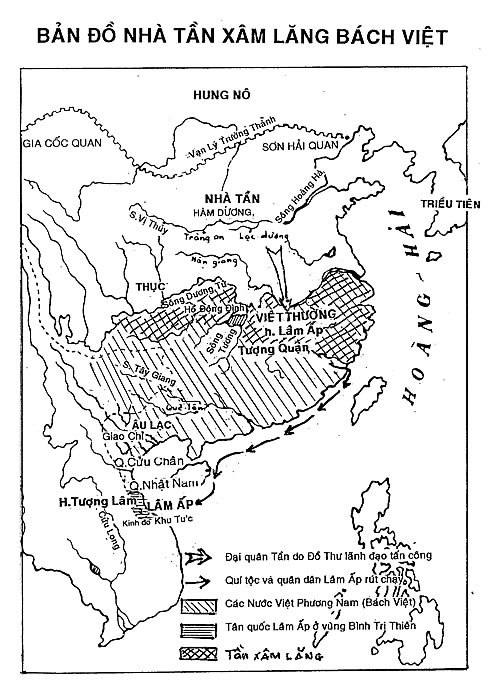
Bản đồ nhà Tần Xâm Lăng Bách Việt
|
|
||||||||||||||||||||||||||||||||||||||||||||||||||||||||||||||||||||||||||||||||||||||||||||||||||||||||||||||||||||||||||||||||||||||||||||||||||||||||||||||||||||||||||||||||||||||||||||||||||||||||||||||||||||||||||||||||||||||||||||||||||||||||||||||||||||||||||||||||||||||||||||||||||||||||||||||||||||||||||||||||||||||||||||||||||||||||||||||||||||||||||||||||||||||||||||||||||||||||||||||||||||||||||||||||||||||||||||||||||||||||||||||||||||||||||||||||||||||||||||||||||||||||||||||||||||||||||||||||||||||||||||||||||||||||||||||||||||||||
|---|---|---|---|---|---|---|---|---|---|---|---|---|---|---|---|---|---|---|---|---|---|---|---|---|---|---|---|---|---|---|---|---|---|---|---|---|---|---|---|---|---|---|---|---|---|---|---|---|---|---|---|---|---|---|---|---|---|---|---|---|---|---|---|---|---|---|---|---|---|---|---|---|---|---|---|---|---|---|---|---|---|---|---|---|---|---|---|---|---|---|---|---|---|---|---|---|---|---|---|---|---|---|---|---|---|---|---|---|---|---|---|---|---|---|---|---|---|---|---|---|---|---|---|---|---|---|---|---|---|---|---|---|---|---|---|---|---|---|---|---|---|---|---|---|---|---|---|---|---|---|---|---|---|---|---|---|---|---|---|---|---|---|---|---|---|---|---|---|---|---|---|---|---|---|---|---|---|---|---|---|---|---|---|---|---|---|---|---|---|---|---|---|---|---|---|---|---|---|---|---|---|---|---|---|---|---|---|---|---|---|---|---|---|---|---|---|---|---|---|---|---|---|---|---|---|---|---|---|---|---|---|---|---|---|---|---|---|---|---|---|---|---|---|---|---|---|---|---|---|---|---|---|---|---|---|---|---|---|---|---|---|---|---|---|---|---|---|---|---|---|---|---|---|---|---|---|---|---|---|---|---|---|---|---|---|---|---|---|---|---|---|---|---|---|---|---|---|---|---|---|---|---|---|---|---|---|---|---|---|---|---|---|---|---|---|---|---|---|---|---|---|---|---|---|---|---|---|---|---|---|---|---|---|---|---|---|---|---|---|---|---|---|---|---|---|---|---|---|---|---|---|---|---|---|---|---|---|---|---|---|---|---|---|---|---|---|---|---|---|---|---|---|---|---|---|---|---|---|---|---|---|---|---|---|---|---|---|---|---|---|---|---|---|---|---|---|---|---|---|---|---|---|---|---|---|---|---|---|---|---|---|---|---|---|---|---|---|---|---|---|---|---|---|---|---|---|---|---|---|---|---|---|---|---|---|---|---|---|---|---|---|---|---|---|---|---|---|---|---|---|---|---|---|---|---|---|---|---|---|---|---|---|---|---|---|---|---|---|---|---|---|---|---|---|---|---|---|---|---|---|---|---|---|---|---|---|---|---|---|---|---|---|---|---|---|---|---|---|---|---|---|---|---|---|---|---|---|---|---|---|---|---|---|---|---|---|---|---|---|---|---|---|---|---|---|---|---|---|---|---|---|---|---|---|---|---|---|---|---|---|---|---|---|---|---|---|---|---|---|---|---|---|
| ||||||||||||||||||||||||||||||||||||||||||||||||||||||||||||||||||||||||||||||||||||||||||||||||||||||||||||||||||||||||||||||||||||||||||||||||||||||||||||||||||||||||||||||||||||||||||||||||||||||||||||||||||||||||||||||||||||||||||||||||||||||||||||||||||||||||||||||||||||||||||||||||||||||||||||||||||||||||||||||||||||||||||||||||||||||||||||||||||||||||||||||||||||||||||||||||||||||||||||||||||||||||||||||||||||||||||||||||||||||||||||||||||||||||||||||||||||||||||||||||||||||||||||||||||||||||||||||||||||||||||||||||||||||||||||||||||||||||
|
2
|
|
|||||||||||||||||||||||||||||||||||||||||||||||||||||||||||||||||||||||||||||||||||||||||||||||||||||||||||||||||||||||||||||||||||||||||||||||||||||||||||||||||||||||||||||||||||||||||||||||||||||||||||||||||||||||||||||||||||||||||||||||||||||||||||||||||||||||||||||||||||||||||||||||||||||||||||||||||||||||||||||||||||||||||||||||||||||||||||||||||||||||||||||||||||||||||||||||||||||||||||||||||||||||||||||||||||||||||||||||||||||||||||||||||||||||||||||||||||||||||||||||||||||||||||||||||||||||||||||||||||||||||||||||||||||||||||||||||||||||||||||||||||||||||||||||||||||||||||||||||||||||||||||||||||||||||||||||||||||||||||||||||||||||||||||||||||||||||||||||||||||||||||||||||||||||||||||||||||||||||||||||||||||||||||||||||||||||||||||||||||||||||||||||||||||||||||||||||||||||||||||||||||||||||||||||||||||||||||||||||||||||||||||||||||||||||||||||||||||||||||||||||||||||||||||||||||||||||||||||||||||||||||||||||||||||||||||||||||||||||||||||||||||||||||||||||||||||||||||||||||||||
|---|---|---|---|---|---|---|---|---|---|---|---|---|---|---|---|---|---|---|---|---|---|---|---|---|---|---|---|---|---|---|---|---|---|---|---|---|---|---|---|---|---|---|---|---|---|---|---|---|---|---|---|---|---|---|---|---|---|---|---|---|---|---|---|---|---|---|---|---|---|---|---|---|---|---|---|---|---|---|---|---|---|---|---|---|---|---|---|---|---|---|---|---|---|---|---|---|---|---|---|---|---|---|---|---|---|---|---|---|---|---|---|---|---|---|---|---|---|---|---|---|---|---|---|---|---|---|---|---|---|---|---|---|---|---|---|---|---|---|---|---|---|---|---|---|---|---|---|---|---|---|---|---|---|---|---|---|---|---|---|---|---|---|---|---|---|---|---|---|---|---|---|---|---|---|---|---|---|---|---|---|---|---|---|---|---|---|---|---|---|---|---|---|---|---|---|---|---|---|---|---|---|---|---|---|---|---|---|---|---|---|---|---|---|---|---|---|---|---|---|---|---|---|---|---|---|---|---|---|---|---|---|---|---|---|---|---|---|---|---|---|---|---|---|---|---|---|---|---|---|---|---|---|---|---|---|---|---|---|---|---|---|---|---|---|---|---|---|---|---|---|---|---|---|---|---|---|---|---|---|---|---|---|---|---|---|---|---|---|---|---|---|---|---|---|---|---|---|---|---|---|---|---|---|---|---|---|---|---|---|---|---|---|---|---|---|---|---|---|---|---|---|---|---|---|---|---|---|---|---|---|---|---|---|---|---|---|---|---|---|---|---|---|---|---|---|---|---|---|---|---|---|---|---|---|---|---|---|---|---|---|---|---|---|---|---|---|---|---|---|---|---|---|---|---|---|---|---|---|---|---|---|---|---|---|---|---|---|---|---|---|---|---|---|---|---|---|---|---|---|---|---|---|---|---|---|---|---|---|---|---|---|---|---|---|---|---|---|---|---|---|---|---|---|---|---|---|---|---|---|---|---|---|---|---|---|---|---|---|---|---|---|---|---|---|---|---|---|---|---|---|---|---|---|---|---|---|---|---|---|---|---|---|---|---|---|---|---|---|---|---|---|---|---|---|---|---|---|---|---|---|---|---|---|---|---|---|---|---|---|---|---|---|---|---|---|---|---|---|---|---|---|---|---|---|---|---|---|---|---|---|---|---|---|---|---|---|---|---|---|---|---|---|---|---|---|---|---|---|---|---|---|---|---|---|---|---|---|---|---|---|---|---|---|---|---|---|---|---|---|---|---|---|---|---|---|---|---|---|---|---|---|---|---|---|---|---|---|---|---|---|---|---|---|---|---|---|---|---|---|---|---|---|---|---|---|---|---|---|---|---|---|---|---|---|---|---|---|---|---|---|---|---|---|---|---|---|---|---|---|---|---|---|---|---|---|---|---|---|---|---|---|---|---|---|---|---|---|---|---|---|---|---|---|---|---|---|---|---|---|---|---|---|---|---|---|---|---|---|---|---|---|---|---|---|---|---|---|---|---|---|---|---|---|---|---|---|---|---|---|---|---|---|---|---|---|---|---|---|---|---|---|---|---|---|---|---|---|---|---|---|---|---|---|---|---|---|---|---|---|---|---|---|---|---|---|---|---|---|---|---|---|---|---|---|---|---|---|---|---|---|---|---|---|---|---|---|---|---|---|---|---|---|---|---|---|---|---|---|---|---|---|---|---|---|---|---|---|---|---|---|---|---|---|---|---|---|---|---|---|---|---|---|---|---|---|---|---|---|---|---|---|---|---|---|---|---|---|---|---|---|---|---|---|---|---|---|---|---|---|---|---|---|---|---|---|---|---|---|---|---|---|---|---|---|---|---|---|---|---|---|---|---|---|---|---|---|---|---|---|---|---|---|---|---|---|---|---|---|---|---|---|---|---|---|---|---|---|---|---|---|---|---|---|---|---|---|---|---|---|---|---|---|---|---|---|---|---|---|---|---|---|---|---|---|---|---|---|---|---|---|---|---|---|---|---|---|---|---|---|---|---|---|---|---|---|---|---|---|---|---|---|---|---|---|---|---|---|---|---|---|---|---|---|---|---|---|---|---|---|---|---|---|---|---|---|---|---|---|---|---|---|---|---|---|---|---|---|---|---|---|---|---|---|---|---|---|---|---|---|---|---|---|---|---|---|---|---|---|---|---|---|---|---|---|---|---|---|---|---|---|---|---|---|---|---|---|---|---|---|---|---|---|---|---|---|---|---|---|---|---|---|---|---|---|---|---|---|---|---|---|---|---|---|---|---|---|---|---|---|
| |||||||||||||||||||||||||||||||||||||||||||||||||||||||||||||||||||||||||||||||||||||||||||||||||||||||||||||||||||||||||||||||||||||||||||||||||||||||||||||||||||||||||||||||||||||||||||||||||||||||||||||||||||||||||||||||||||||||||||||||||||||||||||||||||||||||||||||||||||||||||||||||||||||||||||||||||||||||||||||||||||||||||||||||||||||||||||||||||||||||||||||||||||||||||||||||||||||||||||||||||||||||||||||||||||||||||||||||||||||||||||||||||||||||||||||||||||||||||||||||||||||||||||||||||||||||||||||||||||||||||||||||||||||||||||||||||||||||||||||||||||||||||||||||||||||||||||||||||||||||||||||||||||||||||||||||||||||||||||||||||||||||||||||||||||||||||||||||||||||||||||||||||||||||||||||||||||||||||||||||||||||||||||||||||||||||||||||||||||||||||||||||||||||||||||||||||||||||||||||||||||||||||||||||||||||||||||||||||||||||||||||||||||||||||||||||||||||||||||||||||||||||||||||||||||||||||||||||||||||||||||||||||||||||||||||||||||||||||||||||||||||||||||||||||||||||||||||||||||||||

Sunday, March 5, 2023
Tham dự VABA việt cộng
1:30:41 Hiệp Hội Doanh Nhân Việt Nam ở nước ngoài (hải ngoại) = ông bà có ký tên trong danh sách có trách nhiệm thi hành = David Dương chỉ là một thành viên trong hội VABĂ. Nghĩa là hiệp hội VABA này là do Việt Cộng tạo ra, ông David Dương chỉ là thành Viên. Xin các dân cử dân biểu lưu ý. Hiệp Hội Doanh Nhân VABA Việt Nam ở nước ngoài tạo ra ở bên Việt Nam. Hiệp Hội Doanh Nhân VABA Việt Nam ở nước ngoài không phải do ông David Dương tạo ra mà ông chỉ là thành viên trong hội này thôi. 1:36:16 Victor Dương là em trai của ông David Dương.
Bàn Luận Với Youtuber Canada Phil Đồng Về VinFast, VinHome...
https://www.youtube.com/live/IfCLQHGsPhw
Phân tích sâu tiệc do VN Airlines tài trợ
https://youtu.be/GdXXHZ-2KSI
Làm sáng tỏ vấn đề các Dân Cử, youtuber đi tham dự tiệc của Việt nam airline và Vinfast bảo trợ
https://www.youtube.com/live/VQQ4HA1BCfs
Hiệp hội VABA này là do Việt C tạo ra, ông David Dương chỉ là thành Viên. Xin các dân cử dân biểu lưu ý. Hiệp Hội Doanh Nhân VABA Việt Nam ở nước ngoài tạo ra ở bên Việt Nam. Hiệp Hội Doanh Nhân VABA Việt Nam ở nước ngoài không phải do ông David Dương tạo ra mà ông chỉ là thành viên trong hội này thôi. Ông David Dương có thể làm cho ta hiểu lầm ông là người lập ra hiệp hội VABA hội doanh nhân. Mất chốt mập mờ là ở đây. Hình như người ta cố ý đẩy doanh nhân Việt Nam trong nước dính vào với nhóm dân biểu chính quyền người Việt hải ngoại
HIỂU BIẾT VỂ LỰC LƯỢNG ĐẶC NHIỆM ẢNH HƯỞNG NƯỚC NGOÀI
https://www.youtube.com/live/egFOyDGbqaE
1:30:41 Hiệp Hội Doanh Nhân Việt Nam ở nước ngoài (hải ngoại) = ông bà có ký tên trong danh sách có trách nhiệm thi hành = David Dương chỉ là một thành viên trong hội VABĂ. Nghĩa là hiệp hội VABA này là do Việt C tạo ra, ông David Dương chỉ là thành Viên. Xin các dân cử dân biểu lưu ý. Hiệp Hội Doanh Nhân VABA Việt Nam ở nước ngoài tạo ra ở bên Việt Nam. Hiệp Hội Doanh Nhân VABA Việt Nam ở nước ngoài không phải do ông David Dương tạo ra mà ông chỉ là thành viên trong hội này thôi. 1:36:16 Victor Dương là em trai của ông David Dương.
Hiệp hội VABA này là do Việt Cộng tạo ra, ông David Dương chỉ là thành Viên. Xin các dân cử dân biểu lưu ý. Hiệp Hội Doanh Nhân VABA Việt Nam ở nước ngoài tạo ra ở bên Việt Nam. Hiệp Hội Doanh Nhân VABA Việt Nam ở nước ngoài không phải do ông David Dương tạo ra mà ông chỉ là thành viên trong hội này thôi. Ông David Dương có thể làm cho ta hiểu lầm ông là người lập ra hiệp hội VABA hội doanh nhân. Mấu chốt là ở đây làm mập mờ. Hình như người ta cố ý đẩy doanh nhân Việt Nam trong nước dính vào với nhóm dân biểu chính quyền người Việt hải ngoại
Sự kiện VABA
- Ai gạt ai. Ai lừa ai. Sự thật như thế nào
Làm sáng tỏ vấn đề!
https://www.youtube.com/live/fEA0eXIErYc
Có nên ủng hộ phe cộng sản/Việt cộng để bãi nhiệm các Dân Cử hay không? Cái bẫy gài ra nhằm mục đích gì?
https://www.youtube.com/live/wA53u4d9-nE
Chủ Tịch Hạ Viện Mỹ Từ Chối Thăm U. kraine
https://www.youtube.com/live/X0b8oG4Ye9Y
California hua toàn tập, Chuyện Trụ Cờ và "Bảng Số Cờ" Tại sao?
https://www.youtube.com/live/LdvVrdbGqGk
Luật Sư Trần Thái Văn tuyên bố tranh cử chức Giám Sát Viên Quận Cam
https://www.youtube.com/live/1LFvVKqdJlQ
"Sử Trung Quốc" của Nguyễn Hiến Lê có viết một đoạn về "Tổ chức hành chánh" của Nhà Tần (221-206) (Thời của Pháp Gia) (trang 116) như sau:
"Ông bắt vương tộc sáu nước mà ông đã chiếm, cả gia đình các đại thần của họ nữa phải dời lại Hàm Dương, kinh đô của Tần, như vậy để họ bị bứng hết rễ, không sao ngóc đầu lên được. Đất đai của họ đem phát mãi hết.
Ông chia đất của sáu nước thành quận, huyên. Thời Thương Ưởng, Tần đã chia làm nhiều huyện, mỗi huyện là một đơn vị hành chánh trực thuộc triều đình, có một viên quan thu thuế. Sau lập thêm quận ở những miền mới chiếm được. Vì muốn thống nhất quốc gia, vua Tần bắt huyện tùy thuộc quận, mỗi quận gồm nhiều huyện, viên chủ quận là một võ quan. Sau tổ chức lại, mỗi quận gồm một quận thủ coi về dân sự, và một quận úy coi về quân sự. Ở trên cả, có một viên giám ngự sử chỉ chịu trách nhiệm với nhà vua, như vậy không một viên nào chuyên quyền được, không thể thành một ông chúa như trong thời phong kiến. Thời Tần Thủy Hoàng, Trung Hoa chia làm 36 quận tất cả, cũng như tỉnh ngày nay."
Như vậy "Úy Đà" có thể là một "võ tướng" theo cách tổ chức của nhà Tần?
Nói như vậy không có nghĩa là Tần Thủy Hoàng phái võ tướng Triệu Đà đi cùng với Nhâm Ngao qua đánh Bách Việt (không có sử liệu rõ ràng nói về việc này, chỉ có thể căn cứ vào "thư tịch" lịch sử là bức thư của Triệu Đà gửi Hán Văn Đế năm 179 tr. TL, nói:
"Lão phu ở đất Việt 49 năm rồi" để xác nhận Triệu Đà nguyên là một tướng nhà Triệu, văn võ kiêm toàn, phải bôn tẩu qua lánh nạn ở đất Bách Việt, được Nhâm Ngao cho giữ giữ chức Huyện Úy... (Phải chăng chức huyện úy là do Quận Úy được quyền tuyển dụng và chỉ cần trình báo về triều đình?
Chỉ có chức Quận thủ và Quận Úy mới do triều đình bổ nhậm, vì thế Nhâm ngao trước khi chết đã phải "làm chiếu giả" để Triệu Đà thay mình làm Quận Úy?)
Nhân việc tổ chức hành chánh của nhà Tần, chúng ta cũng phải suy nghĩ về cách tổ chức hành chánh của Nhà Triệu sau khi đã sát nhập nước Âu Lạc vào Nam Việt. Triệu Đà có bắt chước cách tổ chức hành chánh của nhà Tần hay không?
Sử chỉ cho biết rất sơ lược: "Quí Mão, năm thứ 10/198 TCN/, (Hán Cao Đế năm thứ 9), vua sai hai sứ coi giữ hai quận Giao Chỉ và Cửu Chân.(ĐVSKTT, tr. 142). Vai trò của hai sứ thần này có phải là vai trò của "Quận thủ" như tổ chức hành chánh của Tần Thủy Hoàng không?
Ngoài hai quận Giao Chỉ và Cửu Chân (thuộc Âu Lạc), Nhà Triệu còn các quận khác như Nam Hải, Quế Lâm (?), Tượng quận, Mân Việt (?) tổ chức hành chánh ra sao?
----------------------------
Chu Cốc Thành trong Trung Hoa Thông Sử viết:
Viêm Tộc (Việt Tộc) đã có mặt khắp Trung quốc thời Cổ Đại trước khi các tộc khác tràn vào, nên Viêm Tộc kể như chữ đầu tiên. Khi Viêm Tộc định cư rồi thì Hãn Tộc còn sống đời sống du mục tại Tân Cương, Thanh Hải, rồi mãi về sau đến đánh chiếm đất của Viêm Tộc và bị Si Vưu lãnh tụ của Viêm Tộc chống cự. Chu Cốc Thành dẫn sách The State của Franz Oppenheimer chứng minh rằng -- từ cổ chí kim dân định cư nông nghiệp luôn luôn có văn cao nhưng võ kém. Sau khi Si Vưu tử trận, Hiên Viên lãnh tụ Du mục chiếm sáu tỉnh lưu vực sông Hoàng Hà mà lập ra nước. Hiên Viên liền phỏng theo cách sinh hoạt của Viêm Tộc mà tổ chức xã hội cho người Hãn - Hạ.
Hạ là một bộ lạc, du mục, gốc Turk lai Mông Cổ, với một nền văn hóa truyền khẩu (không có chữ viết), đến từ Tây Bắc, sống đời sống du mục tại Tân Cương và Thanh Hải.
Mãi về sau mới đánh chiếm đất của Bách Việt kể từ 1600 TCN.
The word 'China' derives from 'Qin,'
Why do we say Qin Shihuangdi was the first unifier of China when China was already unified under the Xia, Shang, and Zhou dynasties?
https://www.quora.com/Why-do-we-say-Qin-Shihuangdi-was-the-first-unifier-of-China-when-China-was-already-unified-under-the-Xia-Shang-and-Zhou-dynasties
《示儿》
China was first unified under Qin dynasty.
For the Xia dynasty, most scholars now consider it mythical. Its kings were more like a warlord of a clan. The territories that Xia dynasty owned were very small as well.
For the Shang dynasty, Shang never ruled every single group of Chinese people. Some only paid tribute to Shang court (Zhou was one of them). You could also realize that at the end of dynasty, many feudal states joined with King Wu of Zhou to destroy Shang.
For the Zhou dynasty, the king of Zhou distributed the lands to many of his followers, officials and aristocrats. He was only a titular leader of northern China. Every state accepted the King of Zhou as a universal ruler. However, the real power within the feudal states were in the dukes’hands. In the western Zhou dynasty, these states followed the King of Zhou’s order, however, in the eastern zhou dynasty, no one cared about the King anymore.
The Zhou also failed to subjugate the Chu tribes (later became the state of Chu) at the south.
Unlike three dynasties above, Qin was the first dynasty that united the entire of Chinese lands at that time into a single, centralized state. There was no feudal states anymore. Every province was governed by a governor sent by the emperor. It was the feat that no dynasty before Qin had ever achieved.
Unlike three dynasties above, Qin was the first dynasty that united the entire of Chinese lands at that time into a single, centralized state.
Robert Leo
· May 7, 2021
Xia dynasty so far hasn’t been proven, we shall say.
Archaeological sites have been found for diverse civilizations to coexist in that period, but without writing it is difficult to understand their relationship with each other. Also even Shang dynasty hasn’t been proven for a century, give it some time for breakthroughs.
I don’t know but the archaeological evidence required to accept other civilizations seem to be of a different standard. For example we mostly still can’t read Egyptian scripts, but somehow their long history have been proven? Because the same system of historians and archaeologists made the discoveries and studies while doubting others they were not involved?
Hu Shi Xiong
· September 21
There were descendant states of xia and shang dynasties during zhou era . Its whether they're what was recorded or a different form altogether
Chico Oliveira
· November 11, 2020
If we take seriously everything "western" scholars say then China didn't even exist until recently while Greeks and Romans were "European" blondes rather than Mediterranean (racially, culturally and geographically)
Irin Yuyanlin · March 2, 2017
Your knowledge about chinese history almost can pretend yourself as a chinese.
Phen Su , Historian Answered Sep 21
Because China has different definitions in different periods China originally referred to the Luoyang area, because Luoyang is located in the geographic center of China, so it is called the Central Kingdom, and the Chinese are also called the Central Plains people.
The three dynasties of Xia, Shang, and Zhou ruled only the Central Plains. Chinese scholars believe that what they have achieved is just the unification of the Central Plains.
As the Central Plains people continue to move around, the scope of China has also become larger. King of Zhou more than one hundred feudal states when he was at most, but these countries gradually became stronger, and many countries even developed their own languages and scripts. At this time, China was more like a federal state, and with the decline of King of Zhou, many big countries engaged in annexation wars, and many small countries destroyed.
The State of Qin became the ultimate winner and established the Qin Dynasty. The Qin State abolished the feudal system and established a centralized power system. The Qin Dynasty also included the North and the South under its rule, which added many ethnic minorities to China, and they merged with the Central Plains to become the Han. Chinese scholars believe that it is the china proper that unified it.
The three dynasties of Yuan, Ming, and Qing unified the greater China. The Qing Dynasty used the Eight Banners system to unite China's nomadic and agricultural peoples, and successfully established a multi-ethnic country. Chinese scholars believe that they unified modern China.
Many people will misunderstand the difference between the Han and chinese due to the modern concept of nation-state. so they believe that the Qin State unified China. Many Western history textbooks also use the Qin Dynasty as a starting point to describe China. but The real China has different definitions in different periods.
Qin Shihuang’s historical importance in terms of unification was emphasized in the 19th century as the result of the awakening of nationalism. On the contrary, he was considered a tyrant (a man with a great achievement at the start but fucked it up in his last days so that his regime collapsed shortly).
There wasn’t a clear sense of so-called “unification of China” for the ancient Chinese because, in their view, feudalism and centralization were not much different as long as the legitimacy and supremacy of the central regime were acknowledged. It’s a bit like centralization and decentralization in a modern sense that America is still America even with the neoliberal reform done by Ronald Reagan to cut this and cut that.
So in the fall of the Ming Dynasty, it was a popular belief that the Zhou Dynasty was a very great example as it was able to last for 800 years with feudalism while no other central state can make up even half of it except for the Han Dynasty.
This only changed since the Chinese entered the 19th century that suddenly Qin Shihuang was the first one to “unite” China. For ancient Chinese, the Xia, Shang, and Zhou were all supreme regimes that “ruled” China. They didn’t give much crap, ideologically, that if it was done by bureaucrats or submissive nobles and elites.
I agree that China was ‘unified’ during Xia, Shang, and Zhou but the situations and results are different. During Xia China turns from the Mongol system of selection of a Khan to hereditary succession, Shang is loosely a hereditary confederation like Xia, and Zhou is hereditary succession plus feudalism in the parsing of the land to sons, relatives, those who help to form the empire, and remainders of the previous dynasty. They did not conquer all opponents just win from the head honcho. Qin is different in the following ways, all opponents are won over by the Qin army, ‘one inch of land, one inch of blood’.
Qin unify the writing, unify the measures such as weight and length, unify the roads, change the government to provincial system with local control appointed by the central government and institute the rule of law (at least theoretically with the Emperor above all). Giving all the bad things that Qin did. The major accomplishment of Qin is that it set up a system of government that China more or less follow till 1911. One can always split hairs and argue on terminology, this is what should historians do to present a different point of view. And that is all we can do to question history to see if we can have a different interpretation. Since we do not exist during that time, we are all colored by our own upbringing and ideology.
Brilliance Lee
· November 25
南宋陆游的《示儿》
死去元知万事空,但悲不见九州同。
王师北定中原日,家祭无忘告乃翁。
—
Confucianism has always had the idea of "great unification".
Jay Liu , I've been told I'm Chinese... Answered May 28, 2015 The key word is "unified".
It's probably more accurate to use the word "centralized". Qin SH's real achievement, as Franny Fukuyama points out, is to have established the world's first centralized, standardized, non-regional centric, national bureaucracy.
He made sure that the Imperial bureaucrats were predominantly not from the regions they worked in. He would also regularly rotated the staff so as to prevent any deep, multi-generational ties with the land. Both the people and the local administrators were to be loyal to the Emperor, and not to each other.
In terms of actual "unification" in the strict sense of the word, that came in the form of language (written only of course) and weights and measures standardization.
Before The Qin Empire, the ruling hierarchy in China was quite like that of Europe in the Middle Ages, where a king divides his land and gives each piece of it to a landlord. Each landlord would also divide his land and give a piece to his inferiors. These landlords would only answer to their immediate superiors. More importantly, each landlord would have complete control of his land, even the king could not much about it. That's why the English landlords could force their king to sign a treaty that restrains the king's power. That's also why the king's power was significantly subdued in the era of "Warring States" of China.
It was Qin Shihuang who broke the system. He eliminated all the states and unified them as an empire, where the emperor alone would own all the land and everybody else could only be his servants. All the land under the heaven belongs to the emperor, who would gift some of his land to some of his servants but he could take it back whenever he feels like it. This is what we call "unification".
The big distinction is that before Qin dynasty, because China was so big (i.e. about a quarter of the size of Europe by Zhou dynasty in ~ 1000 BC), the consensus was that one had to have "kings" to govern each region, and all of the "kings" had to have both civilian and military control of his territory, and only went to see the emperor once every couple of years. The generals who fought for the emperor usually get the hereditary title of "king" and get a region to govern in perpetuity. This is similar to the armed aristocracy in Europe.
When Qin Shihuang conquered all the other kingdoms and united China, he had a big debate with the court officials on whether he needed to appoint "kings" to govern each region as before. He decided to eliminate "kings", and instead, divided China into 36 provinces, with court-appointed officials for civilian administration. He also eliminated the military forces traditionally associated with each region, and gathered all the weapons and destroyed them at the Capital.
The Qin dynasty was short-lived and many of its reformed did not last, but over the next thousand years, it became the consensus of China's emperors that regional kings with their private armies was a recipe for endless civil wars, and thus should not be tolerated.
Yes, federal system died in China at that day
Because there was a tremendous difference between the 2.
The former were like the Holy Roman Empire, where there is a emperor, but he only controlled his own duchy and everything else was controlled by various lords, The Qin was essentially the Empire of France under Napoleon.
Xiaolan Yang · May 28, 2015
Probably, the Chinese people will think Napoleon is a pity, almost completed the final unification of Europe.
Kilpatrick Kirksimmons Answered May 17, 2015
The Xia and Shang actually had relatively limited scopes of influence. They may be described as the first civilizations in what we now call China, but they hardly "unified" it. Just as the Etruscans came before the Romans but it was the Romans who united and came up with the concept of "Italia." The Zhou were a bit more powerful, but most of their history saw their power waning after a brief initial period of dominance.
There was a Zhou emperor right up until the Qin period, but he had about as much power as the Holy Roman Emperor, or the Japanese emperor during the Shogun period. So Shihuangdi and the state of Qin really were the first to unite all of the various Chinese states under one ruler. Including, importantly, the non-Han states of southern China. All previous dynasties were focused entirely in the north.
Jie Guang Liu · May 19, 2015
More like Zhou King. Considering that the domain he actually ruled over was actually pretty small if you think about it.
Tris Nguyen · June 7, 2015
The Zhou kings' royal domains were pretty large when it began, and also the most fertile and prosperous. It became "relatively" small at later stages because:
- The western (and larger) part of the royal domains was lost to the Quanrongs.
The Zhou king afterwards granted the (already lost) lands to the state of Qin on the condition that they reconquer them back by themselves. Thus, the state of Qin (relative large even in its earlier stage) was centred on the former western part of Zhou's royal domains.
- Peripheral vassals (Chu in the south, Qin in the west, Qi in the east, Jin and Yan in the north) conquered lands from barbarians and became larger and more powerful.
Noel Leong
, Keen reader of Chinese historical books
Answered Nov 18
Xia, Shang and Zhou were different from the Qin Dynasty and every dynasty since.
Prior to Qin, the ruler of the dynasty used the “King” title and was referred to as 天下共主 (Common/Universal Ruler of the World). It’s basically like the European Union where the leader of a state, say Germany, is considered as the leader of the Union with the declaration of support by the leader of every state in the Union.
The Universal Ruler only ruled its own state but had the power to command the rulers of other states in any military campaign by the possession of an item/items called the Nine Tripod Cauldron (九鼎), which is a reference to the land of China and a symbol of ruler ship by the mandate of heaven. During those days, the land of China was considered as made up by nine regions or states (州): Yang State (扬州), Jing State (荆州), Liang State (粱州), Xu State (徐州), Yu State (豫州), Yong State (雍州), Qing State (青州), Yan State (兖州) and Yi State (翼州).
The Nine Tripod Cauldron or Jiu Ding was lost after Qin State (秦国) conquered the Zhou State (周国) and confiscated the Jiu Ding. When Qin Shihuang became the first emperor of China, the original Jiu Ding was never seen again and disappeared from history. Hence, no one really know whether there were nine items representing the nine region or just one item engraved with the landmarks of the nine regions. Whatever it is, the Jiu Ding was said to be forged by the founder of the Xia Dynasty, Yu the Great (大禹) who tamed the flooding of the Yellow River, and had been passed from ruler to ruler who commanded the support of rulers of all states comprising the dynasty. Each ruler was a feudal lord who had absolute political, economic and military control over the ares ruled by him. The areas ruled by the Universal Ruler was considered as the capital and power center of the dynasty but the King of the dynasty only ruled the areas under his command and not the other states.
The Qin Dynasty was different in that it was the first dynasty in Chinese history that ruled with a de facto central government. It’s like the European Union becomes a Federation with only one ruler who rule all states. Qin Shihuang assumed the title of “Emperor” and exercised effective control over the whole dynasty and not only the areas surrounding the capital. He “nationalized” taxation, civil service and the military; implemented standardization of writing and units of measurement and ruled the whole empire as a state. The dynasty was divided into administrative region and ruled by nobles (later governors) with limited power. Real power rest with central government who set policies and laws for the entire dynasty. The Jiu Ding was no longer relevant though some emperors, like Wu Zetian, forged their own to symbolize they have the Mandate of Heaven to rule.
Those xia, shang and zhou could be half true and half mythologic, but the point is that, in those eras, the known world of the ancestors of Hua xia people was divided into different kingdoms,
each sectors of these places are governed by their own jerks, those that were NOT immediately unified by Qin Shihuangdi are lucky that they were not discovered by the ancestors of Huaxia people, for those that did, even the Chu state which claimed of itself to be a barbarian state, and thus it doesn’t want any business to do with the civil one(the middle state), it also eventually got targeted and ate up.
, history enthusiast
Answered Jan 19
Because Qin Shihuangdi was the first real historical person that we know of that actually unified China. So much of prior periods is veiled in mystery it’s hard to anchor one’s history on it. With Qin, we have concrete evidence and knowledge of how that state was organize, how people lived, much details of its history, how the Shihuangdi grew up, who his mother and father were etc. As oppose to mythical Yellow emperor who supposedly united China 4600 years ago and who was an actual deity.
-> China already stopped to exist and restored back to the countries Dali, Western Xia, Jin, and Song for several hundreds of years before 1200s and
-> it was the Mongolians that ruled these countries from 1200s to 1300s
In the 1600s the Manchus, who were a different people and from a different country, conquered and ruled China for 300 years until 1900s.
So excluding about 500 years when China either was restored into independent countries or ruled by different countries (Mongolia and the Manchus), China has existed only about 1,500 years, and its existence was not continuous.
Mike Chow
Before Qin, it was more like a loose confederation under a Son of Heaven who had a little more actual power compared to the local lords.
Qin Shihuang introduced the first imperial system which consolidated all power under one roof. The system was used for the next two thousand years with sight modifications.
Because the Xia, Shang, and Zhou dynasties were myths and they did not exist. China was first formed in 22 B.C. after Qin Shihuangdi conquered six other countries (Zhao, Wei, Han, Yan, Qi, and Chu) and formed China. See
Mike Chow , ex-Quoran Answered May 17, 2015
Before Qin, it was more like a loose confederation under a Son of Heaven who had a little more actual power compared to the local lords. Qin Shihuang introduced the first imperial system which consolidated all power under one roof. The system was used for the next two thousand years with sight modifications.
Johnny Bai , I know a little bit. Answered Aug 14, 2015
Because it is the first time that whole China is under one centralised government. Before that China was a federal state, where the high King did not govern the whole country directly, the federal court do not have direct control over the whole country.
Xiaolan Yang , Ningbo,China Answered May 17, 2015
Originally Answered: Why do we say Qin Shihuangdi was the first unifier of China when China was already unified under the Xia, Shang, and Zhou Dynasties? Because before him,is a national system of enfeoffment,have many kings they had their own country.The king is hereditary But,after Qin Shihuang, only one king ,o no ,only one Emperor,all the land occupation by bureaucratic management,They are not hereditary,only be appointed by the Emperor. The former is like Europe,The latter is like Napoleon
Shannon Chen Answered May 24, 2015
Because before Qin unified China, China existed 6 countries at the same time. It's Qin who defeated all of them and became the empire of China.And the Xia ,Shang,and Zhou dynasties' background were differrent from Qin.
Joseph Boyle , lives in California (1988-present) Answered May 27, 2015
I think we think of it that way because so much about China developed during the Warring States period. The total source material on the early eras is much smaller. The Warring States period has been compared to Classical Greece where thought flourished and was abundantly recorded, becoming a canon for following eras.
Alex Yan , B.A. History & Classics, University of Toronto Answered Jul 11, 2015
Under the Hsia, Shang, and Chou Dynasties, China (term used loosely) was unified in that most regional powers recognized a senior ruler in the person of the King (Hsia and Shang) or Son of Heaven (Chou). These regional powers continue to be autonomous and often belligerent with their neighbours; they also signed treaties and formed alliances with each other freely. The senior ruler, aside from enjoying tributes and ritualistic deference from other rulers, did not govern those other states.
Under the Ch'in Dynasty, China was unified under one government and one ruler. His policy became valid throughout the land, instead of being limited to his own state. More precisely, China, which previously consisted of many states, has come under the dominion of one state and her ruler.
Xiao Chen , programmer Answered May 27, 2015
Zhou was feudal while Qin was centralistic.
Zhou was divided to hundreds of small feudal states which were very much autonomous. The feudal royals can have their own armies and laws. The emperor had little power in those states though he had his own direct ruled region. That's why in the East Zhou those states fought and annexed each other and finally even the emperor's direct land were conquered by Qin Kingdom.
Qin was divided to many Jun's and each Jun was further divided to many Xian's. (Both Jun/郡 and Xian/县 are translated to County in English, but in Qin dynasty, Jun was a higher level administrative unit than Xian). The head officer of Jun's and Xian's were named by the central government. Qin dynasty formed the centralistic tradition of China's political system. Dynasty after Qin typical didn't allow a feudal nobility have his own land ruled by its own law. West Han after Qin was a transition: only those nobility from the emperor's family were allowed to own their own feuds.
Joseph Boyle · May 27, 2015
Didn't the early Zhou have more central power?
Xiao Chen · May 28, 2015
nobility had the right of self-governing in both west and east Zhou. however, in west zhou, the emperor had the right of giving out and taking back the feuds. and the emperor also had the right to name 2~3 ministers in each of nobility's feuds to “help“ the governing. those rights were lost when the emporer was no longer the strongest power after too much land were given out and the nobility became stronger by annexed each other.
Gwydion Madawc Williams
Read a lot about history, and note some general patterns.
Answered May 27, 2015
He re-unified it in a form that persisted down to the Revolution of 1911-12. Earlier dynasties had rather different values. The various Warring States had their own cultures and might feasibly have developed into separate traditions, as happened with the heirs of the Roman Empire.
Minh , Complete Annals of Đại Việt
Answered Oct 20
It depends on the successor dynasty.
Son of Heaven, will choose a political history to suit his dynasty.
Thiên tử (chữ Hán: 天子)
The title "Son of Heaven" stems from the concept of the Mandate of Heaven, created by the Zhou dynasty monarchs to justify their having deposed the Shang dynasty. They held that Heaven had revoked its mandate from the Shang and given it to the Zhou in retribution for Shang corruption and misrule. Heaven bestowed the mandate on whomever was most fit to rule. The title held the emperor responsible for the prosperity and security of his people by the threat of taking away his mandate.
"Son of Heaven" was often one of several titles adopted by East Asian monarchs. Emperor Taizong of Tang held the Chinese title, Son of Heaven", alongside the Central Asian title, Tengeri Qaghan ("Tenger Khan", or God-like Emperor), which he had gained after defeating the Tujue.
Japanese monarchs likewise used a second title, tennō (天皇, "Heavenly Emperor"), that, like "Son of Heaven", appealed to the emperor's connection to Heaven. The title carried widespread influence across East Asia as the ancient Han Chinese imperial title, tianzi (天子), "Son of Heaven", was later adopted by the Emperor of Japan during the Asuka period.
Japan sent diplomatic missions to China, then ruled by the Sui dynasty, and formed cultural and commercial ties with China.
Japan's Yamato state modeled its government after the Chinese Confucian imperial bureaucracy. A Japanese mission of 607 CE delivered a message from "the Son of Heaven in the land where the sun rises ... to the Son of Heaven in the land where the sun sets."
But the Japanese emperor's title was less contingent than that of his Chinese counterpart; there was no divine mandate that would punish Japan's emperor for failing to rule justly. The right to rule of the Japanese emperor, descended from the sun goddess Amaterasu, was absolute.
Based on epitaphs dating to the 4th and 5th centuries in medieval Korea, the kingdom of Goguryeo had concepts of Son of Heaven (天帝之子) and independent tianxia.
The rulers of Goryeo used the titles of emperor and Son of Heaven and positioned Goryeo at the center of the Haedong "East of the Sea" tianxia, which encompassed the historical domain of the "Samhan", another name for the Three Kingdoms of Korea.
The title was also adopted in Vietnam, known in Vietnamese as Thiên tử (Chữ Hán: 天子). A divine mandate gave the Vietnamese emperor the right to rule, based not on his lineage but on his competence to govern.
Vietnam's adoption of a Confucian bureaucracy, presided over by Vietnam's Son of Heaven, led to the creation of a Vietnamese tributary system in Southeast Asia, modeled after the Chinese Sinocentric system in East Asia.
The burning of books and burying of scholars (Chinese: 焚書坑儒; pinyin: fénshū kēngrú), also known as burning the books and executing the ru scholars, refers to the purported burning of texts in 213 BCE and live burial of 460 Confucian scholars in 212 BCE by the Chinese emperor Qin Shi Huang of the Qin dynasty. This was alleged to have destroyed philosophical treatises of the Hundred Schools of Thought, with the goal of strengthening the official Qin governing philosophy of Legalism.
Punishment of the scholars
According to the Sima Qian's Records of the Grand Historian (Shiji), after Qin Shi Huangdi, the first emperor of China, unified China in 221 BCE, his chancellor Li Si suggested suppressing intellectual discourse to unify thought and political opinion.
Chancellor Li Si said: "I, your servant, propose that all historians' records other than those of Qin's be burned. With the exception of the academics whose duty includes possessing books, if anyone under heaven has copies of the Shi Jing [Classic of Poetry], the Shujing [Classic of History], or the writings of the hundred schools of philosophy, they shall deliver them (the books) to the governor or the commandant for burning. Anyone who dares to discuss the Shi Jing or the Classic of History shall be publicly executed. Anyone who uses history to criticize the present shall have his family executed. Any official who sees the violations but fails to report them is equally guilty. Anyone who has failed to burn the books after thirty days of this announcement shall be subjected to tattooing and be sent to build the Great Wall. The books that have exemption are those on medicine, divination, agriculture, and forestry. Those who have interest in laws shall instead study from officials."
— Shiji Chapter 6. "The Basic Annals of the First Emperor of Qin" thirty-fourth year (213 BC)
Three categories of books were viewed by Li Si to be most dangerous politically. These were poetry (particularly the Shi Jing), history (Shujing and especially historical records of other states than Qin), and philosophy. The ancient collection of poetry and historical records contained many stories concerning the ancient virtuous rulers. Li Si believed that if the people were to read these works they were likely to invoke the past and become dissatisfied with the present. The reason for opposing various schools of philosophy was that they advocated political ideas often incompatible with the totalitarian regime.
Some of the diversity in terms of points of agreement and even outright divergences in modern evaluations of Wu Zetian can be seen in the following quotes by
modern non-Chinese authors:
"Wu Zetian (690–705) was an extraordinary woman, attractive, exceptionally gifted, politically astute and an excellent judge of men. With single minded determination, she overcame the opposition of the Confucian establishment through her own efforts, unique among palace women by not using her own family. "Her rise to power was steeped in blood..." Ann Paludan "To the horror of traditional Chinese historians, all members of the shih class, the continued success of the T'ang was in large measure due to an ex-concubine who finally usurped the throne itself... Though she was ruthless towards her enemies, the period of her ascendency was a good one for China. Government was sound, no rebellions occurred, abuses in the army and administration were stamped out and Korea was annexed, an achievement no previous Chinese had ever managed." Yong Yap Cotterell and Arthur Cotterell.
• "China's only woman ruler, Empress Wu was a remarkably skilled and able politician, but her murderous and illicit methods of maintaining power gave her a bad reputation among male bureaucrats. It also fostered overstaffing and many kinds of corruption." John King Fairbank
The start of the Cultural Revolution brought huge numbers of Red Guards to Beijing, with all expenses paid by the government, and the railway system was in turmoil. The revolution aimed to destroy the "Four Olds" (i.e., old customs, old culture, old habits, and old ideas) and establish the corresponding "Four News", which could range from changing of names and cutting of hair to the ransacking of homes, vandalizing cultural treasures, and desecrating temples.
: 61–64 In a few years, countless ancient buildings, artifacts, antiques, books, and paintings were destroyed by Red Guards. The status of traditional Chinese culture and institutions within China was also severely damaged as a result of the Cultural Revolution, and the practice of many traditional customs weakened.
The revolution also aimed to "sweep away" all "cow demons and snake spirits", that is, all the class enemies who promoted bourgeois ideas within the party, the government, the army, among the intellectuals, as well as those from an exploitative family background or who belonged to one of the Five Black Categories. Large numbers of people perceived to be "monsters and demons" regardless of guilt or innocence were publicly denounced, humiliated, and beaten. In their revolutionary fervor, students especially the Red Guards denounced their teachers, and children denounced their parents.
: 59–61 Many died through their ill-treatment or committed suicide. In 1968, youths were mobilized to go to the countryside in the Down to the Countryside Movement so they may learn from the peasantry, and the departure of millions from the cities helped end the most violent phase of the Cultural Revolution
Cultural Revolution - Wikipedia
1966–1976 Maoist sociopolitical movement in China Cultural Revolution Duration May 16, 1966 – October 6, 1976 (1966-05-16 – 1976-10-06) (10 years and 143 days) Location People's Republic of China Motive Preserve communism by purging capitalist and traditional elements. Outcome Economic activity halted, historical and cultural material destroyed. Deaths Hundreds of thousands to millions of civilian, Red Guards and military deaths (exact number not known) Property damage Cemetery of Confucius, Temple of Heaven, Ming Tombs Arrests Jiang Qing, Zhang Chunqiao, Yao Wenyuan, and Wang Hongwen arrested aftermath.
The Cultural Revolution, formally known as the Great Proletarian Cultural Revolution, was a sociopolitical movement in China from 1966 until Mao Zedong's death in 1976. Launched by Mao Zedong, Chairman of the Chinese Communist Party (CCP) and founder of the People's Republic of China (PRC), its stated goal was to preserve Chinese communism by purging remnants of capitalist and traditional elements from Chinese society, and to re-impose Mao Zedong Thought (known outside China as Maoism) as the dominant ideology in the PRC.
The Revolution marked Mao's return to the central position of power in China after a period of less radical leadership to recover from the failures of the Great Leap Forward , which caused the Great Chinese Famine (1959–61). However, the Revolution failed to achieve its main goals. [1] Mao charged that bourgeois elements had infiltrated the government and society with the aim of restoring capitalism. Mao called on young people to " bombard the headquarters ", and proclaimed that "to rebel is justified". The youth responded by forming Red Guards and "rebel groups" around the country. A selection of Mao's sayings were compiled into the Little Red Book , which became a sacred text for Mao's personality cult . They held " denunciation rallies " against revisionists regularly, and grab power from local governments and CCP branches, eventually establishing the revolutionary committees in 1967.
The committees often split into rival factions and involved in armed fights known as ' violent struggles ', to which the army had to be sent to restore order. The Cultural Revolution was characterized by violence and chaos. Death toll estimates vary widely, with roughly 250,000 to 20 million people perishing during the Revolution, [2] a number comparable to various disasters in China by death toll. Beginning with the Red August of Beijing , massacres took place nationwide, including the Guangxi Massacre, in which massive cannibalism also occurred; [3] [4] the Inner Mongolia incident ; the Guangdong Massacre ; the Yunnan Massacres; and the Hunan Massacres. Red Guards destroyed historical relics and artifacts , as well as ransacking cultural and religious sites. The 1975 Banqiao Dam failure, one of the world's greatest technological catastrophes, also occurred during the Cultural Revolution. Meanwhile, tens of millions of people w
https://en.wikipedia.org/wiki/Cultural_Revolution?wprov=sfla1
Wu Zetian - Wikipedia
Founding empress, Zhou Dynasty (r. 665–690); empress regnant of Wu Zhou (r. 690–705 Wu Zhao , commonly known as Wu Zetian (17 February 624 [note 8] [note 9] – 26 November 705), [3] [4] alternatively Wu Hou , and during the later Tang dynasty as Tian Hou , was the de facto ruler of the Tang dynasty , as a empress consort , first through her husband the Emperor Gaozong and then as a empress dowager , through her sons the Emperors Zhongzong and Ruizong , from 665 to 690. She subsequently became empress regnant of the Wu Zhou dynasty of China, ruling from 690 to 705. [3] She was the only legitimate female sovereign in the history of China.
Under her 40-year reign, China grew larger, corruption in the court was reduced, its culture and economy were revitalized, and it was recognized as one of the great powers of the world. Wu was the concubine of Emperor Taizong. After his death, she married his successor—his ninth son, Emperor Gaozong, officially becoming Gaozong's huanghou (皇后 ), or empress consort, in 655, although having considerable political power prior to this. After Gaozong's debilitating stroke in 660, Wu Zetian became administrator of the court, a position equal to the emperor's, until 705.
After re-entering the Emperor Gaozong's harem, she clashed with Empress Wang and Consort Xiao to gain the emperor's affection, and eventually expelled and killed them. After her wedding to Gaozong in 655, Empress Wu's rise to power was swift.
A strong, charismatic, cunning, vengeful, ambitious and well-educated woman who enjoyed the absolute interest of her husband, Wu was the most powerful and influential woman at court during a period when the Tang Empire was at the peak of its glory. She was more decisive and proactive than her husband, and she is considered by historians to have been the real power behind the throne during the reign of Emperor Gaozong for more than twenty years until his death. “She was at the helm of the country for long years, her power is no different from that of the emperor.” She was wholly present when the Emperor held court, and even held court independently when the Emperor was unwell.
She was given charge of the Heirloom Seal of the Realm, implying that her perusal and consent were necessary before any document or order received legal validity. Gaozong sought her views on all matters before issuing orders. In the last years of his reign until death, Emperor Gaozong was unable to run the state due to illness, so he delegated his responsibilities to Empress Wu. Wu was granted certain honors and privileges which were not enjoyed by any Chinese empresses before or after. After Gaozong's death, Empress Wu as empress dowager and regent conquered power completely and solely, used absolute power more forcefully and violently than before, and suppressed her overt and covert opponents, and seven years later, she seized the throne in the Zhou dynasty, becoming the only empress regnant in Chinese history. Wu Zetian is depicted in
https://en.wikipedia.org/wiki/Wu_Zetian?wprov=sfla1
Burning of books and burying of scholars - Wikipedia
213–212 BCE philosophical purge in ancient China Qin dynasty Qin Empire in 210 BCE Qin region Outlying regions The burning of books and burying of scholars (Chinese: 焚書坑儒; pinyin: fénshū kēngrú), also known as burning the books and executing the ru scholars, [1] refers to the purported burning of texts in 213 BCE and live burial of 460 Confucian scholars in 212 BCE by the Chinese emperor Qin Shi Huang of the Qin dynasty. This was alleged to have destroyed philosophical treatises of the Hundred Schools of Thought, with the goal of strengthening the official Qin governing philosophy of Legalism.
Modern historians doubt the details of the story, which first appeared more than a century later in the Han Dynasty official Sima Qian 's Records of the Grand Historian. As a court scholar, Sima had every reason to denigrate the previous emperor to flatter his own, and later Confucians did not question the story. As one recent historian put it, their message was, "If you take our life, Heaven will take the life of your dynasty." [2] Modern scholars agree that Qin Shi Huang indeed gathered and destroyed many works that he regarded as incorrect or subversive, but he ordered two copies of each school to be preserved in imperial libraries (some were destroyed in the fighting following the fall of the dynasty). He did have scholars killed, but not by being buried alive, and the victims were not "Confucians", since that school had not yet been formed as such.
Punishment of the scholars [ edit ] According to the Sima Qian 's Records of the Grand Historian (Shiji), after Qin Shi Huangdi, the first emperor of China , unified China in 221 BCE, his chancellor Li Si suggested suppressing intellectual discourse to unify thought and political opinion. Chancellor Li Si said: "I, your servant, propose that all historians' records other than those of Qin 's be burned. With the exception of the academics whose duty includes possessing books, if anyone under heaven has copies of the Shi Jing [Classic of Poetry], the Shujing [Classic of History], or the writings of the hundred schools of philosophy, they shall deliver them (the books) to the governor or the commandant for burning.
Anyone who dares to discuss the Shi Jing or the Classic of History shall be publicly executed. Anyone who uses history to criticize the present shall have his family executed. Any official who sees the violations but fails to report them is equally guilty. Anyone who has failed to burn the books after thirty days of this announcement shall be subjected to tattooing and be sent to build the Great Wall. The books that have exemption are those on medicine, divination, agriculture, and forestry. Those who have interest in laws shall instead study from officials." [a] — Shiji Chapter 6. "The Basic Annals of the First Emperor of Qin" thirty-fourth year (213 BC) Three categories of books were viewed by Li Si to be most dangerous politically.
https://en.wikipedia.org/wiki/Burning_of_books_and_burying_of_scholars?wprov=sfla1
Son of Heaven - Wikipedia
Sacred imperial title of the Chinese emperor Son of Heaven was a title of the King Wu of Zhou and subsequent Chinese sovereigns. Son of Heaven, or Tianzi (Chinese: 天子; pinyin: Tiānzǐ), was the sacred monarchical title of the Chinese sovereign. It originated with the Zhou dynasty and was founded on the political and spiritual doctrine of the Mandate of Heaven . Since the Qin dynasty, the secular imperial title of the Son of Heaven was " Huangdi ". The title, "Son of Heaven", was subsequently adopted by other Sinospheric monarchs to justify their rule. The Son of Heaven was the supreme universal monarch, who ruled tianxia (means "all under heaven"). His status is rendered in English as "ruler of the whole world." [1]
The title, "Son of Heaven", was interpreted literally only in China and Japan , whose monarchs were referred to as demigods, deities, or "living gods", chosen by the gods and goddesses of heaven . [2]
History and adoption [edit] The title "Son of Heaven" stems from the concept of the Mandate of Heaven, created by the Zhou dynasty monarchs to justify their having deposed the Shang dynasty. They held that Heaven had revoked its mandate from the Shang and given it to the Zhou in retribution for Shang corruption and misrule. Heaven bestowed the mandate on whomever was most fit to rule. The title held the monarch responsible for the prosperity and security of his people by the threat of taking away his mandate. [2] "Son of Heaven" was often one of several titles adopted by Sinospheric monarchs. The Emperor Taizong of Tang held the title "Son of Heaven", alongside The title " Tengeri Qaghan " which he had gained after defeating the Eastern Turkic Khaganate. [3]
Japanese monarchs likewise used a second title, tennō (天皇, "Heavenly Emperor"), that, like "Son of Heaven", appealed to the emperor's connection to Heaven. [4]
The title carried widespread influence across East Asia as the ancient Chinese monarchical title, tianzi (天子), "Son of Heaven", was later adopted by the Emperor of Japan during the Asuka period. [5]
Japan sent diplomatic missions to China, then ruled by the Sui dynasty, and formed cultural and commercial ties with China. [6] Japan's Yamato state modeled its government after the Chinese Confucian imperial bureaucracy. A Japanese mission of 607 CE delivered a message from "the Son of Heaven in the land where the sun rises... to the Son of Heaven in the land where the sun sets." [5] But the Japanese emperor's title was less contingent than that of his Chinese counterpart; there was no divine mandate that would punish Japan's emperor for failing to rule justly. The right to rule of the Japanese emperor, descended from the sun goddess Amaterasu, was absolute. [7]
Based on epitaphs dating to the 4th and 5th centuries, Gaogouli had concepts of the Son of Heaven (天帝之子) and tianxia. [8] [9] [10]
The rulers of Goryeo used the titles of emperor and Son of Heaven and positioned Goryeo at the center of the Haed
https://en.wikipedia.org/wiki/Son_of_Heaven?wprov=sfla1
Quincy Bilge , studied Computer Science Answered Nov 28
This is the most stupid question I ever read about China. Qin Emperor was the first unifier because he unified the classes of people from China into only one. 士: combined 100 schools of ideology into one.
others: measurement system like length, weighth, standards of roads, towns, city. It cannot be like this because Xia or Shang let the feudal lords decided those standards and if you move from Shu to Zhao, your trade could be canceled and your 100 square meters garden you bought could only be 50 square feet. After Qin emperor unified them, trading became more fidelity so the foreign traders can trust merchants from any where in China, such the origin of theory that China was from Cin or Qin .
Rob Harris
, Lived in China 7 years; extensively studied their literature Answered Jan 6, 2021
“China” wasn’t unified under either of those dynasties. Neither of them controlled more than roughly what is now Zhejiang Province.
Ada Help , studied History Answered Mar 11, 2016
1. china was very backward at that time, china was a tribe, not a country.
China was the last of the "ancient" civilizations to develop writing. China invented writing about 3500 years ago, Oraclebone - Wikipedia, the free encyclopedia Middle East invented writing 5000 years ago.
China entered Iron age 600 years later than Europe and Near East, At the time, European used iron tools, Chinese used primitive tools. Iron Age - Wikipedia, the free encyclopedia
2. China was enslaved for 2000 years. China were enslaved by Mongol, Manchu, Xianbei, Khitan, Jurchen empires. Genghis Khan's law, Killing a chinese = killing a donkey. Manchus ruled China for 300 years till 1911.
Manchu conquest of China - Wikipedia The population rate was 100,000,000 Chinese VS 1.000.000 Manchus. In WWII, Japan took the Chinese capital and lost only 2000 soldiers. Battle of Nanking - Wikipedia
Second Sino-Japanese War - Wikipedia Nanking Massacre - Wikipedia Russia and USA saved china.
US killed 1 million Japanese soldiers and lost 100,000.
Tianren Tan
, Human Empire history enthusiast and data analyst Answered Sep 21
Pre East Zhou, it was more a tribal alliance system.
East Zhou period, it was a feudal system.
Qin Shihuangdi era, it was the Imperial Dynastic system.
In 221 B.C. Qin conquered the other six other countries: Zhao, Wei, Han, Yan, Qi, and Chu and formed China. That is why throughout China’s history, it is restored back multiple times to its previous countries and nationalities for hundreds of years.
What was before Xia Dynasty in China? Where did the Xia people come from?
Yu-Hsing Chen
, history enthusiast, relatively wide knowledge of world history Answered Mar 6, 2016
Xia is basically the period where legends meet real history, at least, to the extend of our current archaeological findings.
The story of Shiji suggest that before Xia, the people elects their leaders who then pass on their leadership to who he sees worthy (this is probably a tribal confederation setup.)
The two man before Xia's founder Yu was named Yao and Shun, during these times the floods of the yellow river were a significant problem, so Yao appointed a man to organize flood control projects. unfortunately he failed and was exiled, Yao also decide to step down as the leader and passed the baton to Shun.
Shun hires Yu, who was the son of the previous (exiled) engineer, to continue the project, Yu tried a new approach and succeeded, it was a major accomplishment that took decades, upon completion Shun decided to hand the leadership role over to Yu.
Yu founded the Xia dynasty, so it was not a different group of people from before.
5.8K views View 30 upvotes Answer requested by
· March 10, 2016
Rice has been domesticated in China over 10,000 years ago, so the current dating of xia and other sovereign rulers prior may not be correct as it goes beyond that, just wondering if xia or any tribes before that could have established another civilization, could be that Huang Di, Yandi, Shennong lived 10,000 or even 20,000 years ago?
Daniel Walker · August 8, 2020
Rather than pushing back dates of known dynasties and people, I think the answer lies in Shimao. Longshan culture gave birth to the Xia Dynasty and Longshan culture existed long before that dynasty. Shimao is possibly the most significant archaeological find in Chinese history, as it predates the Xia and its architecture is significantly advanced for its time- leading one to conclude that this culture has been advanced for some time. The Xia left no written record and we only know they existed because the Shang Dynasty wrote about them and left a written record, primarily in oracle bones. Despite Chinese history having a long and accurate trove of written records, some people believed the Xia were mythological until archaeology in modern times proved otherwise. As the Xia left no known written account, we can only speculate about what came before, but there is no doubt that a culture as advanced as the Xia and those who built Shimao did not spring up over night. If we could time travel to 10,000 BCE in China, I’m sure we would see quite an advanced society, albeit a more ephemeral one than its dynastic decedents.
Before Xia Dynasty Eastern China was populated by Xia people, which was the eastern branch of the Sino-Tibetan people. Xia(夏) is the ethnicity name of Han Chinese before the rise of Han dynasty in 2th century BC, and it’s still used in modern Tibetan. The pronunciation of 夏:
Old Chinese (6th century BC): gra -> Middle Chinese (7th century AD): ɣɹa -> Mandarin: ɕa (spelled as xia)
The name of Han people in Tibetan:
7th century AD: rgja -> modern Tibetan, Lhasa dialect: ɕa
Male Han Chinese: རྒྱཕོ (ɕa pho, corresponding to “夏夫”)
Female Han Chinese : རྒྱམོ། (ɕa mu, corresponding to “夏母”)
The Hongshan culture in northeast China and Inner Mongolia existed around 7,000 years ago and is the first known Chinese kingdom to work with jade and use dragon motifs. Ruins were first discovered by Japanese archaeologists in the 1930s. According to some interpretations, the Hongshan culture was forced south by sudden desertitification, and ended up mixing with the existing tribes in the Yellow River valley. This also roughly correlates with the legends about the Yellow emperor, whose people fought and eventually merged with the agrarian Yan tribes, at the head of which was Shen Nong (the Divine Farmer) and his ilk.
Ken PW Ong Gwydion Madawc Williams
, Read a lot about history, and note some general patterns. Answered Mar 6, 2016
The Xia dynasty is known from histories written much later, under the Han Dynasty. Unlike the Shang Dynasty, known from the Oracle Bones, there is no direct evidence it ever existed. The Erlitou culture is sometimes identified as the real Xia.
The Han histories has obviously legendary figures before the Xia. Archaeologists find something they call the Longshan culture. The Xia and the others all seem home-grown, perhaps with some cultural influence from Central Asian peoples who knew of the much older civilisation of Mesopotamia. The chariot was definitely transmitted this way. But there is no evidence of outside conquest or migration. A rather small number of people might have trasmitted the ideas and sold their services to existing rulers.
Ken PW Ong · March 10, 2016
Has there been any study to prove that chariot in china transmitted from Mesopotamia?
Upvote Reply Gwydion Madawc Williams · March 11, 2016
The design is similar. Some of the names used look like loanwords.
Upvote Reply Gab Chan , well-read Answered Mar 26, 2016
The Xia Dynasty (夏朝) is considered semi-mythical because there is some archaeological evidence from the Erlitou Culture (二里頭文化) and there are lots of legends. Currently, the Era of God Emperors (三皇五帝) predate the Xia Dynasty. The Norse also have this blurry continuity from their early history to semi-mythical events and figures.
Tommy Chan · March 26, 2016
Sorry for being off-topic, but I just tried reading Quora answers first then the question second... it's quite good fun O.o
Upvote Reply Alfred W Croucher , A diligent student of history and philosophy. Answered Mar 7, 2016
The Chinese people were created by the Yellow Emperor, who invented Chinese medicine, and Shen Nong, who laid down the rules for agriculture. They were on the tail end of the group which came out of Africa around 50,000bc. They intermarried with Dennisovians and Neanderthals a little bit before settling down in the Central China Plains. Some crossed over the Bering Straits about 20,000bc which is why some Indian tribes have similar DNA. They are not related to Peking Man who was from a much earlier group from Homo erectus clan. Definitely not Sapiens. Not even a little bit.
2K views View 5 upvotes Answer requested by Ken PW Ong 5 Add Comment Jone Chou , works at Auditor Answered Mar 6, 2016
Some Chinese historian appoint that, China also has Yu dynasty before Xia. There are three people who names are Yao,Shun and Yu, they are famous in Yu dynasty.
556 views View 1 upvote 1 Add Comment Eric Chan Updated Jun 19, 2020
The Xia dynasty was a myth. It did not exist. There were just tribal people at that time.
Answers that need improvement Joseph Boyle , lives in California (1988-present) Answered Mar 6, 2016
According to historians, Three Sovereigns and Five Emperors Archeologically, see List of Neolithic cultures of China
Add Comment Paul Chen , History Minor in University Answered Jan 10, 2019
There were many neolithic cultures in china before Xia dynasty. Xia dynasty most likely came from Erlitou culture itself.
The earliest of China's Neolithic Proto-writings come from Jiahu,[6] Dadiwan[1] and Damaidi. These date to 5000–6000BC or 8000 years ago. Later on we have: Banpo and Jiangzhai
Banpo pottery symbols
Jiangzhai pottery symbols
Another group of early symbols, which many have compared to Chinese characters, are the Banpo symbols from sites like Banpo, just east of Xi'an in Shaanxi dating from the 5th millennium BCE,[e] and nearby, at Jiangzhai, in Lintong District, from the early 4th millennium BCE. As the Banpo symbols were discovered fairly early (1954–57)[12] and are relatively numerous (with 22 different symbols on 113 sherds),[13] these have been the focus of the most attention. Some scholars have concluded that they are meaningful symbols like clan emblems or signatures which have some of the quality of writing, perhaps being primitive characters,[14] while others have concluded based on comparisons to oracle bone script that some of them are numerals.
Still others feel they may be ownership mark or potters' marks.[19][20][21]
These symbols are considered proto-writing.
Aside from Proto-writing.
Liangzhu Culture (3400–2250 BC)
The culture possessed advanced agriculture, including irrigation, paddy rice cultivation and aquaculture. Houses were often constructed on stilts, on rivers or shorelines.
here is Liangzhu culture pottery:
In this culture, jade was a precious stone that was appreciated by ancient people just as they are today. And recent archaeological findings show these people had complex and advanced water way works that is older than Mesopotamian water works. https://www.dailymail.co.uk/sciencetech/article-5147023/Huge-ancient-Chinese-waterway-found.html
Other neolithic cultures:
18000–7000BC Xianren Cave culture 仙人洞、吊桶环遗址 Wannian County, Shangrao, Jiangxi A 2012 publication in the Science journal, announced that the earliest pottery yet known anywhere in the world was found at this site dating to between 20,000 and 19,000 years before present.
8500–7700 BC Nanzhuangtou culture 南莊頭遺址 Yellow River region in southern Hebei 7500–6100BC Pengtoushan culture 彭頭山文化 Ccentral Yangtze region in northwestern Hunan 7000–5000BC Peiligang culture 裴李崗文化 Yi-Luo river basin valley in Henan
6500–5500Houli culture 後李文化 Shandong 6200–5400Xinglongwa culture 興隆洼文化 Inner Mongolia-Liaoning border Some of the oldest Comb Ceramic artifacts were found in the Xinglongwa culture From examined samples, the average height of male was between 163.8 cm and 168.8 cm, while the average height of female between 153.4 cm – 159.9 cm. Both male and female Xinglongwa individuals showed strong Mongoloid cranial features[1], and are thought to be the distant ancestors of the present-day Tungusic peoples. 6000–5000Kuahuqiao culture 跨湖桥文化 Zhejiang
A very early dugout canoe was revealed; this demonstrates the earliest technology for constructing this type of watercraft in China, and perhaps the world.The earliest domesticated peach was found here. The second oldest remains of peach have been found at Neolithic Tianluoshan site, also in Zhejiang Province.
6000–5500Cishan culture 磁山文化 southern Hebei Over 500 subterranean storage pits were discovered at Cishan. These pits were used to store millet. The largest pits were 5 meters deep and capable of storing up to 1,000 kg (2,205 lb) of millet.
5800–5400Dadiwan culture 大地灣文化 Gansu and western Shaanxi The foundation of a large building, measuring 290 m2 and 420 m2 when including the outer courtyard, was discovered at Dadiwan. The building, known as F901, is described by Chinese archaeologists as a communal meeting hall. The building was built on an elevated rammed earth foundation, which was then layered with burnt clay. 5500–4800Xinle culture 新樂文化 lower Liao River on the Liaodong Peninsula
5400–4500Zhaobaogou culture 趙宝溝文化 Luan River valley in Inner Mongolia and northern Hebei The culture produced sand-tempered, incised pottery vessels with geometric and zoomorphic designs. The culture also produced stone and clay human figurines. 5300–4100Beixin culture 北辛文化 Shandong 5000–4500Hemudu culture 河姆渡文化 Yuyao and Zhoushan, Zhejiang 5000–3000Daxi culture 大溪文化 Three Gorges region
5000–3000Majiabang culture 馬家浜文化Lake Tai area and north of Hangzhou Bay
5000–3000Yangshao culture 仰韶文化 Henan, Shaanxi, and Shanxi
4700–2900Hongshan culture 紅山文化 Inner Mongolia, Liaoning, and Hebei
The representatives of the Hongshan Culture location Niuheliang (6500–5000 BP) identified 3 different Y-chromosome subclades haplotypes: N1 (xN1a, N1c), C and O3a (O3a3)
Hongshan burial artifacts include some of the earliest known examples of jade working. The Hongshan culture is known for its jade pig dragons and embryo dragons. Clay figurines, including figurines of pregnant women, are also found throughout Hongshan sites. Small copper rings were also excavated.[3] 4100–2600Dawenkou culture 大汶口文化 Shandong, Anhui, Henan, and Jiangsu
Dawenkou's inhabitants were the earliest practitioners of trepanation in prehistoric China. A skull of a Dawenkou man dating to 3000 BC was found with severe head injuries which appeared to have been remedied by this primitive surgery.[15]
3800–3300Songze culture 崧澤文化 Lake Tai area
3400–2250Liangzhu culture 良渚文化 Yangtze River Delta
3100–2700Majiayao culture 馬家窯文化 upper Yellow River region in Gansu and Qinghai
3100–2700Qujialing culture 屈家嶺文化 middle Yangtze region in Hubei and Hunan
3000–2000Longshan culture 龍山文化central and lower Yellow River
2800–2000Baodun culture寶墩文化 Chengdu Plain
2500–2000Shijiahe culture 石家河文化 middle Yangtze region in Hubei
1900–1500Yueshi culture 岳石文化 lower Yellow River region in Shandong
CHINA - Archaeology Magazine
CHINA: The ruins of a massive walled city from the site of Shimao in northern China are revising ancient Chinese history. Archaeologists originally thought the site was part of the Great Wall, since they had not expected to find an enormous prehistoric complex in such a peripheral region. Shimao, however, apparently flourished around 2000 B.C., when it was the largest known settlement in China. At its center was a 230-foot-tall stepped pyramid, which contained 11 platforms and was used as a residential palace for local rulers
After Neolithic:
Erlitou culture
Erlitou culture - Wikipedia
Sanxingdui - Wikipedia
851 views View 8 upvotes Answer may need improvement 8
https://qph.fs.quoracdn.net/main-qimg-8371c281ae96c9a40b9ec225b64ec3b9-lq
Erlitou culture (1900–1500 BC) in northern China, based on Liu Li and Chen Xingcan (2012), The Archaeology of China: From the Late Paleolithic to the Early Bronze Age. Sanxingdui
Là di chỉ vương quốc Thục cách đây khoảng 5000 đến 3000 năm. Di chỉ Tam Tinh Đôi chỉ được phát hiện vào mùa xuân năm 1929, trong lúc một người nông dân ra làm ruộng đã phát hiện một đống đồ ngọc tinh xảo đẹp mắt. Di chỉ Tam Tinh Đôi đại diện cho di chỉ đồ đồng của nước Thục cổ, đánh thức nền văn minh Tam Tinh Đôi của nước Thục trong suốt 3000 năm lịch sử.
Năm 1986, các nhà khảo cổ khai quật ra hai hầm làm lễ tế rất quy mô, hơn 1000 văn vật quý đẹp tuyệt vời và làm rung động cả thế giới cổ vật. Cùng với việc khai quật ra hàng loaṭ văn vật quý hiếm tinh xảo và mang tính chất thần bí, những điều bí ẩn của lịch sử cũng lần lượt xuất hiện. Hiện nay, bảo tàng Tam Tinh Đôi tỉnh Tứ Xuyên là bảo tàng thu hút du khách với bộ sưu tập đồng hiếm có của nước Thục xưa, là nơi nghiên cứu của các nhà khoa học. Mặt nạ đồng.
Mặt nạ đồng là một trong những cổ vật quý hiếm và kỳ lạ nhất trong bộ sưu tập hơn 1000 cổ vật Tam Tinh Đôi. Kỳ lạ là tại khu vực Hà Nam chỉ khai quật văn minh Tam Tinh Đôi chỉ có đỉnh, chậu... trong khi đó, tượng mặt nạ Tam Tinh Đôi lại miêu tả một khuôn mặt khác hoàn toàn với người đương đại, mắt to, mồm bẹp và rộng, lông mày rậm, không có cằm, khuôn mặt nửa cười, nửa giận.
Cho đến thời điểm hiện tại, người ta vẫn không hiểu, khuôn mặt này biểu thị cho cái gì, miêu tả ai và dùng để làm gì là một câu hỏi các nhà khoa học chưa có lời giải đáp.
Tem bưu chính Tam Tinh Đôi[sửa | sửa mã nguồn]
Di chỉ đồ đồng Tam Tinh Đôi hiện nay được đưa lên bộ tem bưu chính do Trung Quốc phát hành năm 2012 với 1 block và 2 tem.[1]
--------------------------------
Người Việt dùng trống đồng ở đâu, thì ở đây. Đại Việt sử ký Toàn Thư trang 91a – 91b:
“Ngày 15, vừa đích thân dẫn trăm quan bái yết Sơ lăng và ra lệnh chỉ cho quan coi lăng ở Lam Sơn rằng:
“Mọi việc ở đền thờ cần phải thành kính, tinh khiết như ngả cây, chặt chẽ, kiếm củi… tế tẩm miếu dùng 4 trâu, đánh trống đồng, [91b] quân lính reo hò hưởng ứng. Về nhạc, võ thì múa điệu “Bình Ngô phá trận”, văn thì múa điệu “Chư hầu lai triều””
Đền Đồng Cổ cũng thờ thần “trống đồng” do vua Lý lập ra.
Tiếng Việt thuộc ngữ hệ Vietic, chi Mon-Khmer, ngành Nam Á (Austroasiastic) vì từ vựng cơ sở và ngữ pháp là hệ Mon-Khmer. Có ý kiến cho rằng hệ Vietic phải nằm ngang hàng với chi Mon-Khmer thành một chi riêng rong ngành Nam Á.
Căn bản ngữ pháp Việt Nam thuộc hoàn toàn vào ngữ pháp Nam Á, không phải Hán-Tạng (Sino-Tibet) cũng không phải Tày-Thái (Tai-Kadai) cũng không phải Mèo Dao (Hmong-Mien). Còn ngữ vựng tuy dày đặc chữ vay mượn gốc Hán nhưng ngữ vựng cơ sở lại thuộc vào hệ Mon-Khmer.
Anh bạn ” lê đại hành nói ” kiến thức sâu rộng, chính tâm & khách quan. Viết như thế mới đáng măt nghiên cứu lịch sử. còn nói: dân việt Giao chỉ là hậu duệ Việt vương Câu Tiển ” là sai rồi, vì hơn 200 năm sau Triệu Đà đánh Trường Sa, tuyên bố lý do thảo phạt: Trường Sa vương chỉ bán trâu đực, không bán trâu cái. Một lý do quan trọng khác là không” Bán đồ sắt dùng làm lưỡi cày”. Nếu dân việt vùng Lưỡng Quảng& Giao chỉ là hậu duệ việt vương câu tiển chắc chắn họ đã thành thạo việc thuần hóa trâu bò và chế biến sắt thép. Cần gì phải nhập cảng.
Sau thời Phù Đổng Thiên Vương hơn ba trăm năm mươi năm thời Cha Con Doãn Thường, nổi lên làm một cuộc chính trị tài tình nuốt trọn toàn bộ Bắc Văn Lang. Bắc Văn Lang chính là nước Xích Quỷ ở thời Kinh Dương Vương. Cha Con Doãn Thường nổi lên chiếm lấy Bắc Văn Lang Chia cắt đất nước Văn Lang ra làm hai. Bắc Văn Lang Cha Con Doãn Thường cai quản thống trị. Chỉ còn lại Trung – Nam Văn Lang Hùng Việt Vương. Tuân Lang, đời thứ 13 Hạ Hùng Vương cai quản thống trị 569 đến 506 trước công nguyên. Mở ra thời đại đen tối cho con cháu Tiên Rồng. Đất nước Văn Lang đi vào cảnh Bách Việt nồi da nấu thịt.
Cha Con Doãn Thường nổi lên chiếm lấy Bắc Văn Lang xưng là Việt Vương: Vì dân tộc Văn Lang là dân tộc Bách Việt, muốn hợp lòng dân thời Cha Con Doãn Thường phải xưng Việt Vương, Vua Việt, thời dân chúng bách Việt mới theo về che chở bảo vệ. Có thể nói Cha Con Doãn Thường rất thông minh lại có mưu đồ lớn nuốt trọn nước Văn Lang lật đổ thời đại Hùng Vương, thay thế thời đại Việt Vương. Vì thế Hùng Việt Vương, Tuân Lang. đời thứ 13 Hạ Hùng Vương khốn đốn trước sự khôn ngoan của Cha Con Doãn Thường nổi lên chiếm lấy Bắc Văn Lang. Mà không cách gì lấy lại Bắc Văn Lang được. Nguồn gốc cha con Doãn Thường Việt Vương Câu Tiễn xuất phát từ đâu? Bắc Văn Lang bị mất như thế nào? Tình cảnh đất nước Văn lang lúc đó rối ren ra sao? Mới các quý độc giả xem trong bộ sử truyện này sẽ hiểu rõ cội căng của nó.
Sau thời Phù Đổng Thiên Vương hơn ba trăm năm mươi năm thời Cha Con Doãn Thường, nổi lên làm một cuộc chính trị tài tình nuốt trọn toàn bộ Bắc Văn Lang.
Bắc Văn Lang chính là nước Xích Quỷ ở thời Kinh Dương Vương.
Cha Con Doãn Thường nổi lên chiếm lấy Bắc Văn Lang Chia cắt đất nước Văn Lang ra làm hai. Bắc Văn Lang thì Cha Con Doãn Thường cai quản thống trị.
Chỉ còn lại Trung – Nam Văn Lang Hùng Việt Vương. Tuân Lang, đời thứ 13 Hạ Hùng Vương cai quản thống trị 569 đến 506 trước công nguyên. Mở ra thời đại đen tối cho con cháu Tiên Rồng.
Đất nước Văn Lang đi vào cảnh Bách Việt nồi da nấu thịt. Cha Con Doãn Thường nổi lên chiếm lấy Bắc Văn Lang xưng là Việt Vương: Vì dân tộc Văn Lang là dân tộc Bách Việt, muốn hợp lòng dân thời Cha Con Doãn Thường phải xưng Việt Vương, Vua Việt, thời dân chúng bách Việt mới theo về che chở bảo vệ.
Có thể nói Cha Con Doãn Thường rất thông minh lại có mưu đồ lớn nuốt trọn nước Văn Lang lật đổ thời đại Hùng Vương, thay thế thời đại Việt Vương. Vì thế Hùng Việt Vương, Tuân Lang, đời thứ 13 Hạ Hùng Vương khốn đốn trước sự khôn ngoan của Cha Con Doãn Thường nổi lên chiếm lấy Bắc Văn Lang, mà không cách gì lấy lại Bắc Văn Lang được. Nguồn gốc cha con Doãn Thường Việt Vương Câu Tiễn xuất phát từ đâu? Bắc Văn Lang bị mất như thế nào? Tình cảnh đất nước Văn lang lúc đó rối ren ra sao? Mới các quý độc giả xem trong bộ sử truyện này sẽ hiểu rõ cội căng của nó.
http://caoducthangqn.blogspot.com/2016/09/van-lang-chien-su-3-quyen-1.html
Người Việt Nam ngày nay với người Kinh làm chủ đạo là con cháu của Thổ Mường ngữ hệ Mol Khmer cũng đúng mà nói là con cháu Bách Việt cũng đúng.
Người hiện đại chủng Autralois đã sinh sống ở dãy Trường Sơn từ 30 ngàn năm trước. Lúc đó vùng đồng bằng duyên hải còn chưa lộ ra. Khi biển rút dần các sắc dân bắt đầu di cư đến khai phá nên dẫn đến sự giao thoa. Có sự giao thoa ở trung du có sự giao thoa ở duyên hải vùng đồi núi thì ít hơn. Khảo cứu nhân chủng cũng đã chứng minh khoảng 15 nghìn năm trước tính trạng Autralois vẫn chiếm chủ đạo ở Việt Nam. Da đen tóc quăn mắt to mũi thẳng nhưng càng về sau thì dạng thù hình Mongoloid mới là chủ đạo tóc xuông da sáng màu hơn. Nét Autralois vẫn còn nhiều ở đồng bào Cao Nguyên nhé.
Người Bách Việt mang nhiều tính trạng Mongoloid cũng di cư đến đây nhưng lẻ tẻ nên ngôn ngữ Proto Vietic vẫn chiếm chủ đạo nhưng bị đơn âm hóa dần. Trời thay cho P lời Bách Việt gọi là Thiên hay Dương. Sông thay cho K rông K long Bách Việt gọi là Hà hay Giang. Nhưng vẫn còn nhiều từ đa âm của Proto Việtic không bị thay thế. Bạc rạc …rời rạc, mênh mông, mênh mang, chênh chao…..v v.
Ngôn ngữ Bách Việt phần lớn sử dụng ở dạng đa âm nếu tách biệt từng âm thì đều có nghĩa nhưng gây khó hiểu. Quốc là Đất nước nếu như thành tố Proto Việtic thì Quốc là một vùng rộng lớn được cấu thành chữ Đất và Nước hoặc chữ Núi và Sông.
Bách Việt thì dùng chữ Quốc đã là rõ ràng nhưng để người Việt Nam hiểu thì phải nói rõ là Quốc Gia hay Tổ Quốc. Người Việt Nam cổ hay người Thổ Mường cổ phần lớn là du canh cuộc sống vẫn phụ thuộc nhiều vào sản phẩm thiên nhiên nên trong ngôn ngữ và từ ngữ nói về quần cư có tổ chức không có nhiều nên phải dùng ngôn ngữ Bách Việt như: Gia đình, Xã hội, Thiên Hạ, Quốc gia…v. v... Ngôn ngữ Proto Việtic cũng nhiều khác biệt trong từ ngữ, danh từ luôn đứng trước tĩnh từ, động từ luôn đứng sau. Ví dụ Thanh thiên hay Thiên thanh thì đều được hiểu là Trời Xanh. Nhưng nếu nói là Xanh trời thì đã mang một ý nghĩa khác. Đó là sự khác biệt lớn nhất của Proto Việtic với các ngôn ngữ khác.
Người Kinh là lớp người ở đồng bằng và duyên hải là lớp giao thoa mạnh nhất nên ngôn ngữ có nét của Proto Việtic và Bách Việt. Về tính trạng thù hình cũng được hưởng nhiều nét đẹp của cha ông, mắt to có mí nhấn rõ ràng, mũi cao da trắng, tóc thẳng.
Bách Việt sang khai phá đem theo văn hóa hình thái kinh tế mới kết hợp với truyền thuyết về Đại Hồng Thủy về cái bọc, quả bầu sinh ra trăm người con trăm dân tộc. Tất cả đã hòa hợp lại thành truyền thuyết Quốc tổ Lạc Long Quân, Âu Cơ. Có cả yếu tố Bách Việt và Việt Mường cổ hình thành nên lớp người Kinh mới vừa là con cháu Bách Việt vừa là con cháu Việt Mường.
Việc chuyển đổi từ chữ Nôm sang chữ Quốc ngữ khiến yếu tố Bách Việt mờ nhạt dần tiếng Việt bị âm sắc hóa mạnh ngày càng sắc nét hơn thành một ngôn ngữ mới. Lớp người mới sau này di cư sang được gọi là người Hoa nhưng thực tế là Bách Việt khó hòa nhập hơn.
Ở Trung quốc lớp người Hán cũng là lớp người mới đan xen giữa Miêu Tạng và Bách Việt. Sự giao thoa đó không tự nhiên, mà bằng chiến tranh cưỡng ép.
Thành tựu văn hóa Bách Việt dần dần bị trở thành thành tựu Hán, đó là sự cưỡng đoạt văn hóa. Bách Việt bị kẹt giữa hai làn đạn, nếu tiền nhân quyết đoán, Bách Việt đã là một nhà.
Người Việt Nam hay người Lạc Việt cũng là con cháu Bách Việt là sự hòa huyết giữa Mongoloid và Autralois.
Cũng xin nói thêm sự hòa huyết giữa Autralois và Mongoloid sinh ra không chỉ một chủng người mà sinh ra rất nhiều chủng. Malayo giống Nam Đảo hình dáng rất giống Autralois nhưng ADN lại gần với Mongoloid nhiều hơn.Negroloid đại chủng Phi. Thậm chí chủng Europid người châu Âu ngày nay cũng được sinh ra từ sự hòa huyết này. Họ mang theo nông nghiệp và truyền thuyết về đại hồng thủy sang khai phá Châu Âu.
Xương cốt của vượn người Bắc Kinh được tìm thấy có niên đại 15 nghìn năm trước và người TQ hiện đại cố chứng minh đó là thủy tổ của người Mongoloid phương Bắc hay người Hán. Nhưng nhân chủng học đã chứng minh Vượn người Bắc kinh không thuộc giống Homon sapien mà là người đứng thẳng đã bị tuyệt chủng khi người hiện đại tràn qua. Ở Châu Âu cũng thế, người Châu Âu tin rằng họ là hậu duệ của người Neanderthal. Nhưng thực tế chẳng có tí tẹo ADN Neanderthal nào mà chỉ thấy Autralois với Mongoloid thôi.
Ở Đông Nam Á tâm điểm là dãy Trường Sơn người Autralois đã sinh sôi và chinh phục thế giới lần đầu tiên. Họ xuống Nam Đảo sang Châu Âu Châu Mỹ hình thành nên lớp người hiện đại đầu tiên. Bạn có thể so sánh văn hóa hình dáng của thổ dân Châu Mỹ với người Tây Nguyên và cộng đồng Đông Nam Á sẽ thấy có rất nhiều nét tương đồng. Họ di cư sang Châu Úc và bị cô lập ở đó nên thổ dân Châu Úc vẫn giữ được nhiều tính trạng Autralois điển hình.Ở vùng núi Vân Nam hẻo lánh người Mongoloid đã hình thành họ đi lên phía Bắc hình thành giống Mongoloid phương Bắc tóc thẳng mắt nhỏ mũi tẹt. Họ đi xuống phía Nam hòa huyết một phần với chủng Autralois thành giống Mongoloid phương Nam chủ nhân của Văn hóa Bách Việt.
Ở phương Nam khí hậu thuận lợi thiên nhiên phong phú nhiều sản vật thiên nhiên. Hình thái kinh tế chủ đạo lại là trồng trọt, cuộc sống phụ thuộc nhiều vào thời tiết. Người phương Nam hiền hòa hơn thường sống quần cư ít có nhu cầu về mở mang lãnh thổ chỉ mong ổn định nên văn hóa xã hội phát triển hơn. Nên ở phương Nam có nhiều sắc tộc hơn do ít chiến tranh, thôn tính. Ở phương Bắc khí hậu khắc nghiệt sản vật nghèo nàn kinh tế chủ yếu là chăn thả nên dân cư thưa thớt ít có điều kiện giao lưu nên văn hóa xã hội ít phát triển hơn. Vì phải di cư theo đàn gia súc nên nhu cầu về đất đai nhu cầu về bảo vệ tài sản vật nuôi cao hơn nên chiến tranh luôn song hành cùng người Mongoloid phương Bắc.
Về kinh tế văn hóa chính trị người Mongoloid phương nam hay cộng đồng Bách Việt sơ khai phát triển hơn cộng đồng Autralois ở Đông Nam Á nên sự đồng hóa diễn ra tự nhiên mang màu sắc dung hòa. Lên phương Bắc thì khốc liệt hơn từ chiến tranh cướp bóc đến chiến tranh thôn tính.
Ở phía Nam giáp Ấn Độ xuôi về Đông Nam Á cộng đồng mang nhiều nét Autralois. Lên phương Bắc xuôi về phía Đông Bắc Mongoloid mới là chủ đạo. Vung phía Đông dãy Trường Sơn đến tận phía Nam dãy ngũ lĩnh là vùng giao thoa. Tiếng nói Kinh Việt gần với tiếng Thổ Mường thì tiếng lưỡng Quảng gần với Tày Thái bởi vì chúng ta đều là con cháu của hai dân tộc này.
1. Bản nhân không có dịp quan sát trực tiếp thanh kiếm của Việt vương Câu Tiễn, nhưng đọc nhiều bài viết và ảnh chụp thì thấy có một thanh kiếm khắc dòng chữ Việt cổ: “Việt vương Câu Tiễn tự tác dụng kiếm”, trong đó, chữ Việt được ghép bởi “nhật”, “long” và “người chim”, vậy mà trong bài viết này thì thấy tác giả Đỗ Thành lại giới thiệu một thanh kiếm khác, khắc hoàn toàn bằng chữ Hán với chữ Việt có bộ “tẩu” là chữ đang dùng hiện nay.
Vậy, xin hỏi tác giả: thanh kiếm nào mới là kiếm thật của Câu Tiễn!?
2. Chữ Việt cổ, như đã mô tả ở trên (giả thiết rằng thanh kiếm đó là thật) thể hiện rất rõ khái niệm người Việt Lương Chử khi xưa tự nhận mình là Con Rồng Cháu Tiên, và, mảnh đất Việt cổ ấy chính là đất Tiên Rồng Bay Dưới Ánh Mặt Trời (viết tắt là Thăng Long – Rồng bay lên trời).
3. Có thể hiểu thế này, đất Rồng bay khi xưa bị con cháu Hiên Viên xâm chiếm và đô hộ thì con cháu người Việt bị phân hóa, một bộ phận chấp nhận đầu hàng làm thân phận nô bộc và sau này bị đồng hóa, một bộ phận cương quyết chống giặc đến cùng nhưng không đủ lực phải từ bỏ mảnh đất tổ tiên, chạy đi lập quốc ở nơi khác, một phần chạy ra biển để lập quốc ở các hải đảo hoặc đất liền Đông bắc Á và Đông nam Á, phần lớn thì vừa chạy vừa lập quốc ở phương Nam theo phương thức hòa huyết với người Việt bản địa, tạo nên hình ảnh:
Từ thuở mang gươm đi mở cõi
Trời Nam thương nhớ đất Thăng Long.
4. Bọn Nho sĩ Tầu rất thâm độc, chúng gọi những bộ tộc chấp nhận đầu hàng và ở lại là Việt Bộc (gồm các vương quốc Sở, Ngô, Mân Việt và Nam Việt),
còn, những bộ tộc rời về phương Nam là bọn Việt Tẩu (bỏ chạy), đó chính là chữ Việt hiện nay đang dùng, nhưng trong lịch sử tồn tại của mình thì các quân vương và trí thức Việt đã hiểu chữ Tẩu thành chữ Thoát. Mặt chữ vẫn vậy nhưng lại là Thoát Việt cũng tức là Thoát Hán đó!
5. Tiếng Việt rất phong phú, có rất nhiều chữ khác âm nhưng đồng nghĩa. Điều này chỉ chưng tỏ là người Việt hiện đại của chúng ta có rất nhiều tổ tiên. Vậy thôi!
"Sử Trung Quốc" của Nguyễn Hiến Lê có viết một đoạn về "Tổ chức hành chánh" của Nhà Tần (221-206) (Thời của Pháp Gia) (trang 116) như sau:
"Ông bắt vương tộc sáu nước mà ông đã chiếm, cả gia đình các đại thần của họ nữa phải dời lại Hàm Dương, kinh đô của Tần, như vậy để họ bị bứng hết rễ, không sao ngóc đầu lên đươc. Đất đai của họ đem phát mãi hết.
Ông chia đất của sáu nước thành quận, huyện. Thời Thương Ưởng, Tần đã chia làm nhiều huyện, mỗi huyện là một đơn vị hành chánh trực thuộc triều đình, có một viên quan thu thuế. Sau lập thêm quận ở những miền mới chiếm được.
Vì muốn thống nhất quốc gia, vua Tần bắt huyện tùy thuộc quận, mỗi quận gồm nhiều huyện, viên chủ quận là một võ quan. Sau tổ chức lại, mỗi quận gồm một quận thủ coi về dân sự, và một quận úy coi về quân sự.
Ở trên cả, có một viên giám ngự sử chỉ chịu trách nhiệm với nhà vua, như vậy không một viên nào chuyên quyền được, không thể thành một ông chúa như trong thời phong kiến.
Thời Tần Thủy Hoàng, Trung Nguyên chia làm 36 quận tất cả, cũng như tỉnh ngày nay."
Như vậy "Úy Đà" có thể là một "võ tướng" theo cách tổ chức của nhà Tần?
Nói như vậy không có nghĩa là Tần Thủy Hoàng phái võ tướng Triệu Đà đi cùng với Nhâm Ngao qua đánh Bách Việt (không có sử liệu rõ ràng nói về việc này, chỉ có thể căn cứ vào "thư tịch" lịch sử là bức thư của Triệu Đà gửi Hán Văn Đế năm 179 tr. TL, nói:
"Lão phu ở đất Việt 49 năm rồi."
để xác nhận Triệu Đà nguyên là một tướng nhà Triệu, văn võ kiêm toàn, phải bôn tẩu qua lánh nạn ở đất Bách Việt, được Nhâm Ngao cho giữ giữ chức Huyện Úy... (Phải chăng chức huyện úy là do Quận Úy được quyền tuyển dụng và chỉ cần trình báo về triều đình?
Chỉ có chức Quận thủ và Quận Úy mới do triều đình bổ nhậm, vì thế Nhâm ngao trước khi chết đã phải "làm chiếu giả" để Triệu Đà thay mình làm Quận Úy?)
Nhân việc tổ chức hành chánh của nhà Tần, chúng ta cũng phải suy nghĩ về cách tổ chức hành chánh của Nhà Triệu sau khi đã sát nhập nước Âu Lạc vào Nam Việt. Triệu Đà có bắt chước cách tổ chức hành chánh của nhà Tần hay không?
Sử chỉ cho biết rất sơ lược: "Quí Mão, năm thứ 10/198 TCN/, (Hán Cao Đế năm thứ 9), vua sai hai sứ coi giữ hai quận Giao Chỉ và Cửu Chân.(ĐVSKTT, tr. 142).
Vai trò của hai sứ thần này có phải là vai trò của "Quận thủ" như tổ chức hành chánh của Tần Thủy Hoàng không?
Ngoài hai quận Giao Chỉ và Cửu Chân (thuộc Âu Lạc), Nhà Triệu còn các quận khác như Nam Hải, Quế Lâm (?),Tượng quận, Mân Việt (?) tổ chức hành chánh ra sao?
3