Hình tượng người trong trang phục gắn lông chim cầm cung hay dây côn rất phổ biến trên trống đồng. Trong lễ hội người Việt cổ, thường hóa trang thành người chim với biểu tượng là “cháu Tiên”, đầy là phong tục nổi bật của người Việt cổ.
2
3
4
6
-
Văn Lang" là tên nguyên thủy của nước ta, kéo dài 2621 năm.
Người Sở, cũng còn được gọi là Kinh Sở, người Kinh Sở, Nước Sở.
Lãnh thổ nước Sở khoảng giữa Hoài Hà và Dương Tử. Người Sở có họ là Mi (芈姓). Một người Sở tên là Dục Hùng (dòng họ của Hùng Vương) giữ chức quan trong triều Thương (nhà Thang). Dục Hùng là thầy dạy học của Chu Văn Vương, khi Chu Thành Vương tiêu diệt nhà Thương thì Chu Văn Vương phong cho Dục Hùng đất Kinh để cai quản đất Kinh.
Nước Xích Quỷ - Đế Minh truyền ngôi lại cho con trưởng là Đế Nghi (Đế Ly) làm vua phương Bắc (từ núi Ngũ Lĩnh về phía Bắc).
- Phong cho Lộc Tục làm vua phương Nam (từ núi Ngũ Lĩnh về phía Nam), xưng là Kinh Dương Vương, lấy quốc hiệu là Xích Quỷ. làm vua vào năm Nhâm Tuất 2879 TCN.
- Bà Âu Cơ là con gái của Đế Lai ở nước Xích Thần ở phương bắc. Sau khi Đế Lai bị chết trận và Xi Vưu là thống soái của liên minh Đế Lai bị quân của Hoang Đế bắt và giết, bà Âu Cơ liền dắt đàn con (81 bộ tộc của Xi Vưu) vào nước Xích Quỷ ở phương nam quê của chồng bà, là Lạc Long Quân.
* Hùng triều thứ nhất: Kinh Dương Vương đóng đô ở Ngàn Hống nhưng sau đó dời về Nghĩa Lĩnh. Vương triều Hùng thứ nhất chỉ có một đời vua là Kinh Dương Vương.
* Hùng triều thứ nhì: khởi đầu với vua Lạc Long Quân. Kinh đô vẫn ở Nghĩa Lĩnh.
* Hùng triều thứ ba: Con của Lạc Long Quân lên ngôi, lấy niên hiệu là Hùng Vương. Ông đổi tên nước là Văn Lang và dời đô về Phong Châu. Quốc hiệu Xích Quỷ được 520 năm thì chấm dứt.
GS HOÀNG ĐỨC PHƯƠNG Bài ĐT#37: HẬU QUẢ của sự TUYỀN TRUYỀN dối trá của đảng TÀU CỘNG
https://youtu.be/lYV4LFpNSl0
GS HOÀNG ĐỨC PHƯƠNG Bài ĐT#36: DIỄN ĐÀN HỘI LUẬN CHÍNH TRỊ
https://youtu.be/tzx_mg08-OU
GS HOÀNG ĐỨC PHƯƠNG Bài ĐT#35: HẬU QUẢ DO VIỆT NÔ CỘNG SẢN GÂY RA CHO TỘC VIỆT. Làm gì để PHỤC HỒI?
https://youtu.be/v8tTmwgc6qY
GS HOÀNG ĐỨC PHƯƠNG (ĐT#34) Số phận nổi trôi của đảng Việt Cộng theo quan thầy Trung Cộng
https://youtu.be/CG8Mik_L_2k
GS HOÀNG ĐỨC PHƯƠNG (ĐT#33) Số phận nổi trôi của đảng Việt Cộng theo quan thày Trung Cộng
https://youtu.be/6byPWQ9YA0E
Hiệp Định Paris 1973 Sự Vi Phạm Trắng Trợn của csVN khi văn bản chưa ráo mực!
https://youtu.be/t7trtzwyyJU
Tìm Hiểu Về Hiệp Định Genéve 1954! Ai đã vi phạm Hiệp Định 1954?
https://youtu.be/N0Fu64R7F-U
Tại sao Bắc cộng Việt Nam tuyên bố đầu hàng vô điều kiện mà Hoa Kỳ không chấp nhận?
https://youtu.be/0TvhERTsXC4
Đây là cách đọc trước 1975. Chúng ta gìn giữ di sản thời VNCH Xin đừng đọc chữ 'cải cách tiếng Việt' của Việt cộng sau 1975...
----
25
3118–2879TCN Xích Thần 2879–2524 TCN Xích Quỷ 2524–208 TCN Văn Lang 207–179 TCN Âu Lạc
Sinh hoạt đời sống của Việt tộc thời cổ đại, hình được mô phỏng theo cách phóng họa theo Trống Đồng Ngọc Lũ
1
2
3
4
Từ phía nam sông Trường Giang/Dương Tử là đất Bách Việt
Người Bách Việt tuy bị người Hán đô hộ, nhưng tiếng nói vẫn là tiếng Yue/Quảng, văn hóa lúa nước, dùng thuyền di chuyển và con người vẫn là người Bách Việt dù họ có bị pha dòng máu với Hán tộc trong thời bị Hán tộc đô hộ, vì dân Bách Việt đông hơn người Hán. Đặc biệt, người Lạc Việt và Âu Việt đã thoát Hán và độc lập.
---------------------------
Sở Dục Hùng /Yuxiong's thị tộc là Mi (芈).
Yuxiong (Sở Dục Hùng) mà sau này được gọi là Chu là Yuzi hoặc Master Yu, thái sư Dục Hùng. Yuxiong - Sở Dục Hùng là thầy của vua Ông Chu (Chu Văn Vương) và là đồng minh của Chu (trị vì 1099-1050 TCN).
Yuxiong/Dục Hùng được gọi là Yuzi hoặc Master Yuzi thái sư trị vì Chu vào thế kỷ 11 trước Công nguyên), ông cũng là một người cai trị đầu tiên của nhà nước Shang/Thương thời cổ đại.
Chu Văn Vương được nhận làm con nuôi. Vua Chu học văn hóa và ngôn ngữ nhà Thương.
Vị vua đầu tiên của nhà Chu Văn Vương đã tiến hành nghiên cứu văn học lịch sử và chữ viết của nhà Thương.
Sở là Việt, họ Mi (芈) là vua Việt của Hùng Vương
Sở Dục Hùng /Yuxiong's clan name was Mi (芈).
Yuxiong (Sở Dục Hùng) that was later known as Chu as Yuzi or Master Yu. Yuxiong (Sở Dục Hùng was teacher of King Wen of Zhou (Chu văn Vương) and an ally of Zhou (reigned 1099–1050 BC).
Yuxiong known as Yuzi or Master Yuzi reigned Zhou in 11th century BC), also he was an early ruler of the ancient Shang state
Chu văn Vương was adopted Shang culture and language, the first king of the Zhou dynasty Chu Văn Vương carried out study from Shang.[3]
8
Khí giới / vũ khí Thời Hồng Bàng
Khí giới /vũ khí Thời Hồng Bàng
Khí giới /vũ khí Thời Hồng Bàng
-------------------------
Khí giới /vũ khí Thời nhà Lê
Người Việt Nam có số lượng vũ khí độc đáo. Nhà Minh Trung Quốc đã mua một tấn vũ khí khổng lồ từ Việt Nam. Vũ khí Việt Nam nổi tiếng là cực kỳ trang trí, và vũ khí quý tộc được bao phủ bởi vàng, ngọc trai và bạc.
Vietnamese have unique amounts of weapons. Ming Chinese bought a huge ton of weapons from Vietnam. Vietnamese weapons were famous for being extremely decorative, and aristocratic weapons were covered with gold, pearls, and silver.
Khí giới /vũ khí Thời nhà Lê
----------------------------------
Khí giới /vũ khí Thời nhà Nguyễn
Khí giới /vũ khí Thời nhà Nguyễn
-------------------------
Tín ngưỡng dân gian
Văn hóa đân gian Đạo Mẫu, hầu đồng, hầu bóng, đồng bóng của người Kinh (Người Kinh hay Kinh Sở là tộc Việt) hơn 5000 năm, còn lưu truyền của người bản xứ tộc Việt.
Chúng tôi thừa nhận sự mất mát của thần linh của chúng tôi: Người Việt Nam có nguồn gốc từ phía nam sông Dương Tử/Trường Giang và là cội nguồn của nền văn minh Lúa. Người Hán thường nói rằng Lúa là của họ, nhưng không phải Lúa. Lúa thuộc về người Đông Nam Á, và người Hán đã đuổi chúng ta hoặc bắt chúng ta làm nũng cho Nho giáo. Chúng ta Việt tộc tôn thờ Thần Mùa màng, Mẹ, Núi Cha và Thần Mặt trời. Tại sao chúng ta thờ Mẫu? Do mẹ nuôi của ta xử sự, trông nom gia đình để cho các Phụ thân đi săn bắn thú rừng, bỏ mạng rất nhiều, vì thế, ơn Mẹ rất cao, dầy và nhiều công đức trong thời tạo thiên lập địa, săn bắn hái lượm. Nhưng khi người Hán đến thì tất cả đều đã biến. Phụ nữ Việt Nam được biến thành cô gái đứng đường và đàn ông được biến thành thí nghiệm và Thái Giám trong 1000 năm.
Tế lễ Hầu Đồng
Đức Anh hầu đồng hầu bóng
(quan đệ ngũ) văn thanh long 2020
https://youtu.be/qZJwhGKTuWI
It’s indigenous religion /tôn giáo bản địa or the native, indigenous religion, “shamanism” pre-Buddhist, pre-Confucian religious traditions of Japan, Korea, and Vietnam respectively.
Video về giáo phái Tứ Cung. Vị thần "giàu nhất" ở Việt Nam vẫn là một phần của Đạo Mẫu, nhưng cô ấy ở phía nam, và Black Lady có hàng triệu người tôn thờ cô ấy hàng năm.
Tứ Phủ (tựa đề) có nghĩa đen là Bốn cung điện, hoặc niềm tin Tứ Cung.
Rất cẩn thận trong chuyện "gọi hồn" hoặc "lên đồng bóng" vì người cõi dương mà liên lạc người cõi âm thì sẽ thành người cõi âm một sớm một chiều. Xin đừng dùng chuyện tôn thờ "Đạo Mẫu" cầu trời đất mưa thuận gió hòa để được mùa, rồi đem đánh đồng với chuyện "lên đồng bóng" cõi âm mà cho là tín ngưỡng dân gian. Chuyện đồng bóng là Shamanism, thầy bùa, thư, yếm là một thế giới khác.
====================================
Tư Tưởng Khổng Tử có thể áp dụng vào thời nay được không - Tại Sao Ngươì Việt Lại ngưỡng mộ Lưu Bị, Quan Công Tương Phi?
https://youtu.be/zVwAC26KsYs
How Confucianism became corrupted.
https://youtu.be/6CH-EPmE8lg
What is the study of self-cultivation?
https://youtu.be/IiehaJ2uFME
The study of self-cultivation is different from religion and ethics.
https://youtu.be/RuQV4XyaB2s
********************************
Do the Chinese know that China tried to make Vietnam a province during the Ming dynasty and burned all of Vietnam's books?
Người Tàu có biết rằng -- Trung Quốc đã tiêu diệt văn hóa Đại Việt và biến Việt Nam thành một tỉnh trong triều đại nhà Minh vì đã đốt cháy tất cả các cuốn sách của Việt Nam?
Yes, actually many Chinese people knew about it, but they “pretend” to know nothing about what China did to other neighbors.
Vâng, nhiều người Tàu có biết về chuyện lính Tàu đốt sách, phá tượng đó, nhưng họ "giả vờ" không biết gì về những gì người Tàu đã làm với các nước láng giềng khác.
The Ming - Ho war (1406–1407) which led to the Fourth Chinese dominion of Vietnam (1407–1427) was actually a WAR OF GENOCIDE, in terms of both ethnic, economic and cultural cleaning.
Chiến tranh nhà Minh - nhà Hồ (1406-1407) dẫn đến sự thống trị lần thứ tư của Trung Quốc ở Việt Nam (1407-1427). Đó là một cuộc chiến tranh diệt chủng, về cả sắc tộc, kinh tế và văn hóa cùa nhà Minh với Đại Việt/Việt Nam.
The Official Historical Records of Dai Viet (Dai Viet Su Ky Toan Thu - 大越史記全書) described the killing methods of Ming troops as follows:
Các ghi chép lịch sử chính thức của Đại Việt (Đại Việt Su Ky Toan Thu - 大越史記全書) mô tả các phương pháp giết người của quân Minh như sau:
“…輔所至多行殺戮,或積屍爲山,或抽腸繫樹,或煎肉取䐧,或炮烙爲戲,至有剖胎為二馘以應令者...”
English translation:
“Whenever General Zhang Fu (張輔) mobilized his troops, they massacred lots of people. Sometimes they cut the bowel out of the victim’s body, tied it to the tree, or make the fried meat ! Some of these soldiers even disemboweled the body of a (female) pregnant victim and chop off the head of her child !”
Vietnamese version:
“Lính Tàu đi đến đâu, giết chóc rất nhiều, có nơi thây chất thành núi, có chỗ moi ruột quấn vào cây, hoặc rán thịt lấy mỡ, hoặc nướng đốt làm trò, thậm chí có đứa mổ bụng lấy thai, cắt lấy hai cái tai để nộp theo lệnh”.
On the other hand, the CULTURAL GENOCIDE was escalated rapidly. Hundreds of precious books written by Vietnamese people were taken away from Royal Court as well as from private libraries, to be burnt at all !
Thanks to the works of Vietnamese and French scholars of École française d'Extrême-Orient (EFEO, or Viện Viễn Đông Bác Cổ) during 1930s, the previous book named “越嶠書” (Việt Kiệu Thư) written by the author Li Wenfeng (李文鳳) was finally discovered and brought to the light. Inside this old book there was an official decree from Ming Emperor Yongle announced that:
“Whenever your army enter Annam, except Buddhist and Taoist text, all written and printed materials of Annam must be burnt. The stelae erected by China during the previous time have to be protected carefully. On the contrary, those stelae erected by Annamese must be completely annihilated, not a single character left”.
-- "Bất cứ khi nào quân đội của bạn tiến vào An Nam, ngoại trừ văn bản Phật giáo và Đạo giáo, tất cả các tài liệu bằng văn bản và in ấn của An Nam phải bị đốt cháy. Tấm bia do Trung Quốc dựng lên trong thời gian trước đó phải được bảo vệ cẩn thận. Ngược lại, những tấm bia do người An Nam dựng lên phải bị tiêu diệt hoàn toàn, không còn một nhân vật nào nữa".
Ming troops and generals strictly followed this policy, and they worked very very well ! They confisticated most of Vietnamese books at that time (to make the Vietnamese be illiterate and forget their ancestor’s history), destroyed nearly all every temples in the area of North Vietnam today (For example, The Four Great Treasures of Annam, 安南四大器, or An Nam Tứ Đại Khí (Báo Thiên Tower, Phổ Minh Caldron, Quy Điền Bell & Buddha Statues of Quỳnh Lâm Temple), were subsequently demolished.
-- Quân Minh và các tướng lĩnh nhà Minh đã tuân thủ nghiêm ngặt chính sách này, và họ đã làm việc rất tốt! Họ đã kết hợp hầu hết các cuốn sách Việt Nam vào thời điểm đó (để làm cho người Việt Nam không biết chữ và quên đi lịch sử của tổ tiên họ), phá hủy gần như tất cả các ngôi đền trong khu vực miền Bắc Việt Nam ngày nay (Ví dụ, Tứ đại báu của An Nam, 安南四大器, hoặc An Nam Tứ Đại Khí (Tháp Báo Thiên, Phổ Minh Bê, Quỳ Điền Bell & Tượng Phật của chùa Quỳnh Lâm Temple ), sau đó đã bị phá hủy.
Moreover, to wipe out and destroy all everything in Vietnam effectively, economic exploitation (in fact ECONOMIC GENOCIDE) policies were promulgated and strongly emphasized by Ming Emperor Yongle as well as his henchmen and generals. The Official Records of Ming dynasty, or the Ming shi lu, “proudly” announced the “achievements”: As a result of the war, 13.6 million piculs of grain were obtained, 230,590 elephants, horses and cattle, 8,677 ships, and 2.5 million military weapons were “confiscated” from Vietnam.
Hơn nữa, để quét sạch và phá hủy tất cả mọi thứ ở Việt Nam một cách hiệu quả, các chính sách khai thác kinh tế (trên thực tế là diệt chủng kinh tế) đã được ban hành và nhấn mạnh mạnh mẽ bởi Hoàng đế Nhà Minh Yongle cũng như tay sai và tướng lĩnh của ông. Các ghi chép chính thức của triều đại nhà Minh, hay Minh Thạch Lỗ, "tự hào" công bố "những thành tựu": Kết quả của chiến tranh, 13,6 triệu piculs ngũ cốc đã thu được, 230.590 voi, ngựa và gia súc, 8.677 tàu, và 2,5 triệu milit.
Twenty years of bloody and devasting war in Annam (1407–1427) also costed the Ming Dynasty heavy prices: hundred thousands of their troops died in vain in Annam, especially during decisive battles of 1408 (Battle of Bô Cô), 1426 (Battle of Tốt Động - Chúc Động, 崒洞祝洞之戰) & 1427 (Battle of Chi Lăng - Xương Giang, 支棱昌江之戰). The success of Lam Sơn Uprising (起義藍山) finally ended the Fourth Chinese Domination of Vietnam and subsequently led to the establishment of one of the most powerful Vietnamese dynasties - the LÊ DYNASTY.
Hai mươi năm chiến tranh đẫm máu và phá hoại ở An Nam (1407-1427) cũng khiến nhà Minh phải trả giá đắt: hàng trăm ngàn quân của họ đã chết trong vô vọng ở An Nam, đặc biệt là trong các trận đánh quyết định năm 1408 (Trận Bô Cô), 1426 (Trận Tốt Động - Chúc Động, 崒洞祝洞之戰) & 1427 (Trận Chi Lăng - Xương Giang, 支棱昌江之戰). Thành công của cuộc khởi nghĩa Lam Sơn (起義藍山) cuối cùng đã chấm dứt sự thống trị thứ tư của Trung Quốc tại Việt Nam và sau đó dẫn đến việc thành lập một trong những triều đại Việt Nam hùng mạnh nhất - TRIỀU ĐẠI LÊ
0000000000000
------------------------------------ Điện Biên Phủ Nỗi Nhục Cho Dân Tộc Việt Nam - Ai chiến Thắng ở Điện Biên Phủ?
https://youtu.be/8w7k3s0UXi4
Tại sao Cộng Sản Việt Nam/Việt cộng lại giết 3,157 người dân Việt Nam của Làng Ba Chúc? Việt cộng giết 3,157 người dân Việt Nam của Làng Ba Chúc
https://youtu.be/JruGyYmXlCc
Hình ảnh người làng Ba Chúc bị quân lính giặc bộ đội giết
Lê Duẩn (tên khai sinh Lê Văn Nhuận; 7 tháng 4 năm 1907 – 10 tháng 7 năm 1986) là một chính trị gia người Việt Nam, Bí thư Thứ nhất Đảng Lao động Việt Nam từ năm 1960 đến năm 1976, Tổng Bí thư thứ 7 của Đảng Cộng sản Việt Nam từ năm 1976 đến năm 1986.[1] Lê Duẩn là tổng Bí thư có thời gian tại vị lâu nhất với 25 năm, 303 ngày. Lê Duẩn nắm giữ vị trí cao nhất trong những năm tháng tại vị.
Lê Duẩn là cộng sản ở miền Nam Việt Nam, Quân Giải phóng miền Nam và Quân đội Nhân dân Việt Nam tấn công và tiếp quản Sài Gòn vào năm 1975, Lê Duẩn tiếp tục
hai cuộc chiến tranh biên giới Tây Nam và phía Bắc.
Lê Duẩn là người nắm quyền uy nhất của đảng Việt cộng tại Việt Nam sau khi ông Hồ chí minh chết 1969.
Lê Duẫn là người đề ra kế hoạch, chiến thuật giết đồng bào Ba Chúc, kiêm cả giết người bịt miệng.
https://youtu.be/18CEUgmVLXw
Người cộng sản là ngọa quỷ, họ giết đồng bào, người dân của chính họ rồi họ giết người dân nước láng giềng mà họ mượn danh là "bạn tốt, bạn vàng" người cộng sản không có quốc tịch, Lê Duẩn giết con gái của chính y, làm hại vợ của y thành người điên, Lê Duẩn giết người Việt làng Ba Chúc, tàn sát tập thể người Cam Pu Chia và đổi thừa là Pol Pốt giết và băt người Cam Pu Chia phải nhớ ơn "giải cứu" của người Việt. Sử Việt cộng mạo danh, đánh tráo, dối trá xin người Việt đừng tin vào sử Việt cộng mà gieo oan rắc oán cho mọi người.
SINH HOẠT VĂN HÓA THUẦN VIỆT BÀI SỐ T85 Lịch Sử dân Việt từ ngày lập quốc đến nay
https://youtu.be/w8GPtvvT6C0
DIỄN ĐÀN HỘI LUẬN CHÁNH TRỊ Bài ĐT#50
https://youtu.be/VW5Sf9KUwSU
SINH HOẠT VĂN HÓA THUẦN VIỆT BÀI SỐ T91
https://youtu.be/Z_NJq5gBgSU
DIỄN ĐÀN HỘI LUẬN CHÁNH TRỊ Bài ĐT#51
https://youtu.be/f_Jd5mHH1xc
Lấy di vật mà suy ra nguyên nhân
1:20:04
Câu hỏi: 1954 sau khi chia cắt đất nước thì miền bắc xã hội chủ nghĩa có ý định đổi chữ viết từ chữ quốc ngữ sang chữ Hán Nôm, một phần Trung cộng cũng khuyên Việt Nam nên đổi nhưng không hiểu vì sao miền bắc lại không đổi?
1:20:58
- Miền bắc chưa dám đổi (chữ Hán nôm) là vì còn miền nam ở đó. Hễ miền bắc mà đổi thì dân miền bắc sẽ quay về miền nam, thì xã hội chủ nghĩa (cộng sản) sẽ không thành công. Ông Ngô Đình Nhu có nói:
Còn miền nam thì thằng Tàu nó chưa dám đánh miền bắc. Nếu miền nam mà mất thì cả nước Việt Nam sẽ lọt vào tay của thằng Tàu.
Miền bắc sẽ sáp nhập vào nước Tàu ngay sau khi họ ký Hiệp Định Genéve.
Trận Điện Biên đánh oai phong lẫm liệt, theo lời nói của Hồ Chí Minh: Giặc Pháp thua, vậy cớ sao Hồ Chí Minh không thừa thắng xông lên đá đít thằng Tây ra khỏi nước Việt mà lại cắm đầu ký Hiệp định Genève, 1954 bán nửa nước cho thằng Tây?
- Trận điện Biên là thằng Tàu nó đánh chứ đâu phải Hồ Chí Minh đánh, vì vậy thằng Hồ Chí Minh theo lệnh của thằng Tàu phải ký giấy bán nước cho thằng Tây.
1:31:00
Dưới thời quốc gia Bảo Đại đã lấy lại được có thác Bản Giốc, có Ải Nam Quan, có đảo Hoàng Sa Trường Sa.
1:31:22
Sau khi vua Quang Trung đánh thắng trận Đống Đa, thì ông có ý định đòi lại đất Bách Việt, tức là từ sông Dương Tử (Trường Giang) trở lại. Cái đòi của Quang Trung không có nghĩa là ông sẽ cai quản mảnh đất đó, mà nhà Thanh phải ra đi để trả lại đất Bách Việt cho người Bách Việt. Quang Trung đòi lại bằng đường lối chính trị bằng cách ông lập lên vùng kháng chiến ở Quảng Đông, Quảng Tây và người Vân Nam, tạo thế lực cho cả vùng Bách Việt, còn Quang Trung thì củng cố thế lực của ông trong nước Đại Việt, diệt Nguyễn Ánh rồi quay ra yêu sách nhà Thanh phải rời đất Bách Việt từ sông Trường Giang, nếu không thì dân Bách Việt sẽ kháng chiến đẩy nhà thanh ra trở về Bắc Kinh. Đó là cái thế chính trị. Ông Càn Long nhìn thấy cái ý định đó của Quang Trung Nguyễn Huệ, và Càn Long nghĩ rằng -- nếu Quang Trung làm như vậy thì Càn Long sẽ mất đất Bách Việt mất luôn đất Tàu ở Bắc Kinh, mất luôn cả hai cái, Vì Mãn Thanh là rợ Kim, họ từ tuôt trên vùng Hắc Long Giang chạy qua Trung Nguyên cai trị dân miền Bắc nước Tàu và vùng nam Bách Việt như vậy thì ‘thà là thí cho quân Tây Sơn một chút quyền lợi để ông ta ngưng chiến còn hơn gây chiến, Càn Long nhận Quang Trung làm con, Quang Trung không có xin làm con nuôi, nhưng thằng nhà thanh ca tụng Quang Trung rồi nói Quang Trung xứng đáng làm con của hắn, ý hắn muốn nhắn: “Bố con đừng đánh nhau nữa.” Sau đó Càn Long lo sợ nên vôi vàng cho xây cái điếm canh, và đặt tên điếm canh là ải Nam Quan. Ải là Chỗ qua lại ở biên giới trên đường tiến vào một nước, nam là phía nam, quan là con đường, “con đường cửa biên biên giới phía nam, tức là đường biên giới của nước Tàu đến đây là hết.
DIỄN ĐÀN HỘI LUẬN CHÁNH TRỊ Bài ĐT#57
https://youtu.be/wJnac7fBI_0
SINH HOẠT VĂN HÓA THUẦN VIỆT BÀI SỐ T98
https://youtu.be/6Ojt-YbUFj4
DIỄN ĐÀN HỘI LUẬN CHÁNH TRỊ Bài ĐT#59
https://youtu.be/ZKU4eXJ-DbY
SINH HOẠT VĂN HÓA THUẦN VIỆT BÀI SỐ T100
https://youtu.be/n9wrt6mjFk8
54 sắc tộc Việt Nam từ đâu tới đất này?
| Tomtatnhanh.vn
https://youtu.be/hGZCPXBgbv4
Cánh Tả gốc Việt lừa gạt tiềm năng những người trẻ thế nào qua vụ Đại Tá Hùng Cao
Cánh Tả gốc Việt - CT ĐẶC BIỆT:
https://youtu.be/MN9ZXdgsNAM
Chữ "cánh tả" được hiểu là "thiên cộng" = có khuynh hướng nghiêng về cộng sản. Thiên tả còn có nghĩa "nghiêng về chủ nghĩa xạ hội" mà chủ nghĩa xã hội cũng là cộng sản nhưng tránh né chữ 'cộng sản", một thứ đi vòng vo, úp mở về thiên cộng, thân cộng.
Một chuyến đi khá vất vã
Chuyện cuộc tranh cử của anh Hùng Cao
https://youtu.be/YfifY5jpu2w
Biểu lộ cảm Tình về ngày 30.4 ở Canberra của người Úc gốc Việt.
https://youtu.be/YnvbVz46kyU
Biểu lộ cảm Tình về ngày 30.4 ở Canberra của người Úc gốc Việt
https://youtu.be/DIWWQQvxlCk
Đi Canberra dạy con lịch sử Việt.
https://youtu.be/p3ZccijAORA
30-4-2022 TAN GAU THU BAY
https://youtu.be/ah4Vh8ABKa0
Lễ tưởng niệm tháng tư đen tại Atlanta
https://youtu.be/gpHrFV-K__0
CHƯƠNG TRÌNH ĐẶC BIỆT: Tưởng niệm 47 năm tháng 4 đen 30/4/1975 - 30/4/2022
https://youtu.be/b5tkfoBqCRg
Đại lộ đẫm máu! Tôi đứa bé 9 tuổi là người chứng nhân của lịch sử
https://youtu.be/ebv5ZNtGhqI
Why does Vietnam use the Latin alphabet in their writing system?
Is that a wise choice?
Ad by Lighthouse Life Direct
Lucia Millar
, Quran user at Quora (2020-present)
Updated Nov 26
Question: Why does Vietnam use the Latin alphabet in its writing system? Is that a wise choice?
Answer: The Latin alphabet with the Vietnamese Quoc Ngu script has helped the Vietnamese for ending Illiteracy most of the Vietnamese after regaining independence in 1945. Albeit suffering a century of the French colonial brutal rule and putting the anti-French sentiment aside, the Vietnamese are still brave enough to choose what benefits them, and choosing the Latin script is a practical and rational option. The Vietnamese language has been recorded in the Latin script has made the Vietnamese easier to learn, easier to write, to read. Your question is that Is choosing the Latin script a wise choice? From my point of view, It is not only a wise choice but also a brave one as follows:
Firstly, anti-French sentiment, as well as anti-western sentiment, had risen sharply in Vietnam after 1945, most of the Vietnamese nation stood up and fought against the French re-conquest war from 1945–1955. There were a certainly large amount of the Vietnamese people who hated the French colonists and the French colonial legacy to the bone. So, at that time, choosing the Chu Quoc Ngu script as one of the French colonial legacies was a brave choice for any of the Vietnamese leaders instead of their own ineffective/unpopular script - the Han Nom script.
The Han-Nom script of Vietnam
Removing the outdated Han Nom script and adopting the modern script - the Chu Quoc Ngu is also an important part of the Vietnamese revolutionary that has nothing to do with the Anti-Chinese sentiment.
Chu Quoc Ngu script
Secondly, The Chu Quoc Ngu has not only inherited the strengths of the Chu Han Nom but also resolved most of the problems of the Chu Han Nom script before that the Vietnamese ancestors had failed to reform.
After thousands of years of establishing the country, the development of the Chu Quoc Ngu as it is today is one of the greatest achievements of the Vietnamese nation. It is the first time in Vietnamese history that they have their writing language different from the rest of the world and recorded exactly their mother tongue even though they have to borrow many things from the western civilization.
P/s: Unlike the Chinese language, the Vietnamese language has not met much the homonym problems when using the Chu Quoc Ngu based on the Latin Alphabet because of differences of tones.
Lucia Millar
Tran Binh Ngoc
· July 26, 2021
Totally agree about homonym problems in Chinese language. Chinese is actually very hard to learn because of that.
Tuấn Anh Lê
· July 6, 2021
I am Vietnamese, I think Vietnamese people should probably live for their own sake rather than the country. Confucianism and Chinese characters both disappeared. Vietnam has nothing left. Culture is broken
Lucia Millar
· July 6, 2021
How the culture of Vietnam is broken?
Confucianism is just a philosophy - It will never disappear if you still read it and appreciate it.
The Chinese Han characters has never been banned from learning it studying and you could search for them, How it become disappeared?
Lucia Millar.
Tu Le Hong
· July 12, 2021
We should review the history to see whether the Vietnamese culture is broken because of switching from Chinese characters. In the Hung Vuong era, the Vietnamese used to have our own scripting system - which is called Khoa Đẩu. Even Chinese history books mention this. After the Trung sisters fell and the Chinese invaded our country, what did they do? They destroyed all objects with our characters on them, killed all our literate people, and forced the others to use Chinese script. They attempted to turn Vietnamese into Chinese. Ironically, it is adopting Chinese characters that broke our culture. Adopting Chinese characters is actually more like national disgrace than pride. Our ancestors did create valuable masterpieces in Chinese, but what make them masterpieces is their content, not the Chinese characters themselves. We appreciate our ancestor heritage, but we also never forget the disgrace of losing our country and our ancient scripting system. If our ancestors had a choice, they would not choose the Chinese scripting system. In fact, switching away from Chinese characters is a part of the effort to restore our cultural values. Chinese was a foreign language for the Vietnamese from the beginning, and nowadays we return it back to the position of a foreign language. And about Confucianism, that philosophy originated from China, not Vietnam, so it is not our ancestor heritage. The adoption of Confucianism was even a backward move for the Vietnamese. Before the rule of China, Vietnamese women had more rights. As you can see, Trung sisters could be emperor. After the Chinese forced Confucianism into Vietnam, women rights were gone.
Andrew Chang
· November 5
I think you guys go too far back. Even modern Chinese is very different from when the Trung sisters were still alive. Everyone has moved on and so should all of you. Be proud of your own culture regardless of where it has originated from because you have put in your own mark and made it yours. We are continuously creating culture as we move forward into the future.
Minh Tran
· November 19
A problem of today’s people is that they project their own 21st century thinking and perceptions to ancient era, and expect people of the ancient past to live, speak, think and even look like they do today. 2,000 years ago at the end of the Bronze Age, there were only a few advanced civilisations in the world. As we know, the prominent were Chinese in the East, Indian in the subcontinent, Greco-Roman in Europe. These civilisations developed relatively high culture, state governance, societal structure, written scripts, architecture, and of course warfare technology and army to conquer neighbouring lands.
The rest of the world were tribal people, progressing from slash-burn cultivation to early forms of settlement and agriculture. They were around 1,000 years behind in development compared to the Chinese, the Indians, the Greco-Romans. It was therefore natural for ancient tribal people to be absorbed into a higher civilisation, either through conquest or through adaptation.
Vietnam follows the Chinese culture while they dominate us. Their neighbours Thailand, Laos and Cambodia adapt the Indic culture.
Why didn’t Vietnam, Thailand, Laos and Cambodia invent their own culture? Why should they? Or could they?
If Vietnam hadn’t been occupied by China, what would have happened to Vietnamese culture. There were 3 choices:
- Chinese, or Indic
- A Vietnamese distinct culture, separate from Chinese and Indic.
- The third choice is extremely unlikely.
No country in East Asia, South Asia and South East Asia could manage to do that, as they were so so far behind the Chinese and Indians in the ancient time. Vietnam was no difference. Japan and Korea adapted Chinese culture by choice, not by force by the way.
As to “Khoa Dau”, the so-called Vietnamese ancient scripts, there is no archeological evidence. Some wiggly figures that anyone could scrawl, if existing, can’t be called a written script by any figment of imagination.
In short, hadn’t Vietnam belonged to Sinosphere, we would’ve belonged to Indosphere anyway, which could’ve possibly been the case had history been different. Our people would’ve used Sanskrit instead Chinese scripts.
Hải Phong Nguyễn
· December 5
I don't think we should use Chinese view toward other civilization. In Chinese view, they are center of world, great civilization while all other is “man di". Our ancestors' civilization all destroyed by Chinese and they try sinicize all they can.
The problem of ancient Vietnam culture is not “it more advance or leave behind by china ancient culture", but Vietnam ancestors was conquested by China ancestors.
An example is Ming dynasty's 20 years occuption. All Vietnam culture was destroyed. That is what happens in only 20 years, what about 1000 years?
Minh Tran
· December 5
My point is that if Vietnam was not conquered by China, which was a real historical possibility, Vietnam’s culture would be either Sinitic (like Korea, Japan) or Indic (like Thailand, Laos, Cambodia, Myanmar).
Japan wasn’t invaded by China. Korea wasn’t occupied by China except for a brief period.
Civilisation adaptation happens everyday. You and I are Vietnamese, writing and speaking English, typing on a laptop or a smart phone - a Western invention, wearing Western clothes, educated in a Western system. Our government and economic systems are copied from the West. The ancient people in Asia did the same thing too. They adapted their civilisations from either the Chinese or the Indians. There was nothing unusual or controversial about that. Those who did not adapt to a higher civilisation would remain backwards and would eventually disappear.
The Ming’s policy during its occupation of Vietnam in the 15th century was to destroy the Vietnamese books and cultural artifacts. But Vietnamese books were all written in Chinese scripts. Vietnamese temples were in Chinese styles. My point is, brutal as the Ming’s occupation was, its policy did not make any fundamental change to the fact that Vietnamese culture was and still is Sinitic.
In fact, the Le dynasty, after defeating the Ming, changed Vietnamese society to more Confucian and more Sinitic than the previous Vietnamese dynasties, Ly and Tran. When it comes to Sinicism, the Nguyen dynasty was the most ardent devotees in Vietnamese history. Did you know that in the Nguyen official records, Vietnamese Kinh people were classified as Hán people. Yes, Hán Nhân.
Thuy Nguyen
· November 27
Because the conquerer Chinese forced our ancestors to use only Chinese characters, our ancestors had to invent Chữ Nôm as a kind of slang to keep our spoken language. It was only an improvised tool used under oppression. Now with free choice, we choose Chữ Quốc Ngữ as our most useful tool for writing. Why should we go back to use the improvide tool.
Profile photo for Thang Nguyen
Thang Nguyen
· October 24
I totally agree with Tu Le Hong, being moved out from China and situated right next to it we can not avoid to have some Chinese philosophy and cultural, but Vietnam still have their own culture as a whole: Look alike, do alike but still not the same.
Profile photo for Steve Christensen
Steve Christensen
· July 24, 2021
If anything Han Chinese culture was broken by the Cultural Revolution and the destruction of the four olds. Vietnam did not go through this self destruction but only in limited circumstances. They say the worst aspects of Chinese now come from the generation who grew up as the Red guards and their entitlement and selfish actions are apparent. Who is pushing in line at the Market? its that 65 year old woman who is the most rude.
Profile photo for Duy Trịnh Khắc
Duy Trịnh Khắc
· January 26
If you want to practice Confucianism or learning Chinese, you can do it, no one stop you.
The Chinese characters is just a writing tool, how does a tool can break our culture when we don’t use it?
And you might not realize but the words we are seeing on screen are encoded to binary number, which is understood by machine so they can decode to other screens.
Does the way computers decode/encode words break our culture?
If not, then what is the problem of using Latin script to write our language?
Again, writing system is just a tool to etch our verbal language to paper, stone, etc. Don’t make it to be something that without it, we are not us.
Comment deletedJuly 15, 2021
Nguyễn Nhật Hoang
· September 29
I think it's a good choice.
Vietnam gained independence. If we use Chinese characters, many people will sometimes think we look like Chinese. On the other hand, using the letters of the alphabet and Vietnamese Quoc Ngu will make it easier for people to learn when the post-war conditions are very difficult and many Vietnamese people at that time did not know how to read and write.
Lucia Millar
· September 29
Lucia Millar
Bryon Ye
· November 10
So you change your culture to not look like another culture lol? That’s very sad… you think westerners can tell the difference just because you use Latin script… your very wrong. ahaha
Lucia Millar
· November 26
This is your ignorance. Vietnam and the Vietnamese have used the current Latin script for it's usefulness, not because of what the westerners view Vietnam. The people may hate the French colonists but not anything relating to the French culture.
Profile photo for Adrion VII
Adrion VII
· July 9, 2021
Very curious why the first Vietnamese linguists chose
to use “Đ” instead of “D”,
and “D” instead of “Z”.
Lucia Millar
· November 26
I believe the sound “D” is not the same Z even though they are very very similar. The ways to pronounce D and Z are different
Thang Nguyen
· October 24
I admire our forefathers who invented those signs to add to the Latin alphabet to make them easier to learn to read and write.
As you see; “Đ” and “D” Put in front of a vowel it pronounced different and become different meaning.
As with the “Z” the sound is too lightly and we don’t have the words with that sound.
Some people wrote “dz” together, but it’s not popular and it’s not teaching in literature.
Thuy Nguyen
· November 27
The pronunciation is different for various locatilities. The writing was made such that all regions can use it with minimum ambiguity.
There is a simple guide for foreigners here.
The problems in making Vietnamese writing using Latin alphabet.
Every language has some peculiar parts and also can miss out totally some other parts. For examples, there are no strong r (French r) in English, while there are no English “th” consonant or Englis…
Pronunciation of Written Vietnamese in former RVN by tonytran2015 (Melbourne, Australia). Click here for a full, up to date ORIGINAL ARTICLE and to help fighting the stealing of readers’ traffi…
The ‘đ’ and ‘d’ do not seem reasonable nowadays, but in the past they made some sense. Nowadays, ‘đ’ is pronounced like ‘d’ in English, but it used to be pronounced differently. ‘d’ and ‘gi’ was used to denote similar but distinct sounds. ‘gi’ is a diphthong denoting a fricative sound like ‘z’ in English, but ‘gi’ was chosen probably due to the influence from the Portuguese language. It is too late to change ‘đ’ to ‘d’ and ‘d’ to ‘z’ now because there are already too many books with ‘đ’ and ‘d’. We just have to keep living with them. I believe that other languages also have many vestiges of the past, and they cannot be changed for the same reason.
Duong Thanh Son
· July 15, 2021
Because the old Vietnamese has many different tones, so it changed as a different sign in writing.
Profile photo for John Vu
John Vu
· October 25
Portugee's father created Latin Alphabet for Việt Nam with the main objective. To promote Catholicism in Vietnam. Later on, it became National Languages. Vietnam is the only Asian Country on this planet that has used Latin Alphabet.
Lucia Millar
· November 26
Indonesia also used the Latin version.
Thuy Nguyen
· November 27
There is nothing wrong with Latin alphabet which descended from Egyptian alphabet and has now produced the International Phonetic Symbols.
What is wrong with using Latin alphabet or International Phonetic Symbols?
Hùng Hoàng Văn
· July 18, 2021
In my view, using “Chữ quốc ngữ” is just wise-choice. No Vietnamese hates French, English or Chinese language (particularly, scripts of these languages), though these nations were enemies to Vietnamese nation some time. And more, Latin alphabet of Vietnamese language is not legacy of French colonials. “Chữ quốc ngữ” was created by a Portuguese missioner approximately in sixteen century.
“Chữ quốc ngữ” became popular after 1906 King Thanh Thai's program included a program to teach The National Language, Vietnamese school educators supported the spread of Latin as a means to open the people's mind, concussion of the people spirit and people living
Khai dân trí
Chấn dân khí
Hậu dân sinh
“Chữ quốc ngữ” for the reason it is easy to learn, to read and to write for all Vietnamese.
Thuy Nguyen
· November 27
Chữ Quốc Ngữ is the best tool to describe Vietnamese pronunciation.
I challenge users of Chữ Nôm to write
“Rừng rậm réo rắt”
in Chữ Nôm so that other users of Chữ Nôm can read it back accurately.
On the other hand, all users of Chữ Quốc Ngữ can easily read it back accurately.
Thuy Nguyen
· November 5
Vietnamese language is as different from Chinese language as English from French.
You can use English to teach people to speak French but that is a horrible task. So using Chinese characters to teach people to speak Vietnamese is also that horrible. Chữ Nôm is such an attempt.
Profile photo for Lê Quang Huy
Lê Quang Huy
· August 3
In fact, Vietnamese is different from Chinese because it is rich in vowels and consonants, not in tones.
Lucia Millar
· August 3
Yeah, It is one of the main reason why China failed to assimilate the Vietnamese.
Lê Quang Huy
· August 3
It's like the moon hitting the Earth. the moon carries part of the earth's matter and the earth bears part of the moon's matter, but the earth is still the earth and the moon is still the moon. It has a large impact force, but it is not one-way. The nature of this collision is due to gravity. I don't know if groups of people in Guangdong and Fujian with other languages have been assimilated. They still have a lot of personality.
However, most of the people in Guangdong and Guangxi have considered themself as the Chinese Han people, not Viet/Yue people anymore.
Quoc-Thai Ngo
· July 7, 2021
You are absolutely right, it’s a real brave and patriotic choice of real leaders. These leaders, belonging likely to an elite and privilege class, abolish their own privilege as the only literates of people! It is far more confortable for them to keep their privilege. Hope our current leaders follow this beautifull example. The people first!!!!
Profile photo for P Hunter
P Hunter
· November 30
I personally think the Han Nom script would have been a better choice. Although it was uneffective/unpopular, it bothers me that we chose westerners script over one used for so long. My ideology is that it could have been improved, and the great thinkers in Vietnam at that time would help improve and eventually find solutions for what made it ineffective. I understand that it was easier but it would make us more unique if we didn't conform to western script. Of course this is just my opinion and you are free to disagree!
David Doan
· July 15, 2021
In the early 1970s as a 5,6 year old kid, I lived in the predominantly Chinese district of Saigon. I remembered a Chinese kid in my neighbourhood of about the same age used to practice everyday writing Chinese scripts. I am so glad now I did not have to do that. I am also glad that my ancestors were forced to sever completely the Chinese scripts, otherwise we would be in the same situation as the Korean and Japanese. They have a Latin alphabet writing system but it’s never widely used because it’s not compulsory. As you have already mentioned, the new chữ Quốc Ngữ is easy to learn, easy to write especially if you can touch-typed on the computer. Initially there was resistance and resentment by the “elites” for obvious reasons but the new system was quickly adopted by the population because a) it’s compulsory, b) open to anyone even the poor peasant kids from the village, c) job opportunity and highly paid too.
Dương Dương
· October 9
Seemingly, not all people in Vietnam got any issues in term of learning Chinese. You know it’s just merely a merit to get any understand of other literacy of languages or cultures. But the problem here is the CCP policies and to some certain kind of Chineses people’s perspective that kind obsoleted or right-winger. As long as Vietnam still shares the same border, and leans extensively on the China’s gov and economic, certainly, under any circumstances in either short or long term. The conflicts surely persist, people have a hold of negative prejudice for China withal. For the past have proved, China tyrants love conquered, they just pick their sword and their go. Fair enough!
Profile photo for Lucia Millar
Profile photo for Nguyen Vinh Phuc
Nguyen Vinh Phuc
· July 15, 2021
the chu quoc ngu is a the biggest historic blessing for the people of Viet Nam The vietnamese is intelligent and chu quoc ngu help this people developing very quickly ; this development is gigantesque
Shaun Darragh
· October 23
Lusia, as usual your English is Impeccable. One minor correction. where you state that “Quoc Ngu" script has helped the Vietnamese for ending illiterate… I believe you meant to say …Illiteracy. Glad to see you’re still fighting the good fight.
Lucia Millar
· July 5, 2021
The Chu Quoc Ngu is a Vietnamese proper name. You could not use Google Translate in this case.
Sở Quốc (So Quoc) is the Sino- Vietnamese name for the State of Chu. Of course, Nước Sở is also the native Vietnamese name for the State of Chu.
Lusia Millar.
Profile photo for Minh Tran
Minh Tran
· July 5, 2021
Hi, my 2 cents are below.
Chữ: Vietnamese for Alphabet, Word
Quốc Ngữ: Sino-Vietnamese 國語 for National Language
Profile photo for Lucia Millar
Lucia Millar
· July 5, 2021
He has used Translate tool to translate “Chu Quoc Ngu” and it turns into “State of Chu”.
Nguyen Hung
· July 9, 2021
Vietnamese grammar and Chinese grammar are different. Quoc Ngu is noun-adjective and Chu is noun.
Profile photo for Thuy Nguyen
Thuy Nguyen
· November 27
No.
Ngu was a Dynasty old Viet, set up by the Đế “Thuấn”.
From Tam Hoàng, Ngũ Đế.
Ngũ Đế:
1. Nghiêu of Đường Dynasty,
2.Thuấn of Ngu Dynasty,
3. Ân of Hạ Dynasty,
4. Vũ (who drained the land) of Hạ Dynasty,
5. Châu Văn Vương of Châu Dynasty.
On the other hand, Chữ Quốc Ngữ means Writing for National (Spoken) Language.
Trần Thảo Nguyên (陈草元-Thao Chan)
· November 26
Before the French came to Annam (Vietnam today), we did use Hanzi (chinese characters, which we call Chữ Nho) as our writing system, which can be found in our old books.
Due to the trouble of communicating, some priests at that time use Latin word to write down how Annamese pronounce each by each word. That creates what today we call Chữ quốc ngữ(vietnamese current writing system).
Vietnamese are speaking one kind of old Chinese language but written in Latin alphabet, which is another form of Pinyin. And if Vietnamese do not learn Chinese, the original word, they will not understand the correct meaning of that word, which leads to a tragic fact today many words are misunderstood by young people .
however, the current wave of anti China and pro western culture makes it hard for Vietnamese to realize they need to bring the teaching of Chinese language to school, many hates everything relating to China, and do not know that 80–90% of vietnamese words have origin from Chinese words. A large number of Vietnamese also have Chinese origin too.
its time to change and go back to our culture, which is the key factor to make one country healthy and develope.
Profile photo for Lucia Millar
Lucia Millar
· November 26
The Han-Nom script is outdated and failed product compared to the current Vietnamese script.
Lucia Millar.
Profile photo for Trần Thảo Nguyên (陈草元-Thao Chan)
Trần Thảo Nguyên (陈草元-Thao Chan)
· November 26
Haha your idea then, i do not think so. I am a Vietnamese too, have been learning chinese for 4 years now and found that a gross deal of daily use Vietnamese have origin from very old chinese words. What i want to say here is, many Vietnamese written in latin have different meanings but same pronunciation, one would not be able to understand it if not learning the root word, which, clearly is a word written in Hanzi, Chinese character.
Profile photo for Lucia Millar
Lucia Millar
· November 27
Thank you for your share.
It is a matter of opinion. If the Han-Nom script is successful, It should be used as the official script of Vietnam now. You could agree to disagree.
I am Vietnamese too, have been learning Chinese for 4 years now and found that a gross deal of daily use Vietnamese have origin from very old Chinese words.
Comment 1: This is your view however, 30–40%/70% of the Vietnamese vocabularies are borrowing words from the Middle Chinese language. You are Vietnamese or not the Vietnamese is not really important.
What I want to say here is, many Vietnamese written in Latin have different meanings but the same pronunciation, one would not be able to understand it if not learning the root word, which, clearly is a word written in Hanzi, Chinese character.
Comment 2: It is not a matter of not learning the root word but learning the meaning of the Vietnamese words. Learning the Vietnamese vocabulary means learning how to write, how to read, how to use including what these vocabularies mean. In the end, It is a matter of many Vietnamese people who are not interesting in learning the meanings of their vocabularies.
Do you really understand the concept of the Han-Viet words?
Lusia Millar
Profile photo for Hải Phong Nguyễn
Hải Phong Nguyễn
· December 5
Between “write a word and know some of it's use" and learn “how to write many words with different means but same pronunce"
We often talk to other, not write to.
We have more thing to care about than what meaning of a word.
A word often don't stand lonely but with other words in a sentence => we can understand it meaning base on sentence.
If someone don't even care to know a meaning of word, how you think they will want to learn and remember to write a new word with same pronunce but different meaning.
Duy Trịnh Khắc
· January 26
I am not sure about the “brave” one. I thought it was just a historical progress, when at the time, Han Nom was really outdated when people who can read books were mostly taught by French. The government staffs were more familiar with Latin script. And the usage of Chu Quoc Ngu was wide spread. I thought it was an obvious choice.
Profile photo for Trần Thảo Nguyên (陈草元-Thao Chan)
Trần Thảo Nguyên (陈草元-Thao Chan)
· November 26
“Removing the outdated Han Nom script and adopting the modern script - the Chu Quoc Ngu is also an important part of the Vietnamese revolutionary that has nothing to do with the Anti-Chinese sentiment. “.
This is a dangerous thing to say, language and culture is the crucial part of every country, removing Han Nom and Hanzi to use Chu quoc ngu is the needs at that time to erase illiteracy. But same like Pinyin, Vietnamese are speaking one kind of language where they do not understand the meaning of the word if do not look it up in the Han Nom dictionary . This is a fact whether you admit it or not.
Lucia Millar
· November 26
But same like Pinyin, Vietnamese are speaking one kind of language where they do not understand the meaning of the word if do not look it up in the Han Nom dictionary. This is a fact whether you admit it or not.
Comment: You are not the Vietnamese but the Chinese. The Vietnamese current script is very different from the Chinese Pinyin. I see the problems of the Chinese Pinyin script but these problems are not related to the Vietnamese national script. However, You should not use your problems of the Chinese Pinyin to consider the Vietnamese Latin script.
Lucia Millar.
Profile photo for Trần Thảo Nguyên (陈草元-Thao Chan)
Trần Thảo Nguyên (陈草元-Thao Chan)
· November 26
do not be blind by the hate for China government and bring that hate to everywhere and everything relating to china, they are a great culture in the shape of a country, and have alot of things for us to learn. Haters gonna hate. 80–90% of vietnamese words have origin from Chinese words, which we call Chu Nho, thats where our basement lie, where contains our culture, stop spreading this lie, this is very dangerous for Vietnam if they do not realize this.
Profile photo for Lucia Millar
Lucia Millar
· November 26
And this your message? I am thinking that you are wiser than Mr. Ho Chi Minh who chosen the current Latin script as the Vietnamese national script?
Lusia Millar.
Profile photo for Trần Thảo Nguyên (陈草元-Thao Chan)
Trần Thảo Nguyên (陈草元-Thao Chan)
· November 26
Please read again my comment, i did not say that using Chu quoc ngu is a wrong choice at that time by President Ho Chi Minh, the main purpose was to erase illiteracy. But these days we need to consider again the needs to learn Chu Nho again, that’s to help Vietnamese understand what they are speaking, really know what we are speaking, I hope you get my point here
Profile photo for Lucia Millar
Lucia Millar
· November 27
Thank you for your share. You mean that the Vietnamese people should learn the Han-Nom script to understand what they are speaking and really know what they are speaking.
I believe that they focus on learning the meaning of the Vietnamese vocabulary, they will definitely understand what they are speaking. Learning the old script: Han-Nom script is good to preserve the Vietnamese ancient script but for understand what the Vietnamese are speaking is quite unnecessary. The current script of Vietnam definitely helps the Vietnamese to learn the meanings of their vocabularies if they are interested in learning. It is a matter of the educational level of each people, not really relating to not learning the Han-Nom script at all.
Lusia Millar
Profile photo for Hải Phong Nguyễn
Hải Phong Nguyễn
· December 5
The script from beginning is a tool to keep and transfer infomation, knowledge to later generation.
A good script should be a script which suitable with language, easy to learn and use.
Among Latin-Vietnamese script, Nôm script, and Chinese script, it's easy to know that Latin Vietnamese script is the most suitable, and easiest to learn and use.
Script is a tool for everyone, not a toy for top class person.
How long a Vietnamese to learn and read Latin Vietnamese script to read and write fluently? 1 2 year
How long for Nom. 5 10 year?
And how long for Chinese script? 5 10 year?
Profile photo for Trần Thảo Nguyên (陈草元-Thao Chan)
Trần Thảo Nguyên (陈草元-Thao Chan)
· December 5
“it's easy to know that Latin Vietnamese script is the most suitable, and easiest to learn and use.” i did not deny the fact that latin Vietnamese is easiest to learn and use, you can read again my comment above and everywhere. My point is if Vietnamese only learn the Latin script Vietnamese without learning the root word in Hanzi(chữ Nho), after few generations we will not understand what we are saying anymore cause you do not even know what that word really means. The message that what I’m trying to deliver here is not so hard for some people to understand, latin Vietnamese is one kind of “chữ phiên âm” from “chữ Nho” into “latin script”, and by using only the latin words like what Vietnam is doing now, you would forget what is the root word of that latin script, which is the true carrier of meaning that one word should have with it, the latin script just delivers the sound of that word only, which also means we are some kind of parrots that can speak but do not understand what we are speaking! Does it make sense to you now?
I’m not surprised when reading this news, the next generations will be more worse off than this if no one realize the fact that most of most Vietnamese now do not even understand anything of the books written by their ancestors. The breakdown of culture and history wave by getting rid of Chu Nho is a tragedy of Vietnam.
And may i ask again, why so many people here against anything relating to China even though it was also our heritage of our forefathers? We just share similarities with China does not mean that all of those similarities should be washed off completely, deny everything relating to them.
Lucia Millar
· January 19
My point is if Vietnamese only learn the Latin script Vietnamese without learning the root word in Hanzi(chữ Nho), after a few generations we will not understand what we are saying anymore cause you do not even know what that word really means.
Comment: It is unnecessary to learn the Hanzi (Chữ Nho) to understand the Han-Viet words because many of the Han-Viet words have been changed in meanings and usages. Also, you could learn the meanings of the Han-Viet words through the Vietnamese Latin scripts. It is easier to learn and write except you are interested in learning the Han-Nom script.
Your points are interesting but unrealistic because it is not a matter of anti-China but conveniences and effectiveness of learning the Vietnamese Latin script far better than learning the Han-Nom script
Profile photo for 潼水北
潼水北
· November 8
You can say that Latin letters are modern in modern times, I have never thought.The Chinese input method system is currently very complete, and typing is not difficult or slow. In the cultural struggle with Westerners, Vietnam was the only East Asian nation that surrendered. You are not as good as South Korea. At least they are self-made Korean scripts. Your direct Latin scripts in Vietnam are a complete failure. Please stop pretending to be East Asia or Confucianism.
Profile photo for Lucia Millar
Lucia Millar
· November 26
There is such thing called cultural struggles between the western civilization and the eastern civilizations. If not, China should follow their tradition.
Profile photo for Hải Phong Nguyễn
Hải Phong Nguyễn
· December 5
What is different between borrowed Chinese script and borrowed Latin script? If you call use latin script = surrender to western culture. Then you want us surrender to Chinese culture. What a good logic.
Script is not a toy, script is a tool. If you borrow a tool, tool which more suitable with you is the best tool. I will don't say Chinese script or latin is moderner, but more suitable.
Profile photo for Lucia Millar
Lucia Millar
· January 19
They will not try to understand what you said. Your insisted view is that choosing the Latin script instead of the Han-Nom script means anti-China.
Royce Hong
· July 8, 2021
My answer is Yes, they have had a wise choice.
Chinese Han character will be gone naturally.
It will be useless in digital time near future.
Japanese too.
But, Latin, English, Korean will be main language.
You know what I mean?
So, Vietnam language will be survived I guess
Profile photo for Sean 김
Sean 김
· July 11, 2021
Great prediction. I see it too. English in the West and Hangul in the East in the Digital Era. You see it happening already America and Korea is leading the 4th industrial revolution and digital culture. Chinese script is obsolete in the Digital era as even the Chinese perfer to use Latin alphabetical script to type their of Hanja script.
Profile photo for Royce Hong
Lucia Millar
· July 16, 2021
It is your Chinese problem, not the Vietnamese language matter.
Profile photo for Tianren Tan
Tianren Tan
· November 2
https://impactotic.co/en/the-5-leading-countries-in-the-fourth-industrial-revolution-Colombia/
These Are The Six Countries Leading The Fourth Industrial Revolution - Blockhead Technologies
Profile photo for Peter Qian
Peter Qian
· January 18
I vote you two to be the greatest fortune tellers of 21st century, the wise man everyone in the world should bestow to!
Profile photo for Trần Thảo Nguyên (陈草元-Thao Chan)
Trần Thảo Nguyên (陈草元-Thao Chan)
· November 26
For example, 中英:zhongying: trung ương. Westerners will read that word zhongying, vietnamese read it trung ương, and it points to only one root chinese word 中英.
Profile photo for Lucia Millar
Lucia Millar
· November 30
And?
Peter Qian
· January 18
China at one time was seriously considering adopting Pinyin as the written script to help alleviate illiteracy, that would have been a grave mistake as this will cutoff all future generations from the history, as well as creating untold confusion in many phrases having the same pronunciations! While it may help in initially gaining literacy, inevitably it will dumb down the whole population in literature and its sophistication. I do not know the Vietnamese language, but after reading the discussions here, I’ve some understanding now and can fully sympathize the struggle. Besides Chinese characters is a beautiful art that are so treasured in East Asia, and we will forever preserve it not as history relic but a heritage to live on. I heard Chinese is gaining popularity in Vietnam and I congratulate you of learning this art. I could just imagine the mother lode of your history you found while learning the written Chinese where the Latin script cannot!
BTW, the Catholic priests in Taiwan did for the same reason, creating a Latin script of Taiwanese(Min Nan dialect) to facilitate the spread of bible, the early Taiwan independence movement also tried to use the Latin Pinyin to make Chinese obsolete but there wasn’t much political support!
Profile photo for Lucia Millar
Profile photo for Trần Thảo Nguyên (陈草元-Thao Chan)
Profile photo for Lucia Millar
Lucia Millar
· January 19
Thank you for your share about the Chinese language but I do not think that Vietnam needs the comeback of the Han-Nom script at all. For ordinary people, Learning history does not need learning the old script.
Profile photo for Trần Thảo Nguyên (陈草元-Thao Chan)
Trần Thảo Nguyên (陈草元-Thao Chan)
· January 18
Finally, someone really understands what i wrote here. You are right, “I could just imagine the mother lode of your history you found while learning the written Chinese where the Latin script cannot!”, this is a gradual but soo interesting road to go. Before i learnt English, it took me 5 years to master this language. For Chinese, the time reduces half to 2.5 years due to the similarity. Btw, that’s a good luck for Taiwan to keep using Hanzi, language is the tool to retain culture of a group of people, no need to mention how important culture is. Hope Vietnam will soon find a way back to its fountainhead.
Profile photo for Peter Qian
Profile phot
o for Lucia Millar
Lucia Millar
· January 19
Actually, this is your personal experience and many of the Chinese will agree with your view because their media seems to support this view. However, changes of the Vietnamese script from the Han-Nom to the Latin is one of the greatest achievements of Vietnamese history. For the first time in Vietnam history, they have their full alphabets to record exactly their own languages and do not need to borrow the characters much from other languages.
In the end, I still respect your view and support your effort to learning the Vietnamese Han-Nom script to preserve partly the Vietnamese ancient culture.
Lusia Millar
Sponsored by Natural Reviews
Why do seniors take collagen supplements?
Because they work! We recently listed the top five collagen brands.
Profile photo for Tu Le Hong
Tu Le Hong
, studied Computer Science at University of Economics, Ho Chi Minh City (2003)
Answered Jan 22, 2021
Before the use of the Latin alphabet, Vietnam used to use Chinese script. The problem with Chinese script was designed for the Chinese language, not the Vietnamese language. The Vietnamese people were only forced to use it by the Chinese rulers. As the matter of fact, Chinese script does not have characters that describe things or concepts specific for Vietnam or Vietnamese.
Chinese script is simply not suitable for the Vietnamese language. Then it came Chữ Nôm, a scripting system based on the Chinese scripting system. As many have pointed out, Chữ Nôm was so awkward and burdensome, because it required the user to first master Chinese script, and then some more additional. It turns out that the Latin based script is most suitable for the Vietnamese language: It is phonetic, which means you do not have to learn too many characters to be literate. It is faster to learn. It can record all syllables of the Vietnamese language. I also has a useful side effect:
It makes it easier for Vietnamese to read words from European languages. In China or Japan, people do not generally read Latin-based scripts, to they have to translate foreign words to their respective language. But for Vietnamese it is much easier. Just throw in the word as it is and the Vietnamese can read it, although maybe not 100% accurately. For example, when a Vietnamese first see “El Niño”, she should be able to read it right away.
This makes it much easier for Vietnamese people to learn European languages. I personally love this “side effect.”
With regards to connection with the ancestry, there should be nothing to worry about. Some say that when you cannot read old scripts from you ancestors, it is a big problem. Well, even when you know Chinese characters, you many not understand what the old books say, because the same character may have a different meaning in the distant past. You need to learn a lot in order to understand them. It is normal for a modern person to unable to understand ancient script. This is common in the world actually. How many of the modern Englishmen can read old English script? How many of the modern Egyptians can read ancient Egypt script? If you want to understand the ancient script, just learn to read it.
The Latin-based script may not be perfect. We know that it still has some issues. However, it does not have to be perfect to work well. As the matter of fact, it works better than its predecessors. Therefore, the Latin script is a good choice for the Vietnamese language.
Thanh Tung
, Business Manager (2016-present)
Answered Jun 19, 2021
The benefits of Vietnamese are outstanding for us. Vietnamese is truly an enlightenment for Vietnam because:
1- Vietnamese is easy to learn, fast to learn, learners can read and write within 6 months. In a very short time after President Ho Chi Minh issued the order to erase blindness of writing, many Vietnamese people knew how to write.
2- Reflecting the full syllables of Vietnamese people, very easy to pronounce, very easy to spell, so there is no need to remember words.
3- Vietnamese is a Latin script, so it is suitable for European languages, so it can reflect all scientific and technical words. Vietnamese is also diversify, reduce words with identical sound and different meanings because the creator of Vietnamese has devised 5 marks and 5 carets for vowels.
4- Vietnamese people learn English, French, German and Portuguese easier than learning Japanese, Korean and Chinese. Due to the Latin script, the keyboard can be used by English speakers (which is an international language).
5- Vietnamese language is unique, not borrowed from other languages and designed specifically for Vietnam and after only a few years has created for Vietnam a new culture, great literature.
6. Thanks to the Vietnamese language, Vietnamese people have a very high literacy rate even though the education budget is not large. Vietnam is one of the countries with highly literate people in the world (about 98%). 2% of illiterate people are the elderly, ethnic minorities. Literacy rates will still increase as the economy improves.
7. Vietnamese helps Vietnamese people in communication and work. An ordinary Vietnamese person can understand the whole meaning of a Vietnamese dictionary except for some specialized terms. Most Vietnamese literate people can read and understand an entire novel with tens of thousands of words without looking up a dictionary.
8. Vietnamese language also helps Vietnamese people improve their learning ability even though Vietnam is still poor and the budget for education is small. In the PISA exams, Vietnam's performance is quite good. Certainly, Vietnamese language plays an important role to upgrade the Vietnamese knowledge.
Conclusion: I only mentioned a few benefits of Vietnamese, it is not possible to list all the benefits of Vietnamese here. President Ho Chi Minh made the right choice in 1945 when choosing Vietnamese as the National Language. Although the people who designed the Vietnamese language used it to serve the interests of France, the Vietnamese people should appreciate and acknowledge their contribution to Vietnam.
Was the reason why Vietnam changed their writing system from Chữ Nôm to the Latin alphabet was to differentiate themselves from the Chinese?
Is the Vietnamese alphabet ugly?
Why does every writing system has to become so complicated when used to write the Vietnamese language? The alphabet has a lot of diacritics and Chu Nom has a lot of characters.
Profile photo for Anonymous
Answered Mar 17, 2017
No I don't think it's a wise choice
I can't even read what's on my ancestors shrine when we go there to light incense
My family has a family book with all our ancestors details and I can't read it
It's a problem when people walk into a historical site and the only thing they understand is the donation box
It's a problem when tourists from other countries explain and teach Vietnamese about their own culture
All the poetry on the walls become hieroglyphs
All the arts like calligraphy can no longer be fully appreciated
Vietnam becomes a hybrid quái thai civilization and nobody respects us
Latin script is just ugly in my opinion. Yes feel free to hate me but it's my opinion
Yes I think we should have developed another system based on Chinese characters and Chu Nom. That is our real heritage.
In the past public education is not available so of course everyone is illiterated. In the past education is only for nobilitlies. Now it is different, so the difficulty of the script cannot be blamed for low literacy. China never had problem once public education is available
Vietnam’s switch to Latin alphabet is a disconnection between the past and the present. A deliberate destruction of our cultural heritage which is just as rich and beautiful and China Japan or Korea
Even the Koreans realize that and began to teach characters again in schools
And why did Vietnam do this? More than just to spread literacy, it was to make Vietnam more advanced since Asia was poor and undeveloped back then. China, the biggest power in Asia collapsed. Vietnamese were not confident in their Asian heritage anymore and thought Western culture was better. Similar to reasons the Japanese underwent Meiji restoration and got rid of their traditional calendar.
Vietnam would be a more interesting country had it stuck with developing its own cultural heritage
I just don't understand what's so beautiful about this. Not only is it difficult to read , it is so nguệch ngoạc it looks like scribbles
I absolutely hate Quốc ngữ temples. They are so ugly in my opinion. Do you ever see girls trying to take photos with them?
I bet I'm not the only one thinking this way. If Vietnamese are so confident with the Latin alphabet why the need to force it to look like characters?
Dor Kimp
, Vietnamese
Answered Apr 14, 2016
This question has been asked to death.
The Latin alphabet entered Vietnam at the time European missionaries travelled to Asia to spread the gospel. Portuguese missionaries found that it took too long for a native person to be literate because of the complicated Chinese characters that Vietnam used before which slowed down their evangelisation effort. It has nothing to do with French colonisation as mentioned in the other answers. Many Vietnamese continued a Hanzi education , most notably Ho Chi Minh.
Vietnam adopted the Latin alphabet mainly because the revolutionists advocated for it as they saw it as a quick way to get the masses educated and thus can join in the revolutionary effort. If the revolutionists opted for Chinese characters or Chu Nom then I think today Vietnam will use chinese characters/Chu nom. I don't see it any difference than English or German adopting Latin alphabet when they are Germanic languages. It's quite laughable that people continue to think it was the French effort to destroy Vietnamese culture? To be honest , the French did less to destroy Vietnamese culture than the Americans and also French rule was indirect , they mainly took control via a puppet government and elite class. They did not march in and conquered everyone like people imagine.
Vietnamese did not lose any root or culture by switching to the Latin alphabet, mainly because the alphabet is just a phonetic tool to transcribe the pronunciation. All Chu nom and chinese texts have been transcribed phonetically so now we are able to preserve their rhymes forever. And yes, Vietnamese understand Chu nom literature just fine, hell we can also understand Classical Chinese poems provided they are not too obscure. About homophones Vietnamese has a wide range of sounds so there are way less homophones in Vietnamese comparing to other languages.
Is it a wise move? Depends which side you're on. People who like chinese characters and chinese civilisation see it as a real pity, people who don't like China because of whatever political reason see it as a relief, people who don't care much besides their own life don't think much of it, to them it's just a writing system. As for our cultural struggle against China, yes it exists, mainly because Vietnam as a nation exists on a duality, that is our cultural identity is tied to China but we see China as the enemy at the same time.
Cheong Tee
“Vietnamese did not lose any root or culture by switching to the Latin alphabet” — that’s only if you consider subtle or even profound connection to ancestry is not important. There are fundamental differences in phonetic writing versus ‘pictorial’, it affects deep cultural and language constructs.
Earl Myers
· January 31, 2020
I was in Vietnam 18 months and never got a straight answer to this question…..till now…thanks!
Nguyen Vinh Phuc
, lived in Vietnam
Answered Aug 5
Before being a cultural element, writing is simply a means of recording and transmitting knowledge. Acquiring knowledge is the core problem. Learning chu quoc ngu is very easier than learning chinese scripts or chu han nom. Learning chu quoc ngu helps quick acquisition of knowledge.
Chinese writing (Chinese scripts) is surely not the writing for the Vietnamese although in the past, governing China wanted it; han nom is partially the writing for the Vietnamese because VietNam has not its entirely own wrting, or in the past, VN had its own writing but it has been destroyed by governing China. Chu quoc ngu though meaning national writing, has been understood as the writing of the Vietnamese nation, although using the Latin alphabet instead of the chinese scripts.
I think the choice of chu quoc ngu has helped Viet Nam not only to acquire its independence, but also to quickly become an important nation in the region and in the world. Juste choice, happy choice.
Walter John Burgess
Answered Jul 31, 2021
A Portuguese Jesuit priest developed the Romanized Vietnamese script in the 1750’s and the French imposed the Romanized script on their office workers and in newspapers from the 1850’s onwards instead of the Chinese script. By 1954 it was the main script taught throughout Vietnam in schools ijhnstead of the Chinese csriopt. It also increased the literacy rate within Vietnam It was certainly imposed by the Diem regime from 1954 onwards instead of other scdxripts and languagews (Khmer, Chinese etc).
Anh Pham
Answered Oct 20
Did you try learning Chinese? It is a very difficult language to learn, especially in writing. It takes years and years of learning and practice.
Chinese was the official language in Vietnam for hundreds of years but it was mostly the elites who could afford to learn how to read and write. In the old days, only a wealthy family could afford to hire a teacher for their children and even for a wealthy family it was a considerable sum. Typically, they must cover his salary, provide him with food, clothing and accommodation and occasional holidays. Most people couldn’t even dream of being able to afford a teacher.
That’s why 99% of the population was illiterate up until quite recently.
The Latin alphabet solved this problem. It was easy to learn and thanks to the education system put in by the French, a significant number of Vietnamese were already familiar with it. It was much much easier to just adopt it compared to the Chinese alphabet, which was also just another foreign language to most people anyway.
Some Chinese on Quora like to say Chinese has been the language of Vietnam for thousands of years. This is only partially true.
Spoken Vietnamese is very old but we never had a written language. For various reasons, the Chinese alphabet filled that void but never replaced our spoken language.
For the vast majority of Vietnamese, Chinese characters may as well be Korean or Japanese. Most can’t tell them apart, except maybe for very basic characters.
Sam Eaton
Answered Jan 18, 2018
Yes. In fact I would say that with the addition of tones through the use of the Latin alphabet, and using the diacritical marks available using the Vietnamese modified Latin alphabet, written Vietnamese has become much more precise and understandable.
Jeff
, Once I too aspired to learn these languages. I still do.
Answered Apr 14, 2016
Vietnam was colonized by the French for roughly a century. Japan was never colonized, Korea was only colonized by the Japanese, and while parts of China were occupied by Europeans and Americans, control over most of the country was never accomplished by people using said alphabet.
As to the wisdom, it reinforces the cultural struggle against China which goes back two thousand years and gives them a leg up on learning European languages. There is a certain advantage to that, but I suspect Mandarin will become steadily more common in Vietnamese higher education as a foreign language, just as it is in many other parts of the world, including the USA.
Jack Noone
· April 14, 2016
I doubt the fact Vietnam has a Latin alphabet means that they have an advantage in learning European languages, Chinese students would have some grounding in Latin characters through pinyin, and in any case, it doesn't take that much time to learn the alphabet if you take it seriously enough.
Jeff
· April 14, 2016
Yeah the older generation with French experience would have certainly had an advantage, but for younger non-French speakers you are probably correct. My main point was colonial influence was probably the deciding factor in the choice of an European alphabet.
Joseph Boyle
, lives in California (1988-present)
Answered Apr 14, 2016
Compatibility is an actual benefit.
Bragging you invented something incompatible is not.
Jack Noone
, studied at University of Leeds (2017)
Answered Apr 14, 2016
As has been mentioned, the French colonised Vietnam for over a century. It has been argued that changing the writing system was an attmpt to cut off the Vietnamese from their roots, as they would be unable to read Vietnamese literature in Chu Nom. As for would a Latin alphabet work for other East Asian languages, no, it wouldn't, East Asian languages have a high number of homophones, without characters, sometimes it is difficult to distinguish between homophonic words. Mao found this out when he started his attempt at abolishing Chinese characters, in the end he settled on the current set of simplified characters. Korean has a fully alphabetic system, albeit there are occasional difficulties due to homophones. In any case, it doesn't help literacy rates all that much, even China's literacy rates are higher than Vietnam's.
Personally, I think aside from China's fully logographic script, written Japanese works well too, as it has its own 'native' (perhaps influenced by Chinese) systems for grammar and non-Sinitic vocabulary, while it incorporates Kanji to help reduce homophonic confusions too.
Francisco Rivas
· November 14, 2016
The “evil French forcing Quốc ngữ on Vietnamese people’s throats to divorce them from their past” rhetoric is as much of a myth as “the evil CCP forcing simplified characters on Chinese people’s throats to divorce them from their past” one, as some other answers have stated.
More importantly, Mao didn’t abandon the idea of latinizing Chinese due to homophones, he did it because it would pose logistic problems with speakers of other Chinese languages (and because abolishing one of the pillars of Chinese unity might have made southern Chinese people rebel).
Lea Lea
· March 17, 2017
The simplified Chinese has been used for handreds to thousands years old. It is a natural development of Chinese characters. It is not CCP to force to use simplified Chinese. Simplified Chinese is started and advocated before CCP appears. Nowdasys the traditional Chinese is forced used by dictator Jiang Jieshi in Taiwan. Even Chinese character in Japan is simplified by Japanese.
Francisco Rivas
· March 19, 2017
You clearly didn't understand my comment, you're misrepresenting the existence of simplified Chinese characters in Chinese history (as well as in Japan), and you're outright lying about the situation in Taiwan. Very nice comment.
Hải Phong Nguyễn
· December 5
What France colonists want is VN learn France , not latin Vietnamese script.
The reason latin Vietnamese script became more and more popular is because some Vietnamese found the uselful and suitable Latin-Vietnamese script to Vietnamese compare with Chinese script or borrowed Chinese script (Nôm script)
Richard qq Chen
, I just visited Saigon, where I visited in 2005.
Updated Dec 17, 2016
Latinization is a bad idea for Japan and China, because both countries will lose an important part of their culture. I guess it also apples to Korea and Vietnam.
Lucky for the Chinese, China made a try in the 1950s and failed.
I didn't find any record about Japan wanted latinization.
I recognize Chinese characters were not easy to learn, but I don't think Korea and Vietnamese totally gave up Chinese characters was a good choice. Chinese and Japanese educated their children very well without giving up Chinese characters.
I think the real reason is Vietnam and Korea lacked of confidence, they wanted to get rid of the influences of Chinese culture. But I guess they will embrace Chinese characters again in the future, some South Korean are requesting using Chinese characters again.
Matthew Nghiem
· April 15, 2016
Personally, as Chinese-Vietnamese, I think that although Latinisation is practical, getting rid of Characters was a disappointing part of our history indeed.
Dor Kimp
· April 14, 2016
You made a good point about lack of confidence. This is definitely true for Vietnam. We often run into identity crisis where we are unsure of whether to embrace things that originated from China or not. A few weeks ago was the cold food festival and many people posted photos of their special food on facebook . Some people commented asking why we are still celebrating a Chinese festival and that it should be abolished. Sigh.
Theclowcard .
· November 7, 2017
Not in the slightest. Ask the majority of Vietnamese peopel and they will absolutely reject introducing Chinese back into the writing system. Many efforts have been made for the aforementioned purpose but they all failed in the end. The people want less Sinicization and they achieve it with the Latin alphabet. That’s all
San Do
, Master dishwasher (2012-present)
It is the Latin alphabet that chose Vietnam and because of that, Vietnam writing system has developed the modern alphabet.
Sài Gòn có bến Chương Dương,
Có dinh Độc Lập, có đường Tự Do.
=======================================
=======================================
Vietnamese language
From Wikipedia, the free encyclopedia
Austroasiatic official language of Vietnam
Vietnamese
Tiếng Việt
Tiếng Việt (Vietnamese Language) with various Vietnamese words, in Latin script
Early linguistic work some 150 years ago[7] classified Vietnamese as belonging to the Mon–Khmer branch of the Austroasiatic language family (which also includes the Khmer language spoken in Cambodia, as well as various smaller and/or regional languages, such as the Munda and Khasi languages spoken in eastern India, and others in Laos, southern China and parts of Thailand). Later, Muong was found to be more closely related to Vietnamese than other Mon–Khmer languages, and a Viet–Muong subgrouping was established, also including Thavung, Chut, Cuoi, etc.[8] The term "Vietic" was proposed by Hayes (1992),[9] who proposed to redefine Viet–Muong as referring to a subbranch of Vietic containing only Vietnamese and Muong. The term "Vietic" is used, among others, by Gérard Diffloth, with a slightly different proposal on subclassification, within which the term "Viet–Muong" refers to a lower subgrouping (within an eastern Vietic branch) consisting of Vietnamese dialects, Muong dialects, and Nguồn (of Quảng Bình Province).[10]
History[]
Vietnamese belongs to the Northern (Viet–Muong) clusters of the Vietic branch, spoken by the Vietic peoples.
In the distant past, Vietnamese shared more characteristics common to other languages in South East Asia and with the Austroasiatic family, such as an inflectional morphology and a richer set of consonant clusters, which have subsequently disappeared from the language under Chinese influence. Vietnamese is heavily influenced by its location in the Mainland Southeast Asia linguistic area, with the result that it has acquired or converged toward characteristics such as isolating morphology and phonemically distinctive tones, through processes of tonogenesis. These characteristics have become part of many of the genetically unrelated languages of Southeast Asia; for example, Tsat (a member of the Malayo-Polynesian group within Austronesian), and Vietnamese each developed tones as a phonemic feature. The ancestor of the Vietnamese language is usually believed to have been originally based in the area of the Red River Delta in what is now northern Vietnam.[11][12][13]
Distinctive tonal variations emerged during the subsequent expansion of the Vietnamese language and people into what is now central and southern Vietnam through conquest of the ancient nation of
Champa and the
Khmer people of the
Mekong Delta in the vicinity of present-day Sài Gòn, also known as Saigon.
Vietnamese was primarily influenced by Chinese, which came to predominate politically in the 2nd century BC. After Vietnam achieved independence in the 10th century, the ruling class adopted Classical Chinese as the formal medium of government, scholarship and literature. With the dominance of Chinese came radical importation of Chinese vocabulary and grammatical influence. A portion of the Vietnamese lexicon in all realms consists of Sino-Vietnamese words (They are about a third of the Vietnamese lexicon, and may account for as much as 60% of the vocabulary used in formal texts.[14])
When France invaded Vietnam in the late 19th century, French gradually replaced Chinese as the official language in education and government. Vietnamese adopted many French terms, such as đầm (dame, from madame), ga (train station, from gare), sơ mi (shirt, from chemise), and búp bê (doll, from poupée).
Proto-Viet–Muong, also known as Pre-Vietnamese or Proto-Vietnamuong, the ancestor of Vietnamese and the related Muong language (before 7th century AD).
Proto-Vietnamese, the oldest reconstructable version of Vietnamese, dated to just before the entry of massive amounts of Sino-Vietnamese vocabulary into the language, c. 7th to 9th century AD. At this state, the language had three tones.
Archaic Vietnamese, the state of the language upon adoption of the Sino-Vietnamese vocabulary and the beginning of creation of the Vietnamese characters during the Ngô Dynasty, c. 10th century AD.
Ancient Vietnamese, the language represented by Chữ Nôm (c. 15th century), widely used during the Lê and the Chinese–Vietnamese, and the Ming glossary "Annanguo Yiyu" 安南國譯語 (c. 15th century) by the Bureau of Interpreters 会同馆 (from the series Huáyí Yìyǔ (Chinese: 华夷译语). By this point, a tone split had happened in the language, leading to six tones but a loss of contrastive voicing among consonants.
Middle Vietnamese, the language of the Dictionarium Annamiticum Lusitanum et Latinum of the Jesuit missionary Alexandre de Rhodes (c. 17th century); the dictionary was published in Rome in 1651. Another famous dictionary of this period was written by P. J. Pigneau de Behaine in 1773 and published by Jean-Louis Taberd in 1838.
The following diagram shows the phonology of Proto-Viet–Muong (the nearest ancestor of Vietnamese and the closely related Muong language), along with the outcomes in the modern language:[17][18][19][20]
^1 According to Ferlus, */tʃ/ and */ʄ/ are not accepted by all researchers. Ferlus 1992[17] also had additional phonemes */dʒ/ and */ɕ/
^2 The fricatives indicated above in parentheses developed as allophones of stop consonants occurring between vowels (i.e. when a minor syllable occurred).
These fricatives were not present in Proto-Viet–Muong, as indicated by their absence in Muong, but were evidently present in the later Proto-Vietnamese stage. Subsequent loss of the minor-syllable prefixes phonemicized the fricatives. Ferlus 1992[17] proposes that originally there were both voiced and voiceless fricatives, corresponding to original voiced or voiceless stops, but Ferlus 2009[18] appears to have abandoned that hypothesis, suggesting that stops were softened and voiced at approximately the same time, according to the following pattern:
*p, *b > /β/
*t, *d > /ð/
*s > /r̝/
*c, *ɟ, *tʃ > /ʝ/
*k, *ɡ > /ɣ/
^3
In Middle Vietnamese, the outcome of these sounds was written with a hooked b (ꞗ), representing a /β/ that was still distinct from v (then pronounced /w/). See below.
^4 It is unclear what this sound was. According to Ferlus 1992,[17] in the Archaic Vietnamese period (c. 10th century AD, when
Sino-Vietnamese vocabulary was borrowed) it was *r̝, distinct at that time from *r.
The following initial clusters occurred, with outcomes indicated:
*pr, *br, *tr, *dr, *kr, *gr > /kʰr/ > /kʂ/ > s
*pl, *bl > MV bl > Northern gi, Southern tr
*kl, *gl > MV tl > tr
*ml > MV ml > mnh > nh
*kj > gi
A large number of words were borrowed from Middle Chinese, forming part of the
Sino-Vietnamese vocabulary. These caused the original introduction of the retroflex sounds /ʂ/ and /ʈ/ (modern s, tr)
into the language.
Proto-Viet–Muong had no tones to speak of. The tones later developed in some of the daughter languages from distinctions in the initial and final consonants. Vietnamese tones developed as follows:
Glottal-ending syllables ended with a glottal stop /ʔ/,
while fricative-ending syllables ended with /s/ or /h/.
Both types of syllables could co-occur with a resonant (e.g. /m/ or /n/).
At some point, a
tone split occurred, as in many other
Southeast Asian languages. Essentially, an
allophonic distinction developed in the tones, whereby the tones in syllables with voiced initials were pronounced differently from those with voiceless initials.
(Approximately speaking, the voiced
allotones were pronounced with additional breathy voice or creaky voice and with lowered pitch.
The quality difference predominates in today's northern varieties, e.g. in Hanoi,
while in the southern varieties the pitch difference predominates, as in Sài Gòn.) Subsequent to this, the plain-voiced stops became voiceless and the allotones became new phonemic tones. Note that the implosive stops were unaffected, and in fact developed tonally as if they were unvoiced. (This behavior is common to all East Asian languages with implosive stops.)
As noted above, Proto-Viet–Muong had
sesquisyllabic words with an initial minor syllable (in addition to, and independent of, initial clusters in the main syllable). When a minor syllable occurred, the main syllable's initial consonant was intervocalic and as a result suffered lenition, becoming a voiced fricative.
The minor syllables were eventually lost, but not until the tone split had occurred. As a result,
words in modern Vietnamese with voiced fricatives occur in all six tones, and the tonal register reflects the voicing of the minor-syllable prefix and not the voicing of the main-syllable stop in Proto-Viet–Muong that produced the fricative.
For similar reasons, words beginning with /l/ and /ŋ/
occur in both registers. (Thompson 1976[20] reconstructed voiceless resonants to account for outcomes where resonants occur with a first-register tone, but this is no longer considered necessary, at least by Ferlus.)
Old Vietnamese/Ancient Vietnamese was a Vietic language which was separated from Viet–Muong around 9th century, and evolved to Middle Vietnamese by 16th century. The sources for the reconstruction of Old Vietnamese are Nom texts, such as the 12th-century/1486 Buddhist scripture Phật thuyết Đại báo phụ mẫu ân trọng kinh ("Sūtra explained by the Buddha on the Great Repayment of the Heavy Debt to Parents"),[22] old inscriptions, and late 13th-century (possibly 1293) Annan Jishi glossary by Chinese diplomat Chen Fu (c. 1259 – 1309).[23] Old Vietnamese used Chinese characters phonetically where each word, monosyllabic in Modern Vietnamese, is written with two Chinese characters or in a composite character made of two different characters.[24]
For examples, the modern Vietnamese word "trời" (heaven) was read as *plời in Old/Ancient Vietnamese.
The writing system used for Vietnamese is based closely on the system developed by Alexandre de Rhodes for his 1651 Dictionarium Annamiticum Lusitanum et Latinum. It reflects the pronunciation of the Vietnamese of Hanoi at that time, a stage commonly termed Middle Vietnamese (tiếng Việt trung đại). The pronunciation of the "rime" of the syllable, i.e. all parts other than the initial consonant (optional /w/ glide, vowel nucleus, tone and final consonant), appears nearly identical between Middle Vietnamese and modern Hanoi pronunciation. On the other hand, the Middle Vietnamese pronunciation of the initial consonant differs greatly from all modern dialects, and in fact is significantly closer to the modern Saigon dialect than the modern Hanoi dialect.
The following diagram shows the orthography and pronunciation of Middle Vietnamese:
^1[p] occurs only at the end of a syllable. ^2 This symbol, "Latin small letter B with flourish", looks like: . It has a rounded hook that starts halfway up the left side (where the top of the curved part of the b meets the vertical, straight part) and curves about 180 degrees counterclockwise, ending below the bottom-left corner. ^3[j] does not occur at the beginning of a syllable, but can occur at the end of a syllable, where it is notated i or y (with the difference between the two often indicating differences in the quality or length of the preceding vowel), and after /ð/ and /β/, where it is notated ĕ. This ĕ, and the /j/ it notated, have disappeared from the modern language.
Note that b[ɓ] and p[p] never contrast in any position, suggesting that they are allophones.
The language also has three clusters at the beginning of syllables, which have since disappeared:
tl/tl/ > modern tr
bl/ɓl/ > modern gi (Northern), tr (Southern)
ml/ml/ > mnh/mɲ/ > modern nh
Most of the unusual correspondences between spelling and modern pronunciation are explained by Middle Vietnamese. Note in particular:
de Rhodes' system has two different b letters, a regular b and a "hooked" b in which the upper section of the curved part of the b extends leftward past the vertical bar and curls down again in a semicircle. This apparently represented a voiced bilabial fricative/β/. Within a century or so, both /β/ and /w/ had merged as /v/, spelled as v.
de Rhodes' system has a second medial glide /j/ that is written ĕ and appears in some words with initial d and hooked b. These later disappear.
đ/ɗ/ was (and still is) alveolar, whereas d/ð/ was dental. The choice of symbols was based on the dental rather than alveolar nature of /d/ and its allophone[ð] in Spanish and other Romance languages. The inconsistency with the symbols assigned to /ɓ/ vs. /β/ was based on the lack of any such place distinction between the two, with the result that the stop consonant/ɓ/ appeared more "normal" than the fricative /β/. In both cases, the implosive nature of the stops does not appear to have had any role in the choice of symbol.
x was the alveolo-palatal fricative/ɕ/ rather than the dental/s/ of the modern language. In 17th-century Portuguese, the common language of the Jesuits, s was the apico-alveolar sibilant/s̺/ (as still in much of Spain and some parts of Portugal), while x was a palatoalveolar/ʃ/. The similarity of apicoalveolar /s̺/ to the Vietnamese retroflex/ʂ/ led to the assignment of s and x as above.
De Rhodes's orthography also made use of an apex diacritic, as in o᷄ and u᷄, to indicate a final labial-velar nasal/ŋ͡m/, an allophone of /ŋ/ that is peculiar to the Hanoi dialect to the present day. This diacritic is often mistaken for a tilde in modern reproductions of early Vietnamese writing.
As the national language, Vietnamese is the lingua franca in Vietnam. It is also spoken by the Gin traditionally residing on three islands (now joined to the mainland) off Dongxing in southern Guangxi Province, China.[25] A large number of Vietnamese speakers also reside in neighboring countries of Cambodia and Laos.
In the United States, Vietnamese is the fifth most spoken language, with over 1.5 million speakers, who are concentrated in a handful of states. It is the third most spoken language in Texas and Washington; fourth in Georgia, Louisiana, and Virginia; and fifth in Arkansas and California.[26] Vietnamese is the seventh most spoken language in Australia.[27] In France, it is the most spoken Asian language and the eighth most spoken immigrant language at home.[28]
Vietnamese is the sole official and national language of Vietnam. It is the first language of the majority of the Vietnamese population, as well as a first or second language for the country's ethnic minority groups.[29]
In the Czech Republic, Vietnamese has been recognized as one of 14 minority languages, on the basis of communities that have resided in the country either traditionally or on a long-term basis. This status grants the Vietnamese community in the country a representative on the Government Council for Nationalities, an advisory body of the Czech Government for matters of policy towards national minorities and their members. It also grants the community the right to use Vietnamese with public authorities and in courts anywhere in the country.[30][31]
Vietnamese is increasingly being taught in schools and institutions outside of Vietnam, a large part which is contributed by its large diaspora. In countries with strongly established Vietnamese-speaking communities such as the United States, France, Australia, Canada, Germany, and the Czech Republic, Vietnamese language education largely serves as a cultural role to link descendants of Vietnamese immigrants to their ancestral culture. Meanwhile, in countries near Vietnam such as Cambodia, Laos, and Thailand, the increased role of Vietnamese in foreign language education is largely due to the recent recovery of the Vietnamese economy.[32][33]
Since the 1980s, Vietnamese language schools (trường Việt ngữ/ trường ngôn ngữ Tiếng Việt) have been established for youth in many Vietnamese-speaking communities around the world, notably in the United States.[34][35]
Similarly, since the late 1980s, the Vietnamese-German community has enlisted the support of city governments to bring Vietnamese into high school curriculum for the purpose of teaching and reminding Vietnamese German students of their mother-tongue. Furthermore, there has also been a number of Germans studying Vietnamese due to increased economic investments and business.[36][37]
Historic and stronger trade and diplomatic relations with Vietnam and a growing interest among the French Vietnamese population (one of France's most established non-European ethnic groups) of their ancestral culture have also led to an increasing number of institutions in France, including universities, to offer formal courses in the language.[38]
Front and central vowels (i, ê, e, ư, â, ơ, ă, a) are unrounded, whereas the back vowels (u, ô, o) are rounded. The vowels â [ə] and ă [a] are pronounced very short, much shorter than the other vowels. Thus, ơ and â are basically pronounced the same except that ơ [əː] is of normal length while â [ə] is short – the same applies to the vowels long a [aː] and short ă [a].[b]
The centering diphthongs are formed with only the three high vowels (i, ư, u). They are generally spelled as ia, ưa, ua when they end a word and are spelled iê, ươ, uô, respectively, when they are followed by a consonant.
In addition to single vowels (or monophthongs) and centering diphthongs, Vietnamese has closing diphthongs[c] and triphthongs. The closing diphthongs and triphthongs consist of a main vowel component followed by a shorter semivowel offglide/j/ or /w/.[d] There are restrictions on the high offglides: /j/ cannot occur after a front vowel (i, ê, e) nucleus and /w/ cannot occur after a back vowel (u, ô, o) nucleus.[e]
The correspondence between the orthography and pronunciation is complicated. For example, the offglide /j/ is usually written as i; however, it may also be represented with y. In addition, in the diphthongs [āj] and [āːj] the letters y and i also indicate the pronunciation of the main vowel: ay = ă + /j/, ai = a + /j/. Thus, tay "hand" is [tāj] while tai "ear" is [tāːj]. Similarly, u and o indicate different pronunciations of the main vowel: au = ă + /w/, ao = a + /w/. Thus, thau "brass" is [tʰāw] while thao "raw silk" is [tʰāːw].
Some consonant sounds are written with only one letter (like "p"), other consonant sounds are written with a digraph (like "ph"), and others are written with more than one letter or digraph (the velar stop is written variously as "c", "k", or "q").
Not all dialects of Vietnamese have the same consonant in a given word (although all dialects use the same spelling in the written language). See the language variation section for further elaboration.
The analysis of syllable-final orthographic ch and nh in Vietnamese has had different analyses. One analysis has final ch, nh as being phonemes /c/, /ɲ/ contrasting with syllable-final t, c/t/, /k/ and n, ng/n/, /ŋ/ and identifies final ch with the syllable-initial ch/c/. The other analysis has final ch and nh as predictable allophonic variants of the velar phonemes /k/ and /ŋ/ that occur after the upper front vowels i/i/ and ê/e/; although they also occur after a, but in such cases are believed to have resulted from an earlier e/ɛ/ which diphthongized to ai (cf. ach from aic, anh from aing). (See Vietnamese phonology: Analysis of final ch, nh for further details.)
Pitch contours and duration of the six Northern Vietnamese tones as spoken by a male speaker (not from Hanoi). Fundamental frequency is plotted over time. From Nguyễn & Edmondson (1998).
Each Vietnamese syllable is pronounced with one of six inherent tones,[f] centered on the main vowel or group of vowels. Tones differ in:
Tone is indicated by diacritics written above or below the vowel (most of the tone diacritics appear above the vowel; however, the nặng tone dot diacritic goes below the vowel).[g] The six tones in the northern varieties (including Hanoi), with their self-referential Vietnamese names, are:
Other dialects of Vietnamese may have fewer tones (typically only five).
Tonal differences of three speakers as reported in Hwa-Froelich & Hodson (2002).[39]
The curves represent temporal pitch variation while two sloped lines (//) indicates a glottal stop.
Tone
Northern dialect
Southern dialect
Central dialect
Ngang (a)
Huyền (à)
Sắc (á)
Hỏi (ả)
Ngã (ã)
Nặng (ạ)
In Vietnamese poetry, tones are classed into two groups: (tone pattern)
Tone group
Tones within tone group
bằng "level, flat"
ngang and huyền
trắc "oblique, sharp"
sắc, hỏi, ngã, and nặng
Words with tones belonging to a particular tone group must occur in certain positions within the poetic verse.
Vietnamese Catholics practice a distinctive style of prayer recitation called đọc kinh, in which each tone is assigned a specific note or sequence of notes.
Old Nôm character for rice noodle soup "phở". The character 米 on the left means "rice" whilst the character on the right "頗" was used to indicate the sound of the word (phở).
Although Vietnamese roots are classified as Austroasiatic, Vietic and Viet-Muong, the result of language contact with Chinese heavily influenced the Vietnamese language, causing it to diverge from Viet-Muong into Vietnamese. For instance, the Vietnamese word quản lý, meaning management (noun) or manage (verb) is likely descended from the same word as guǎnlǐ (管理) in Chinese, kanri (管理, かんり) in Japanese, and gwanli (관리, 管理) in Korean. Besides English and French which have made some contributions to Vietnamese language, Japanese loanwords into Vietnamese are also a more recently studied phenomenon.
Modern linguists describe modern Vietnamese having lost many Proto-Austroasiatic phonological and morphological features that original Vietnamese had.[40] The Chinese influence on Vietnamese corresponds to various periods when Vietnam was under Chinese rule, and subsequent influence after Vietnam became independent. Early linguists thought that this meant Vietnamese lexicon then received only two layers of Chinese words, one stemming from the period under actual Chinese rule and a second layer from afterwards. These words are grouped together as Sino-Vietnamese vocabulary.
However, according to linguist John Phan, “Annamese Middle Chinese” was already used and spoken in the Red River Valley by the 1st century CE, and its vocabulary significantly fused with the co-existing Proto-Viet-Muong language, the immediate ancestor of Vietnamese. He lists three major classes of Sino-Vietnamese borrowings:[41][42][43] Early Sino-Vietnamese (Han Dynasty (ca. 1st century CE) and Jin Dynasty (ca. 4th century CE), Late Sino-Vietnamese (Tang Dynasty), Recent Sino-Vietnamese (Ming Dynasty and afterwards)
Additionally, the French presence in Vietnam from 1777 to the Geneva Accords of 1954 resulted in significant influence from French into eastern Mainland Southeast Asia (Laos, Cambodia, Vietnam ). 'Cà phê' in Vietnamese was derived from French café (coffee). Yogurt in Vietnamese is "sữa chua", but also calqued from French (yaourt) into Vietnamese (da ua - /j/a ua). Phô mai meaning cheese is also derived from French:fromage. Musical note was also borrowed into Vietnamese as "nốt or nốt nhạc" (musical notes)" from French (note de musique).
Some English words were incorporated into Vietnamese as loan words, such as "TV" borrowed as "tivi", but still officially called truyền hình. Some other borrowings are calques, translated into Viet, for example, 'software' is translated into 'phần mềm' (literally meaning "soft part"). Some scientific terms such as "biological cell" were derived from Chữ Hán, ( 细胞 - tế bào), whilst other scientific names such as "acetylcholine" are unaltered. Words like "peptide", may be seen as peptit.
Japanese loanwords are a more recently studied phenomenon, with a paper by Nguyen & Le (2020) classifying three layers of Japanese loanwords, where the third layer was used by Vietnamese who studied Japanese and the first two layers being the main layers of borrowings that were derived from Japanese.[44] The first layer consisted of Kanji words created by Japanese to represent Western concepts that were not readily available in Chinese or Japanese, where by the end of the 19th century they were imported to other Asian languages.[45] This first layer was called Sino-Vietnamese words of Japanese-origins. For example, the Vietnamese term for "association club", câu lạc bộ, which was borrowed from Chinese (俱乐部; Mandarin pinyin - jùlèbù; Cantonese jyutping - keoi1 lok6 bou6), which was borrowed from Japanese (kanji - 倶楽部; katakana - クラブ; rōmaji - kurabu) which came from English ("club"), resulting in indirect borrowing from Japanese.
The second layer was from brief Japanese occupation of Vietnam from 1940 until 1945. However, Japanese cultural influence in Vietnam started significantly from the 1980s. This new, second layer of Japan-origin loanwords is distinctive from Sino-Vietnamese words of Japanese-origin in that they were borrowed directly from Japanese. This vocabulary included words representative of Japanese culture, such as kimono, sumo, samurai, and bonsai from modified Hepburn romanisation. These loanwords are coined as "new Japanese loanwords". A significant number of new Japanese loanwords were also of Chinese origin. Sometimes, the same concept can be described using both Sino-Vietnamese words of Japanese origin (first layer) and new Japanese loanwords (second layer). For example, judo can be referred to as both judo and nhu đạo, the Vietnamese reading of 柔道.[44]
Other words, like muôn thuở meaning forever are seen to be purely Vietnamese invention, which used to be scribed Nôm characters, which were compounded Chinese characters, which are now written in romanized script.
Vietnamese slang (tiếng lóng) changed from time to time. Vietnamese slang consists of pure Vietnamese words or words borrowed from other languages such as Mandarin or Indo-European languages.[46] It is estimated that Vietnamese slang that originated from Mandarin accounts for a tiny proportion of all Vietnamese slang (4.6% of surveyed data in newspapers).[46] On the contrary, slang that originated from Indo-European languages accounts for a more significant proportion (12%) and is much more common in today's uses.[46] Slang borrowed from these languages can be either transliteration or vernacular.[46] Some examples:
a word borrowed from English used to describe ex-lover, usually pronounced similarly to ếch ("frog"). This is an example of vernacular slang.[46]
Sô
/ʂoː/
a word derived from the English's word "show" which has the same meaning, usually pair with the word chạy ("to run") to make the phrase chạy sô, which translates in English to "running shows", but its everyday use has the same connotation as "having to do a lot of tasks within a short amount of time". This is an example of transliteration slang.[46]
With the rise of the Internet, new slang is generated and popularized through social media. This more modern slang is commonly used among the younger generation in Vietnam. This more recent slang is mostly pure Vietnamese, and almost all the words are homonyms or some form of wordplay. Some examples:
00
Word
IPA
Description
vãi
/vǎːj/
One of the most popular slang in Vietnamese. Vãi can be a noun, or a verb depends on the context. It refers to a female pagoda-goer in its noun form and refers to spilling something over in its verb form. Nowadays, it's commonly used to emphasize an adjective or a verb. For example, ngon vãi ("so delicious"), sợ vãi ("so scary").[47] Similar uses to expletive, bloody.
trẻ trâu
/ʈɛ̌ːʈəw/
A noun whose literal translation is "young buffalo". It is usually used to describe younger children or people who behave like a child, like putting on airs, and act foolishly to attract other people's attention (with negative actions, words, and thoughts).[48]
gấu
/ɣə̆́w/
A noun meaning "bear". It is also commonly used to refer to someone's lover.[49]
gà
/ɣàː/
A noun meaning "chicken". It is also commonly used to refer to someone's lack of ability to complete or compete in a task.[48]
cá sấu
/káːʂə́w/
A noun meaning "crocodile". It is also commonly used to refer to someone's lack of beauty. The word sấu can be pronounced similar to xấu (ugly).[49]
thả thính
/tʰǎːtʰíŋ̟/
A verb used to describe the action of dropping roasted bran as bait for fish. Nowadays, it is also used to describe the act of dropping hints to another person that one is attracted to.[49]
nha (and other variants)
/ɲaː/
Similar to other particles: nhé, nghe, nhỉ, nhá. It can be used to end sentences. "Rửa chén, nhỉ" can mean "Wash the dishes... yeah?" [50]
dzô
/zoː/,/jow/
Eye dialect of the word vô, meaning "in". The letter "z" which is not usually present in the Vietnamese alphabet, can be used for emphasis or for slang terms.[51]
There are debates on the prevalence of uses of slang among young people in Vietnam, as certain teen speak conversations become difficult to understand for older generations. Many critics believed that incorporating teenspeak or internet slang into daily conversation among teenagers would affect the formality and cadence of speech.[52] Others argue that it is not the slang that is the problem but rather the lack of communication techniques for the instant internet messaging era. They believe slang should not be dismissed, but instead, youth should be informed enough to know when to use them and when it is appropriate.[53]
The first two lines of the classic Vietnamese epic poem The Tale of Kieu, written in the Nôm script and the modern Vietnamese alphabet. Chinese characters representing Sino-Vietnamese words are shown in green, characters borrowed for similar-sounding native Vietnamese words in purple, and invented characters in brown.
In the bilingual dictionary Nhật dụng thường đàm (1851), Chinese characters (chữ Nho) are explained in chữ Nôm.
Jean-Louis Taberd's dictionary Dictionarium anamitico-latinum (1838) represents Vietnamese (then Annamese) words in the Latin alphabet and chữ Nôm.
A sign at the Hỏa Lò Prison museum in Hanoi lists rules for visitors in both Vietnamese and English.
After ending a millennium of Chinese rule in 938, the Vietnamese state adopted Literary Chinese (called văn ngôn文言 or Hán văn漢文 in Vietnamese) for official purposes.[54]
Up to the late 19th century (except for two brief interludes), all formal writing, including government business, scholarship and formal literature, was done in Literary Chinese, written with Chinese characters (chữ Hán).[55]
From around the 13th century, Vietnamese scholars used their knowledge of the Chinese script to develop the chữ Nôm (lit.'Southern characters') script to record folk literature in Vietnamese. The script used Chinese characters to represent both borrowed Sino-Vietnamese vocabulary and native words with similar pronunciation or meaning. In addition, thousands of new compound characters were created to write Vietnamese words using a variety of methods, including phono-semantic compounds.[56]
For example, in the opening lines of the classic poem The Tale of Kieu,
the Sino-Vietnamese word mệnh 'destiny' was written with its original character 命;
the native Vietnamese word ta 'our' was written with the character 些 of the homophonous Sino-Vietnamese word ta 'little, few; rather, somewhat';
the native Vietnamese word năm 'year' was written with a new character compounded from 南nam and 年 'year'.
Nôm writing reached its zenith in the 18th century when many Vietnamese writers and poets composed their works in Nôm, most notably Nguyễn Du and Hồ Xuân Hương (dubbed "the Queen of Nôm poetry"). However, it was only used for official purposes during the brief Hồ and Tây Sơn dynasties.[57]
A Vietnamese Catholic, Nguyễn Trường Tộ, unsuccessfully petitioned the Court suggesting the adoption of a script for Vietnamese based on Chinese characters.[58] The French colonial administration sought to eliminate the Chinese writing system, Confucianism, and other Chinese influences from Vietnam by getting rid of Nôm.[59]
A romanization of Vietnamese was codified in the 17th century by the Avignonese Jesuit missionary Alexandre de Rhodes (1591–1660), based on works of earlier Portuguese missionaries, particularly Francisco de Pina, Gaspar do Amaral and Antonio Barbosa.[60][61] Still, chữ Nôm was the dominant script in Vietnamese Catholic literature for more than 200 years.[62] Starting from the late 19th century, the Vietnamese alphabet (chữ Quốc ngữ or "national language script") was gradually expanded from its initial usage in Christian writing to become more popular among the general public.
The Vietnamese alphabet contains 29 letters, including one digraph (đ) and nine with diacritics, five of which are used to designate tone (i.e. à, á, ả, ã, and ạ) and the other four used for separate letters of the Vietnamese alphabet (ă, â/ê/ô, ơ, ư).[63]
This Romanized script became predominant over the course of the early 20th century, when education became widespread and a simpler writing system was found to be more expedient for teaching and communication with the general population. Under French colonial rule, French superseded Chinese in administration. Vietnamese written with the alphabet became required for all public documents in 1910 by issue of a decree by the French Résident Supérieur of the protectorate of Tonkin. In turn, Vietnamese reformists and nationalists themselves encouraged and popularized the use of chữ Quốc ngữ. By the middle of the 20th century, most writing was done in chữ Quốc ngữ, which became the official script on independence.
Nevertheless, chữ Hán was still in use during the French colonial period and as late as World War II was still featured on banknotes,[64][65] but fell out of official and mainstream use shortly thereafter. The education reform by North Vietnam in 1950 eliminated the use of 'chữ Hán and chữ Nôm.[66] Today, only a few scholars and some extremely elderly people are able to read chữ Nôm or use it in Vietnamese calligraphy. Priests of the Gin minority in China (descendants of 16th-century migrants from Vietnam) use songbooks and scriptures written in chữ Nôm in their ceremonies.[67]
Chữ Quốc ngữ reflects a "Middle Vietnamese" dialect that combines vowels and final consonants most similar to northern dialects with initial consonants most similar to southern dialects. This Middle Vietnamese is presumably close to the Hanoi variety as spoken sometime after 1600 but before the present. (This is not unlike how English orthography is based on the Chancery Standard of Late Middle English, with many spellings retained even after the Great Vowel Shift.)
The Unicode character set contains all Vietnamese characters and the Vietnamese currency symbol. On systems that do not support Unicode, many 8-bit Vietnamese code pages are available such as Vietnamese Standard Code for Information Interchange (VSCII) or Windows-1258. Where ASCII must be used, Vietnamese letters are often typed using the VIQR convention, though this is largely unnecessary with the increasing ubiquity of Unicode. There are many software tools that help type Roman-script Vietnamese on English keyboards, such as WinVNKey and Unikey on Windows, or MacVNKey on Macintosh, with popular methods of encoding Vietnamese using Telex, VNI or VIQR input methods. Telex input method is often set as the default for many devices.
Vietnamese speak date in the format "daymonthyear". Each month's name is just the ordinal of that month appended after the word tháng, which means "month". Traditional Vietnamese however assigns other names to some months; these names are mostly used in the lunar calendar and in poetry.
English month name
Vietnamese month name
Normal
Traditional
January
Tháng Một
Tháng Giêng
February
Tháng Hai
March
Tháng Ba
April
Tháng Tư
May
Tháng Năm
June
Tháng Sáu
July
Tháng Bảy
August
Tháng Tám
September
Tháng Chín
October
Tháng Mười
November
Tháng Mười Một
December
Tháng Mười Hai
Tháng Chạp
When written in the short form, "DD/MM/YYYY" is preferred.
Example:
English: 28 March 2018
Vietnamese long form: Ngày 28 tháng 3 năm 2018
Vietnamese short form: 28/3/2018
The Vietnamese prefer writing numbers with a comma as the decimal separator in lieu of dots, and either spaces or dots to group the digits. An example is 1 629,15 (one thousand six hundred twenty-nine point fifteen). Because a comma is used as the decimal separator, a semicolon is used to separate two numbers instead.
The Tale of Kieu is an epic narrative poem by the celebrated poet Nguyễn Du, (阮攸), which is often considered the most significant work of Vietnamese literature. It was originally written in Chữ Nôm (titled Đoạn Trường Tân Thanh斷腸新聲) and is widely taught in Vietnam (in chữ quốc ngữ transliteration).
Vietnamese has traditionally been divided into three dialect regions: North, Central, and South. Michel Ferlus and Nguyễn Tài Cẩn also proved that there was a separate North-Central dialect for Vietnamese as well. The term Haut-Annam refers to dialects spoken from the northern Nghệ An Province to the southern (former) Thừa Thiên Province that preserve archaic features (like consonant clusters and undiphthongized vowels) that have been lost in other modern dialects.
These dialect regions differ mostly in their sound systems (see below), but also in vocabulary (including basic vocabulary, non-basic vocabulary, and grammatical words) and grammar.[j] The North-central and Central regional varieties, which have a significant number of vocabulary differences, are generally less mutually intelligible to Northern and Southern speakers. There is less internal variation within the Southern region than the other regions due to its relatively late settlement by Vietnamese speakers (around the end of the 15th century). The North-central region is particularly conservative; its pronunciation has diverged less from Vietnamese orthography than the other varieties, which tend to merge certain sounds. Along the coastal areas, regional variation has been neutralized to a certain extent, while more mountainous regions preserve more variation. As for sociolinguistic attitudes, the North-central varieties are often felt to be "peculiar" or "difficult to understand" by speakers of other dialects, despite the fact that their pronunciation fits the written language the most closely; this is typically because of various words in their vocabulary which are unfamiliar to other speakers (see the example vocabulary table below).
The large movements of people between North and South beginning in the mid-20th century and continuing to this day have resulted in a sizable number of Southern residents speaking in the Northern accent/dialect and, to a greater extent, Northern residents speaking in the Southern accent/dialect. Following the Geneva Accords of 1954 that called for the temporary division of the country, about a million northerners (mainly from Hanoi, Haiphong and the surrounding Red River Delta areas) moved south (mainly to Saigon and heavily to Biên Hòa and Vũng Tàu, and the surrounding areas) as part of Operation Passage to Freedom. About 18% (~180,000) of that number of people made the move in the reverse direction (Tập kết ra Bắc, literally "go to the North for mission".)
Following the North invation of the south Vietnam in 1975, Northern and North-Central speakers from the densely populated Red River Delta and the traditionally poorer provinces of Nghệ An, Hà Tĩnh, and Quảng Bình have continued to move South to look for better economic opportunities, beginning with the new government's "New Economic Zones program" which lasted from 1975 to 1985.[68] The first half of the program (1975–80), resulted in 1.3 million people sent to the New Economic Zones (NEZs), majority of which were relocated to the southern half of the country in previously uninhabited areas, of which 550,000 were Northerners.[68] The second half (1981–85) saw almost 1 million Northerners relocated to the NEZs.[68] Government and military personnel from Northern and North-central Vietnam are also posted to various locations throughout the country, often away from their home regions. More recently, the growth of the free market system has resulted in increased interregional movement and relations between distant parts of Vietnam through business and travel. These movements have also resulted in some blending of dialects, but more significantly, have made the Northern dialect more easily understood in the South and vice versa. Most Southerners, when singing modern/old popular Vietnamese songs or addressing the public, do so in the standardized accent if possible (which is Northern pronunciation). This is true in Vietnam as well as in overseas Vietnamese communities.
Modern Standard Vietnamese is based on the Hanoi dialect. Nevertheless, the major dialects are still predominant in their respective areas and have also evolved over time with influences from other areas. Historically, accents have been distinguished by how each region pronounces the letters d ([z] in the Northern dialect and [j] in the Central and Southern dialect) and r ([z] in the Northern dialect, [r] in the Central and Southern dialects). Thus, the Central and Southern dialects can be said to have retained a pronunciation closer to Vietnamese orthography and resemble how Middle Vietnamese sounded in contrast to the modern Northern (Hanoi) dialect which underwent shifts.
Although regional variations developed over time, most of these words can be used interchangeably and be understood well, albeit, with more or less frequency then others or with slightly different but often discernible word choices and pronunciations.
The syllable-initial ch and tr digraphs are pronounced distinctly in North-Central, Central, and Southern varieties, but are merged in Northern varieties (i.e. they are both pronounced the same way). Many North-Central varieties preserve three distinct pronunciations for d, gi, and r whereas the North has a three-way merger and the Central and South have a merger of d and gi while keeping r distinct. At the end of syllables, palatals ch and nh have merged with alveolars t and n, which, in turn, have also partially merged with velars c and ng in Central and Southern varieties.
In addition to the regional variation described above, there is a merger of l and n in certain rural varieties in the North:[70]
l, n variation
Orthography
"Mainstream" varieties
Rural varieties
n
[n]
[l]
l
[l]
Variation between l and n can be found even in mainstream Vietnamese in certain words. For example, the numeral "five" appears as năm by itself and in compound numerals like năm mươi "fifty" but appears as lăm in mười lăm "fifteen" (see Vietnamese grammar#Cardinal). In some northern varieties, this numeral appears with an initial nh instead of l: hai mươi nhăm "twenty-five", instead of mainstream hai mươi lăm.[m]
There is also a merger of r and g in certain rural varieties in the South:
--
r, g variation
Orthography
"Mainstream" varieties
Rural varieties
r
[r]
[ɣ]
g
[ɣ]
The consonant clusters that were originally present in Middle Vietnamese (of the 17th century) have been lost in almost all modern Vietnamese varieties (but retained in other closely related Vietic languages). However, some speech communities have preserved some of these archaic clusters: "sky" is blời with a cluster in Hảo Nho (Yên Mô, Ninh Bình Province) but trời in Southern Vietnamese and giời in Hanoi Vietnamese (initial single consonants /ʈ/, /z/, respectively).
Although there are six tones in Vietnamese, some tones may slightly[clarification needed] "merge", but are still highly distinguishable due to the context of the speech.[clarification needed] The hỏi and ngã tones are distinct in North and some North-central varieties (although often with different pitch contours) but have somewhat[clarification needed] merged in Central, Southern, and some North-Central varieties (also with different pitch contours). Some North-Central varieties (such as Hà Tĩnh Vietnamese) have a slight[clarification needed] merger of the ngã and nặng tones while keeping the hỏi tone distinct. Still, other North-Central varieties have a three-way merger of hỏi, ngã, and nặng resulting in a four-tone system. In addition, there are several phonetic differences (mostly in pitch contour and phonation type) in the tones among dialects.
A language game known as nói lái is used by Vietnamese speakers.[71]Nói lái involves switching/adding/removing the tones in a pair of words and also the order of the two words or the first consonant and rime of each word; the resulting nói lái pair preserves the original sequence of tones. Some examples:
Original phrase
Phrase after nói lái transformation
Structural change
đái dầm "(child) pee"
→
dấm đài (literal translation "vinegar stage")
word order and tone switch
chửa hoang "pregnancy out of wedlock"
→
hoảng chưa "scared yet?"
word order and tone switch
bầy tôi "all the king's subjects"
→
bồi tây "west waiter "
initial consonant, rime, and tone switch
bí mật "secrets"
→
bật mí "revealing secrets"
initial consonant and rime switch
Tây Ban Nha "Spain"
→
Tây Bán Nhà "Westerner selling home"
initial consonant, rime, and tone switch
The resulting transformed phrase often has a different meaning but sometimes may just be a nonsensical word pair. Nói lái can be used to obscure the original meaning and thus soften the discussion of a socially sensitive issue, as with dấm đài and hoảng chưa (above) can you please ẰNG VÀ NIKITA CỦA MÌNH CÓ or, when implied (and not overtly spoken), to deliver a hidden subtextual message, as with bồi tây.[n] Naturally, nói lái can be used for a humorous effect.[72]
Another word game somewhat reminiscent of pig latin is played by children. Here a nonsense syllable (chosen by the child) is prefixed onto a target word's syllables, then their initial consonants and rimes are switched with the tone of the original word remaining on the new switched rime.
---
Nonsense syllable
Target word
Intermediate form with prefixed syllable
Resulting "secret" word
la
phở "beef or chicken noodle soup"
→
la phở
→
lơ phả
la
ăn "to eat"
→
la ăn
→
lăn a
la
hoàn cảnh "situation"
→
la hoàn la cảnh
→
loan hà lanh cả
chim
hoàn cảnh "situation"
→
chim hoàn chim cảnh
→
choan hìm chanh kỉm
This language game is often used as a "secret" or "coded" language useful for obscuring messages from adult comprehension.
^Citizens belonging to minorities, which traditionally and on long-term basis live within the territory of the Czech Republic, enjoy the right to use their language in communication with authorities and in front of the courts of law (for the list of recognized minorities see National Minorities Policy of the Government of the Czech Republic, Belorussian and Vietnamese since 4 July 2013, see Česko má nové oficiální národnostní menšiny. Vietnamce a Bělorusy). The article 25 of the Czech Charter of Fundamental Rights and Basic Freedoms ensures right of the national and ethnic minorities for education and communication with authorities in their own language. Act No. 500/2004 Coll. (The Administrative Rule) in its paragraph 16 (4) (Procedural Language) ensures, that a citizen of the Czech Republic, who belongs to a national or an ethnic minority, which traditionally and on long-term basis lives within the territory of the Czech Republic, have right to address an administrative agency and proceed before it in the language of the minority. In the case that the administrative agency doesn't have an employee with knowledge of the language, the agency is bound to obtain a translator at the agency's own expense. According to Act No. 273/2001 (About The Rights of Members of Minorities) paragraph 9 (The right to use language of a national minority in dealing with authorities and in front of the courts of law) the same applies for the members of national minorities also in front of the courts of law.
^There are different descriptions of Hanoi vowels. Another common description is that of (Thompson 1991):
This description distinguishes four degrees of vowel height and a rounding contrast (rounded vs. unrounded) between back vowels. The relative shortness of ă and â would then be a secondary feature. Thompson describes the vowel ă[ɐ] as being slightly higher (upper low) than a[a].
^The lack of diphthong consisting of a ơ + back offglide (i.e., [əːw]) is an apparent gap.
^Tone is called thanh điệu or thanh in Vietnamese. Tonal language in Vietnamese translates to ngôn ngữ âm sắc.
^Note that the name of each tone has the corresponding tonal diacritic on the vowel.
^Comparison note: As such its grammar relies on word order and sentence structure rather than morphology (in which word changes through inflection). Whereas European languages tend to use morphology to express tense, Vietnamese uses grammatical particles or syntactic constructions.
^ abIn southern dialects, ch and tr are increasingly being merged as [c]. Similarly, x and s are increasingly being merged as [s].
^In southern dialects, v is increasingly being pronounced [v] among educated speakers. Less educated speakers have [j] more consistently throughout their speech.
^Gregerson (1981) notes that this variation was present in de Rhodes's time in some initial consonant clusters: mlẽ ~ mnhẽ "reason" (cf. modern Vietnamese lẽ "reason").
^Nguyễn 1997, p. 29 gives the following context: "... a collaborator under the French administration was presented with a congratulatory panel featuring the two Chinese characters quần thần. This Sino-Vietnamese expression could be defined as bầy tôi meaning 'all the king's subjects'. But those two syllables, when undergoing commutation of rhyme and tone, would generate bồi tây meaning 'servant in a French household'."
^Hayes, La Vaughn H (1992). "Vietic and Việt-Mường: a new subgrouping in Mon-Khmer". Mon-Khmer Studies. 21: 211–228.
^Diffloth, Gérard. (1992). "Vietnamese as a Mon-Khmer language". Papers from the First Annual Meeting of the Southeast Asian Linguistics Society, 125–128. Tempe, Arizona: Program for Southeast Asian Studies.
^Nguyễn, Đình-Hoà (2009), "Vietnamese", in Comrie, Bernard (ed.), The World's Major Languages (2nd ed.), Routledge, pp. 677–692, ISBN978-0-415-35339-7.
^ ab
Thompson, Laurence C. (1976), "Proto-Viet–Muong Phonology", Oceanic Linguistics Special Publications, Austroasiatic Studies Part II, University of Hawai'i Press, 13 (13): 1113–1203, JSTOR20019198.
^Blanc, Marie-Eve (2004), "Vietnamese in France", in Ember, Carol (ed.), Encyclopedia of Diasporas: Immigrant and Refugee Cultures Around the World, Springer, p. 1162, ISBN978-0-306-48321-9
^Deborah, H.-F., W., H. B., & T., E. H. (2002). Characteristics of Vietnamese Phonology. American Journal of Speech-Language Pathology, 11(3), 264–273. https://doi.org/10.1044/1058-0360(2002/031)
^LaPolla, Randy J. (2010). ""Language Contact and Language Change in the History of the Sinitic Languages."". Procedia - Social and Behavioral Sciences. 2 (5): 6858–6868. doi:10.1016/j.sbspro.2010.05.036.
^
Jacques, Roland (2002). Portuguese Pioneers of Vietnamese Linguistics Prior to 1650 – Pionniers Portugais de la Linguistique Vietnamienne Jusqu'en 1650 (in English and French). Bangkok, Thailand: Orchid Press. ISBN974-8304-77-9.
^
Ostrowski, Brian Eugene (2010). "The Rise of Christian Nôm Literature in Seventeenth-Century Vietnam: Fusing European Content and Local Expression". In Wilcox, Wynn (ed.). Vietnam and the West: New Approaches. Ithaca, New York:
SEAP Publications, Cornell University Press. pp. 23, 38. ISBN9780877277828.
^Friedrich, Paul; Diamond, Norma, eds. (1994). "Jing". Encyclopedia of World Cultures, volume 6: Russia and Eurasia / China. New York: G.K. Hall. p. 454. ISBN0-8161-1810-8.
——— (1951). Studies in Vietnamese (Annamese) grammar. University of California publications in linguistics. 8.
Berkeley: University of California Press.
Hashimoto, Mantaro (1978). "Current developments in Sino-Vietnamese studies". Journal of Chinese Linguistics. 6 (1): 1–26. JSTOR23752818.
Marr, David G. (1984). Vietnamese Tradition on Trial, 1920–1945.
University of California Press. ISBN978-0-520-90744-7.
Alves, Mark J. 2007. "A Look At North-Central Vietnamese" In SEALS XII Papers from the 12th Annual Meeting of the Southeast Asian Linguistics Society 2002, edited by Ratree Wayland et al. Canberra, Australia, 1–7. Pacific Linguistics, Research School of Pacific and Asian Studies, The Australian National University
Alves, Mark J.; & Nguyễn, Duy Hương. (2007). "Notes on Thanh-Chương Vietnamese in Nghệ-An province". In M. Alves, M. Sidwell, & D. Gil (Eds.), SEALS VIII: Papers from the 8th annual meeting of the Southeast Asian Linguistics Society 1998 (pp. 1–9). Canberra: Pacific Linguistics, The Australian National University, Research School of Pacific and Asian Studies
Hoàng, Thị Châu (1989). Tiếng Việt trên các miền đất nước: Phương ngữ học [Vietnamese in different areas of the country: Dialectology]. Hanoi: Khoa học xã hội.
Honda, Koichi. (2006).
"F0 and phonation types in Nghe Tinh Vietnamese tones". In P. Warren & C. I. Watson (Eds.), Proceedings of the 11th Australasian International Conference on Speech Science and Technology (pp. 454–459). Auckland, New Zealand: University of Auckland.
Pham, Andrea Hoa. (2005).
"Vietnamese tonal system in Nghi Loc: A preliminary report". In C. Frigeni, M. Hirayama, & S. Mackenzie (Eds.), Toronto working papers in linguistics: Special issue on similarity in phonology (Vol. 24, pp. 183–459). Auckland, New Zealand: University of Auckland.
Vũ, Thanh Phương. (1982). "Phonetic properties of Vietnamese tones across dialects". In D. Bradley (Ed.), Papers in Southeast Asian linguistics: Tonation (Vol. 8, pp. 55–75). Sydney: Pacific Linguistics, The Australian National University.
Vương, Hữu Lễ. (1981). "Vài nhận xét về đặc diểm của vần trong thổ âm Quảng Nam ở Hội An" [Some notes on special qualities of the rhyme in local Quảng Nam speech in Hội An]. In
Một Số Vấn Ðề Ngôn Ngữ Học Việt Nam [Some linguistics issues in Vietnam] (pp. 311–320). Hà Nội: Nhà Xuất Bản Ðại Học và Trung Học Chuyên Nghiệp.
Luong, Hy Van. (1987). "Plural markers and personal pronouns in Vietnamese person reference: An analysis of pragmatic ambiguity and negative models".
Anthropological Linguistics, 29(1), 49–70. JSTOR30028089
Alves, Mark J. (2001). "What's So Chinese About Vietnamese?"(PDF). In Thurgood, Graham W. (ed.). Papers from the Ninth Annual Meeting of the Southeast Asian Linguistics Society. Arizona State University, Program for Southeast Asian Studies. pp. 221–242. ISBN978-1-881044-27-7.
Chamberlain, James (2019), "Vanishing Nomads: Languages and Peoples of Nakai, Laos, and Adjacent Areas", in Brunn, Stanley; Kehrein, Roland (eds.), Handbook of the Changing World Language Map, Vientiane: Springer International Publishing, pp. 1589–1606, ISBN978-3-03002-437-6
Cooke, Joseph R. (1968). Pronominal reference in Thai, Burmese, and Vietnamese. University of California publications in linguistics (No. 52). Berkeley: University of California Press.
Gregerson, Kenneth J. (1969). "A study of Middle Vietnamese phonology". Bulletin de la Société des Etudes Indochinoises, 44, 135–193. (Reprinted in 1981).
Nguyễn, Đình-Hòa (1986). "Alexandre de Rhodes' dictionary". Papers in Linguistics. 19: 1–18. doi:10.1080/08351818609389247.
Sagart, Laurent (2008), "The expansion of Setaria farmers in East Asia", in Sanchez-Mazas, Alicia; Blench, Roger; Ross, Malcolm D.; Ilia, Peiros; Lin, Marie (eds.), Past human migrations in East Asia: matching archaeology, linguistics and genetics, Routledge, pp. 133–157,
ISBN978-0-415-39923-4
Shorto, Harry L. edited by Sidwell, Paul, Cooper, Doug and Bauer, Christian (2006).
A Mon–Khmer comparative dictionary. Canberra: Australian National University. Pacific Linguistics. ISBN
Thompson, Laurence E (1967). "The history of Vietnamese final palatals". Language. 43 (1): 362–371. doi:10.2307/411402. JSTOR411402.
Nguyễn, Đình-Hòa. (1955). Quốc-ngữ: The modern writing system in Vietnam. Washington, DC: Author.
Nguyễn, Đình-Hòa (1990). "Graphemic borrowing from Chinese: The case of
chữ nôm, Vietnam's demotic script".
Bulletin of the Institute of History and Philology, Academia Sinica.
61: 383–432.
Nguyễn, Đình-Hòa. (1996). Vietnamese. In P. T. Daniels, & W. Bright (Eds.), The world's writing systems, (pp. 691–699). New York: Oxford University Press. ISBN978-0-19-507993-7.
Nguyen, Bich Thuan. (1997). Contemporary Vietnamese: An intermediate text.
Southeast Asian language series. Northern Illinois University, Center for Southeast Asian Studies.
Healy, Dana. (2004). Teach Yourself Vietnamese. Teach Yourself. Chicago: McGraw-Hill. ISBN
Hoang, Thinh; Nguyen, Xuan Thu; Trinh, Quynh-Tram; (2000). Vietnamese phrasebook, (3rd ed.). Hawthorn, Vic.: Lonely Planet. ISBN
Moore, John. (1994). Colloquial Vietnamese: A complete language course. London: Routledge.
Nguyễn, Đình-Hòa. (1967). Read Vietnamese: A graded course in written Vietnamese. Rutland, Vermont: C.E. Tuttle.
Lâm, Lý-duc; Emeneau, M. B.; von den Steinen, Diether. (1944). An Annamese reader. Berkeley: University of California, Berkeley.
Nguyễn, Đăng Liêm. (1970). Vietnamese pronunciation.
PALI language texts: Southeast Asia. Honolulu: University of Hawaii Press.
• This page was last edited on 7 December 2021, at 08:47 (UTC).
---
Giữ gìn tiếng Việt trong sáng, đẹp đẽ.
1
2
3
4
With the addition of tones through the use of the Latin alphabet, and using the diacritical marks available using the Vietnamese modified Latin alphabet, written Vietnamese has become much more precise and understandable.
˧˩˧
Name Description Contour Diacritic Example Sample vowel
ngang 'level' mid level ˧ (no mark) ma 'ghost' a (help·info)
huyền 'deep' low falling (often breathy) ˨˩ ◌̀ (grave accent)
mà 'but' à (help·info)
sắc 'sharp' high rising ˧˥ ◌́ (acute accent)
má 'cheek, mother (southern)' á (help·info)
Confucianism is just a philosophy - It will never disappear if you still read it and appreciate it.
Was the Vietnamese culture is broken because of switching from Chinese characters. In the Hung Vuong era, the Vietnamese used to have our own scripting system - which is called Khoa Đẩu. Even Chinese history books mention this. After the Trung sisters fell and the Chinese invaded our country, what did they do? They destroyed all objects with our characters on them, killed all our literate people, and forced the others to use Chinese script. They attempted to turn Vietnamese into Chinese. Ironically, it is adopting Chinese characters that broke our culture. Adopting Chinese characters is actually more like national disgrace than pride.
Our ancestors did create valuable masterpieces in Chinese, but what make them masterpieces is their content, not the Chinese characters themselves. We appreciate our ancestor heritage, but we also never forget the disgrace of losing our country and our ancient scripting system. If our ancestors had a choice, they would not choose the Chinese scripting system.
switching away from Chinese characters is a part of the effort to restore our cultural values. Chinese was a foreign language for the Vietnamese from the beginning, and nowadays we return it back to the position of a foreign language.
Confucianism, that philosophy originated from China, not Vietnam, so it is not our ancestor heritage. The adoption of Confucianism was even a backward move for the Vietnamese.
Before the rule of China, Vietnamese women had more rights. As you can see, Trung sisters could be emperor. After the Chinese forced Confucianism into Vietnam, women rights were gone.
the prominent were Chinese in the East, Indian in the subcontinent, Greco-Roman in Europe. These civilisations developed relatively high culture, state governance, societal structure, written scripts, architecture, and of course warfare technology and army to conquer neighbouring lands. No country in East Asia, South Asia and South East Asia could manage to do that, as they were so so far behind the Chinese and Indians in the ancient time. Vietnam was no difference. Japan and Korea adapted Chinese culture by choice, not by force by the way.
The problem of ancient Vietnam culture is not “it more advance or leave behind by china ancient culture", but Vietnam ancestors was conquested by China ancestors.
Japan wasn’t invaded by China. Korea wasn’t occupied by China except for a brief period.
Civilisation adaptation happens everyday. You and I are Vietnamese, writing and speaking English, typing on a laptop or a smart phone - a Western invention, wearing Western clothes, educated in a Western system. Our government and economic systems are copied from the West. The ancient people in Asia did the same thing too. They adapted their civilisations from either the Chinese or the Indians. There was nothing unusual or controversial about that. Those who did not adapt to a higher civilisation would remain backwards and would eventually disappear.
Because the conquerer Chinese forced our ancestors to use only Chinese characters, our ancestors had to invent Chữ Nôm as a kind of slang to keep our spoken language. It was only an improvised tool used under oppression. Now with free choice, we choose Chữ Quốc Ngữ as our most useful tool for writing. Why should we go back to use the improvide tool.
Move away from Chinese philosophy and cultural, but
Vietnam still have their own culture as a whole: Look alike, do alike but still not the same.
The Chinese characters is just a writing tool, how does a tool can break our culture when we don’t use it? And you might not realize but the words we are seeing on screen are encoded to binary number, which is understood by machine so they can decode to other screens. Does the way computers decode/encode words break our culture? If not, then what is the problem of using Latin script to write our language?
writing system is just a tool to etch our verbal language to paper, stone,
old Vietnamese has many different tones, so it changed as a different sign in writing.
Cha của Portugee đã tạo ra Bảng chữ cái Latinh cho Việt Nam với mục tiêu chính. Thúc đẩy Công giáo ở Việt Nam.
Nh ưng sau đó, nó trở thành Ngôn ngữ Quốc gia v ơi s ư ch âp nh ân c ủa ng ư ơi Viêt. Việt Nam là quốc gia châu Á duy nhất trên hành tinh này sử dụng Bảng chữ cái Latinh.
Portugee's father created Latin Alphabet for Việt Nam with the main objective. To promote Catholicism in Vietnam. Later on, it became National Languages.
Vietnam is the only Asian Country on this planet that has used Latin Alphabet.
There is nothing wrong with Latin alphabet which descended from Egyptian alphabet and has now produced the International Phonetic Symbols.
What is wrong with using Latin alphabet or International Phonetic Symbols?
using “Chữ quốc ngữ” is just wise-choice. No Vietnamese hates French, English or Chinese language (particularly, scripts of these languages), though these nations were enemies to Vietnamese nation some time. And more, Latin alphabet of Vietnamese language is not legacy of French colonials. “Chữ quốc ngữ” was created by a Portuguese missioner approximately in sixteen century.
===============================
Đế Viêm Thần Nông
Thần Nông nếm các loại thảo mộc để khám phá phẩm chất của chúng.
帝炎
Nghĩa đen
Đức Vương Hỏa/Hỏa Đức Vương
Đế Viêm (tiếng Hán: 炎帝) hay Hỏa Đức Vương/Đức Vương Hỏa (火德王)[1] là một vị vua cổ đại huyền thoại của người Việt cổ vào thời kỳ tiền triều đại. Học thuật hiện đại đã xác định núi Dương Đầu ngay phía bắc Bảo Kê trong tỉnh Thiểm Tây là quê hương và lãnh thổ của ông.[2]
Một cuộc tranh luận kéo dài đã tồn tại về việc liệu Viêm Đế có phải là nhân vật huyền thoại Thần Nông hay không. Một hội thảo học thuật được tổ chức tại Trung Quốc vào năm 2004 đã đạt được sự đồng thuận chung rằng Viêm Đế và Thần Nông là một người.[3] Một khả năng khác là thuật ngữ "Hỏa Đức Vương" là một tước hiệu, được nắm giữ theo kế vị triều đại của các lãnh chúa bộ lạc, với Thần Nông được biết đến với tên gọi Viêm Đế có lẽ sau khi đã qua đời. Theo đó, thuật ngữ các "Hỏa Đức Vương" nói chung sẽ chính xác hơn.
Sự kế vị của các vị Hỏa Đức Vương này, từ Thần Nông - vị Hỏa Đức Vương đầu tiên - cho đến thời điểm vị Hỏa Đức Vương cuối cùng là Đế Du Võng bị Hoàng Đế đánh bại, khoảng 500-530 năm.[1][4]
Bản đồ các bộ lạc và liên minh bộ lạc người Việt cổ thời đại, bao gồm các bộ lạc theo
Hoàng Đế, Đế Viêm và Xi Vưu.
Không có ghi chép thành văn nào được biết là tồn tại từ thời trị vì của Viêm Đế. Tuy nhiên, ông và Thần Nông được nhắc đến trong nhiều tác phẩm kinh điển của tộc Việt cổ đại. Viêm theo nghĩa đen có nghĩa là "lửa", ngụ ý rằng người dân của Viêm Đế có thể coi biểu tượng lửa như các vật tổ bộ lạc của họ. Ngô Quốc Trinh
(吳國楨, Wu K. C.) phỏng đoán rằng danh xưng này có thể liên quan đến việc sử dụng lửa để đốt ruộng nương trong nông nghiệp kiểu đốt rừng làm nương rẫy.[4]
Trong mọi trường hợp, có vẻ như những cải tiến nông nghiệp của Thần Nông và hậu duệ của ông đã góp phần vào một số thành công kinh tế-xã hội, làm họ tự phong mình là đế (帝), thay vì là hầu (侯) như trong trường hợp của các thủ lĩnh các bộ lạc nhỏ hơn.
Vào thời điểm này, dường như mới chỉ có những khởi đầu thô sơ của chữ viết, và để duy trì việc ghi chép thì một hệ thống các dây thắt nút (có lẽ tương tự như quipu ở Nam Mỹ) đã được sử dụng.[5]Tả truyện ghi lại rằng vào năm 525 TCN các hậu duệ của Viêm Đế được công nhận là những bậc thầy về lửa từ lâu và đã sử dụng lửa trong họ tên của họ.[6] Viêm Đế cũng được coi là "Hoàng đế của phương Nam".[7]
Vị Viêm Đế cuối cùng đã kết thúc triều đại của mình trong trận đánh thứ ba trong chuỗi ba trận chiến, được gọi là trận Phản Tuyền. Vị trí chính xác của trận chiến này vẫn còn tranh cãi giữa các nhà sử học hiện đại, do nhiều địa điểm sử dụng cùng một tên gọi ở các thời điểm khác nhau trong lịch sử. Các ứng cử viên có thể bao gồm huyện Trác Lộc và huyện Hoài Lai ở Trương Gia Khẩu, tỉnh Hà Bắc; quận Diên Khánh ở Bắc Kinh; huyện Phù Câu ở Chu Khẩu, tỉnh Hà Nam, và quận Diêm Hồ ở Vận Thành, tỉnh Sơn Tây.
Con cháu Đế Viêm vừa mới phải rút lui trước cuộc xâm lăng trong thời gian ngay trước đó của các lực lượng của Xi Vưu thì đã xảy ra xung đột lãnh thổ với các bộ tộc Hữu Hùng láng giềng do Hoàng Đế lãnh đạo. Con cháu Đế Viêm là Đế Du Võng bị đánh bại sau ba trận chiến liên tiếp và đầu hàng Huân Viên Hoàng Đế, người tự xưng là cộng chủ (共主).
Hoàng Đế đã gom hai bộ lạc thành một liên minh mới - bộ lạc Viêm Hoàng. Dưới sự lãnh đạo của Hoàng Đế, đã tham chiến để đánh bại Xi Vưu Xi Vưu tướng soái của Đế Minhtrong trận Trác Lộc.
Sau khi Xi Vưu, vị tướng soái của Đế Minh bị bắt và bị giết, cùng với Đế Lai bị tử trận trong trận Trác Lộc. Hiên Viên Hoàng Đế thắng lớn, Sau đó Hoàng Đế ông thiết lập sự thống trị của họ ở Trung vùng đất Trung Nguyên (Trong Nguồn) nước Xích Thần của Đế Nghi, chấm dứt 520 năm trị vì của con cháu Thần Nông Đế Viêm.
Tính lịch sử]
Trận Phản Tuyền được Tư Mã Thiên coi như một sự kiện lịch sử trong Sử ký của ông, đây là điểm chuyển tiếp quan trọng giữa huyền thoại và lịch sử.
Người Hán đã gom hai vị Đế Viêm và Xi Vưu, rồi tự gọi mình là con cháu Viêm-Hoàng hay Viêm - Hoàng tử tôn. Việc ghép hai tên vào là hành động đánh cắp văn hóa con cháu của Thần Nông và cũng là việc san bằng và xóa sổ con cháu Thần Nông.
Viêm Đế đi vào lịch sử với tước hiệu Hỏa Đức Vương.
Đế Viêm đều được coi là tổ tiên của Bách Việt văn hóa Lúa Nước. Ngoài ra, truyền thống liên kết một màu nhất định với một triều đại cụ thể có thể đã bắt đầu từ cá cĐức Đế Vương Hỏa.
Danh sách các Đế Viêm / Đức Đế Vương Hỏa
Thuyết về việc Viêm Đế truyền được 8 đời bắt nguồn từ sách chiêm nghiệm tốt xấu Xuân Thu mệnh lịch tự (春秋命歷序) (khuyết danh, thời Hán).[9]
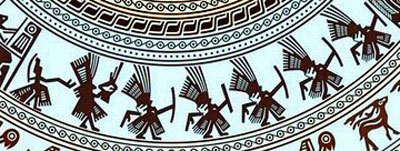


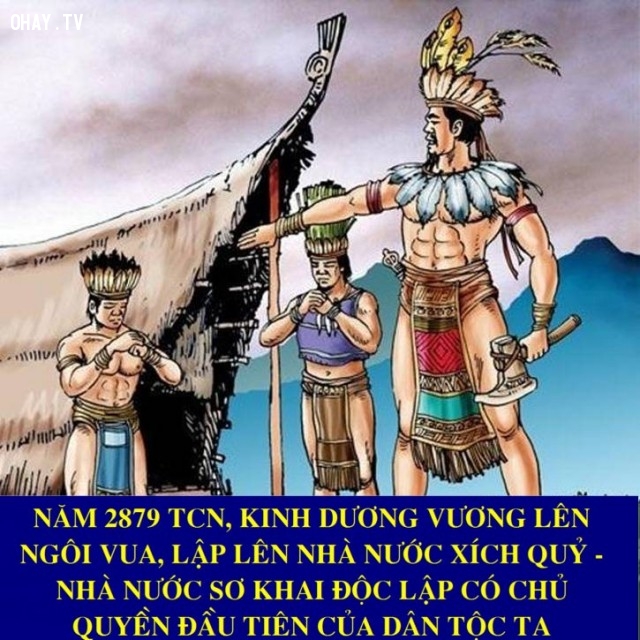
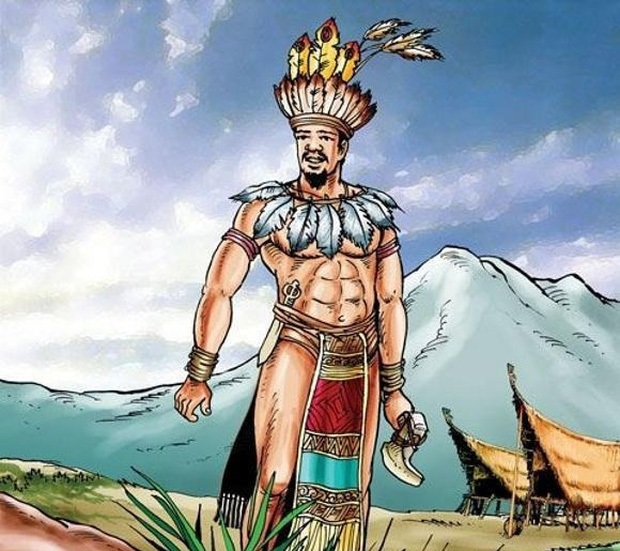
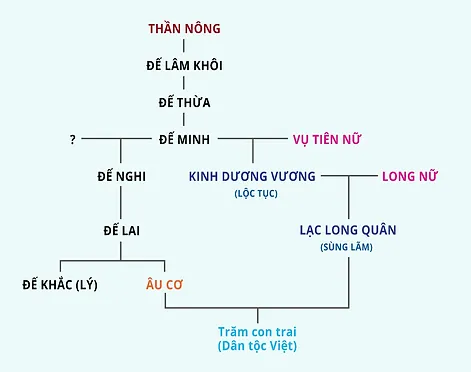


 Khí giới /vũ khí Thời Hồng Bàng